

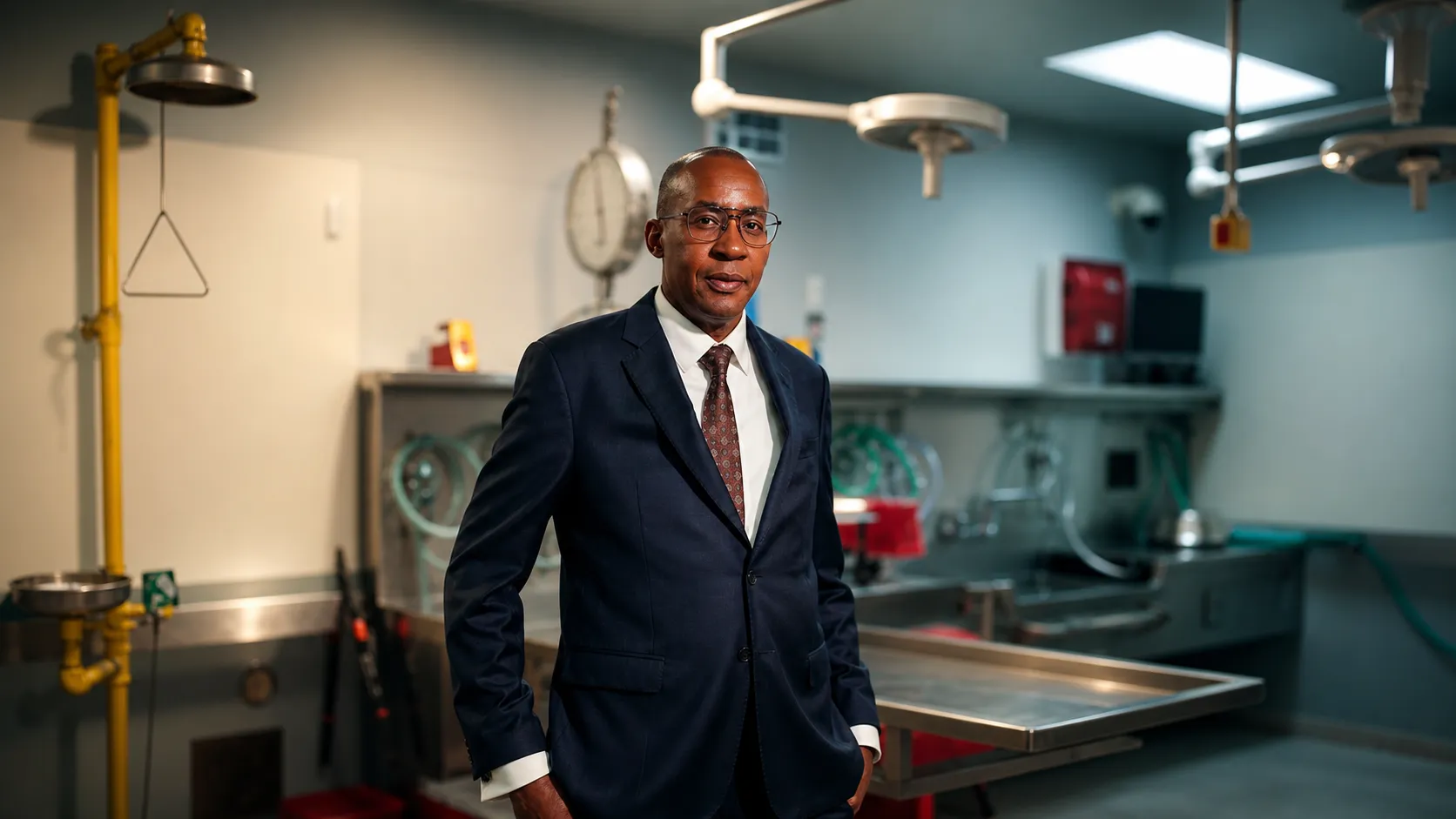
The Los Angeles County Medical Examiner’s Office has performed autopsies in many high-profile cases, including that of 14-year-old Celeste Rivas Hernandez, who singer D4vd is charged with killing, and the death of “Friends” star Matthew Perry. Chief Medical Examiner Dr. Odey Ukpo recently outlined how his office approaches these cases and the work it performs for everyone who comes through its doors.
When Matthew Perry was found unresponsive in a hot tub at his Los Angeles home in October 2023, initial reports speculated that he had drowned. Two months after his death, Ukpo’s office determined the main cause of his death was acute toxicity of the surgical anesthetic ketamine, with drowning as a secondary cause. The finding sparked some debate among ketamine advocates who believed drowning should have been deemed the primary cause. However, Ukpo explained the medical examiner’s approach to terminology used on death certificates, noting that his office never certifies a death as an overdose. “If you look at death certificates, you’ll never see ‘methamphetamine overdose,'” Ukpo said. “It’s just part of the culture and understanding about how drugs kill people. People can understand ‘overdose,’ but any level of methamphetamine can kill somebody. When you say overdose, it suggests that there’s an appropriate amount that someone can take. This one overdid it.”
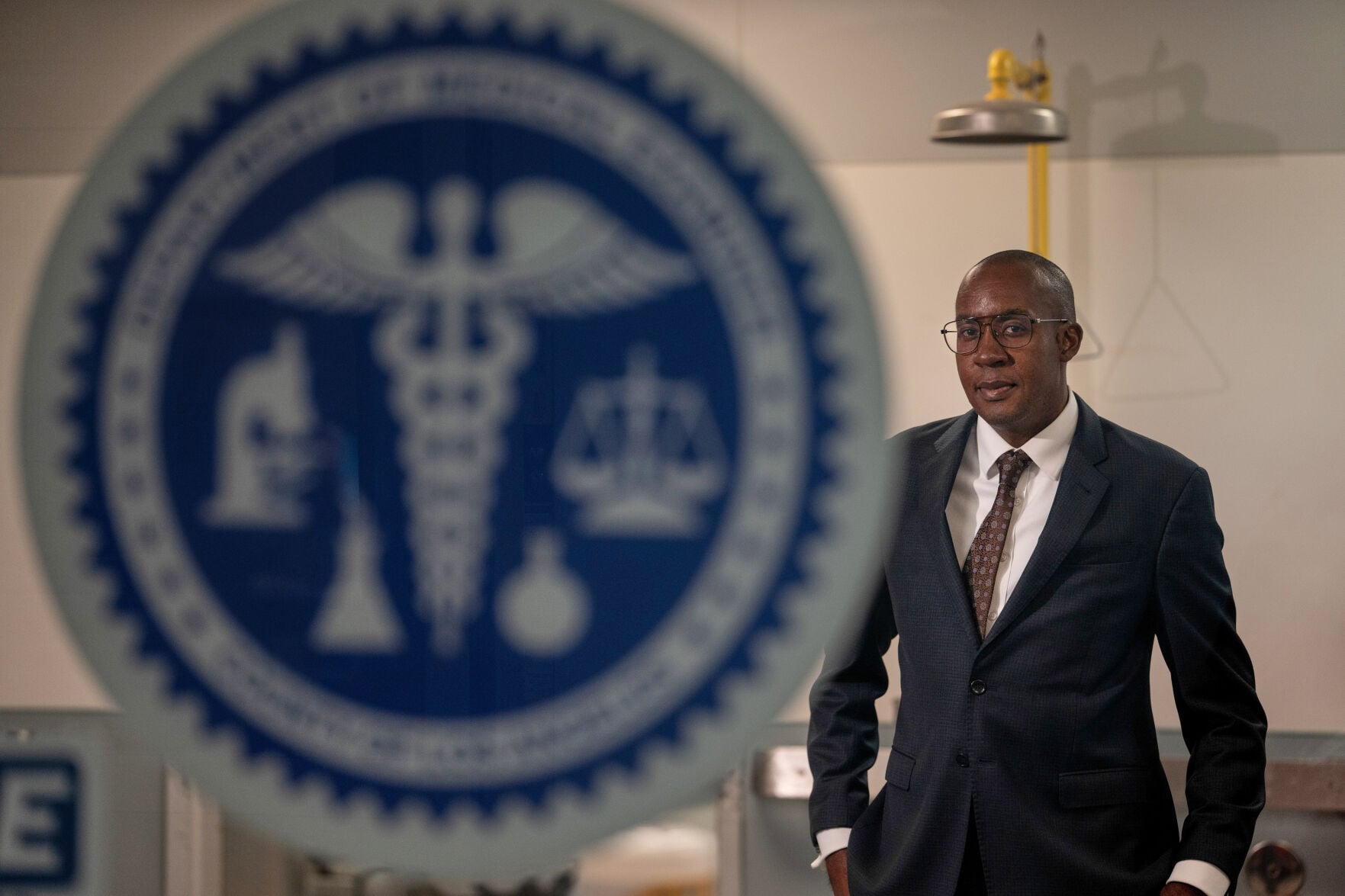
The Perry case emerged shortly after Ukpo was appointed chief medical examiner-coroner in 2023, becoming the agency’s first Black leader since it was founded in 1850. Before taking the top position, Ukpo spent nearly a decade performing autopsies. He has handled some of the most scrutinized cases in Los Angeles, including autopsies on rapper Mac Miller, actor Tommy Lister Jr., and model and actor Kim Porter. His office currently responds to approximately 13,000 sudden, unexpected and premature deaths per year across Los Angeles County.
The autopsy process itself varies significantly depending on the nature of the case. While autopsies are generally performed and initial conclusions reached soon after a body is found, detailed reports revealing the cause of death can take months if toxicology tests are required. “We want to make sure that we get it right,” Ukpo said. “When someone dies, the blood specimens are different than when you’re at the hospital, so they’re harder to handle. And we also have to have certainty.”
One of Ukpo’s early major decisions involved emphasizing independence from law enforcement. Soon after his appointment, he supported dropping the word “coroner” from the department’s official title. He explained that a coroner is typically an elected official, often also the county sheriff, but not necessarily a doctor. “Coroner just kind of confused our purpose and suggested that we were within a law enforcement agency,” Ukpo said. “It’s so important to establish our independence.”
That commitment to independence became most visible in how he handled the autopsy of Celeste Rivas Hernandez. Her body, dismembered and found in a Tesla in the Hollywood Hills, had been sealed by court order in the investigation that led to murder charges against D4vd. When the autopsy results were released, Ukpo included a pointed statement saying it was “unfathomable” that her grieving parents had to wait months to learn how their daughter died. Autopsy reports rarely come with barbed comments, so the statement drew attention to Ukpo’s conviction that transparency serves the public interest better than secrecy.
Ukpo doesn’t believe that sealing autopsy reports helps police investigations. “That goes completely against our mission,” he said. “It’s so important for us to release the information that she did not die from something natural, she did not die from drugs, she was stabbed. And then we start to look back at what made her vulnerable to be in that situation.”
Ukpo’s path to forensic pathology was unconventional. Growing up in Anaheim not far from Disneyland, he wanted to be a homicide detective at age six. However, meeting his family physician changed his trajectory. He was impressed by how the doctor worked with his hands, did what he called “dirty work,” and worked with blood, but could also be professional in an office setting in a suit and tie. “There you go, that’s the formula for a forensic pathologist,” he said. His medical training took him through Loyola University in Chicago, the Mayo Clinic in Rochester, Minnesota, and the medical examiner’s office in Albuquerque, New Mexico.
Ukpo embraces the high-profile cases that come to Los Angeles, viewing them as opportunities to educate the public about dangers it may face. When asked about celebrity autopsies, he noted that the scrutiny they receive and the likelihood of misinformation spreading are strong incentives to do careful, irrefutable work. “I should be able to anticipate the strongest arguments or the most interesting questions by the work that I’ve done,” he said. “If I haven’t, then something’s missing.”
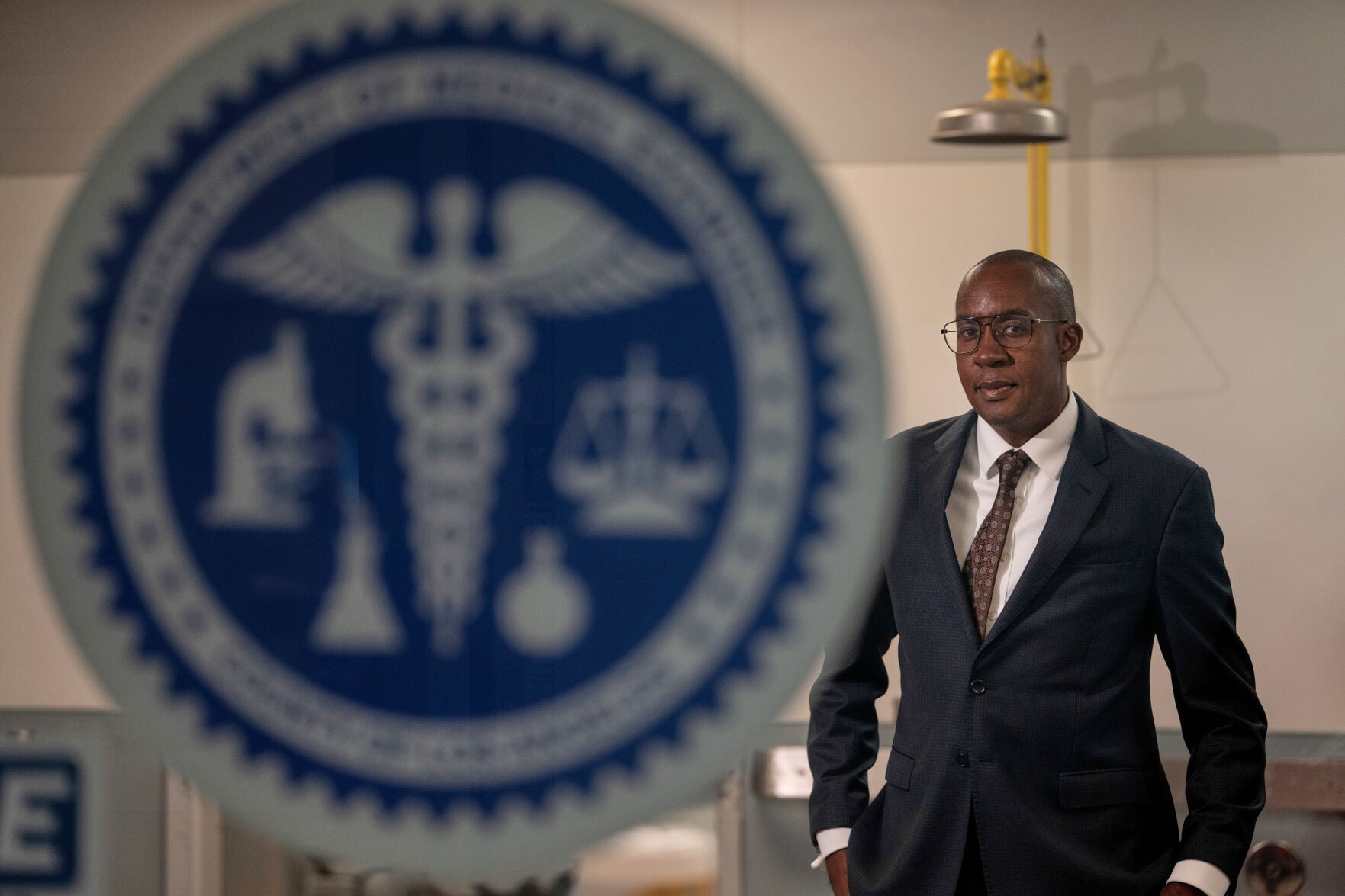
The emphasis on serving the community represents a shift in how Ukpo approaches the role. “What I’m trying to shift during my leadership here is to try to focus on community first,” he said. “Death doesn’t just happen for the family, for the individual. When a death happens, it reverberates.”
Legal experts acknowledge the challenge of maintaining independence while conducting investigations that intersect with law enforcement. Andrew Bernstein, a longtime New York criminal defense attorney, noted that “buddy-buddy” relationships can easily develop between medical examiners and law enforcement. He added that such relationships can hurt a prosecutor’s case because jurors often perceive a testifying medical examiner as biased. At the same time, Bernstein cautioned that medical examiners should not have so much independence that they make decisions without considering the wants and needs of police and prosecutors.
Ukpo’s approach reflects a broader understanding that the medical examiner’s role is fundamentally different from law enforcement. The work involves determining cause and manner of death through scientific investigation, collecting evidence, and maintaining detailed records. It’s a specialized function that requires trained physicians committed to accuracy above all other considerations. Whether examining a celebrity or an ordinary citizen, the process and standards remain the same, though the visibility and intensity of scrutiny differ significantly.