

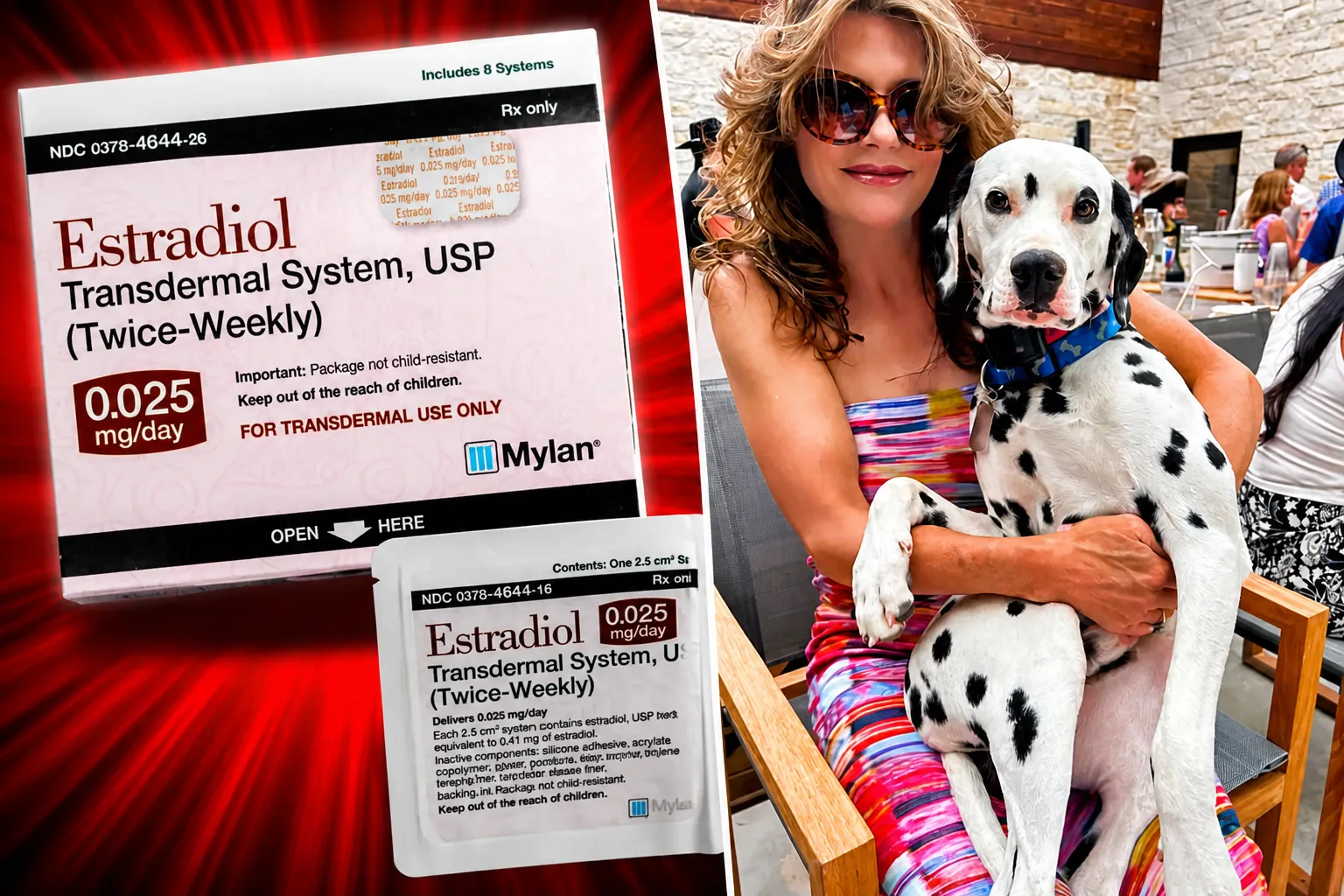
Women are driving across state lines, rationing doses, and plotting border runs to keep their hormone replacement therapy on hand as a national shortage of estrogen patches drags on with no clear end in sight.
The scramble intensified after the FDA stripped the black box warning from estrogen-based HRT in November 2025, a move that sent demand surging within weeks. Elizabeth Borsting, who had been on the therapy for a year and a half, discovered the gap between supply and demand firsthand when her regular Costco pharmacy came up empty. “They told me, ‘Yeah, we’re out, there’s a shortage, but you can pick it up [40 miles away],'” she told The Post. With no time for an unexpected road trip, she shipped her prescription nearly 400 miles to Utah where her husband was traveling, a Hail Mary that worked but launched her into a months-long hunt for reliable refills.
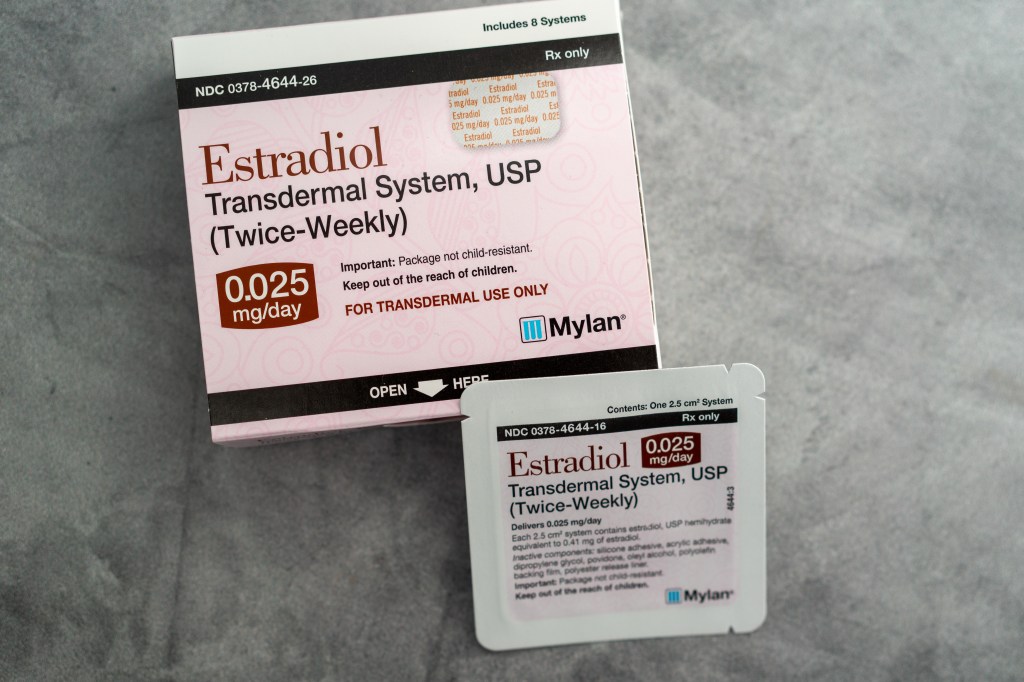
The patch shortage has turned routine pharmacy visits into monthly gambles. Patients are now restricted to one-month supplies in an effort to prevent stockpiling, meaning each refill is a fresh uncertainty. “Trying to find estrogen patches right now is like a high-stakes scavenger hunt that nobody asked to be a part of,” one woman griped on TikTok. “It’s harder to find my estrogen patches and my HRT right now than it is to find buried treasure.”

The desperation cuts across platforms and state lines. “I am driving all over God’s creation to find a CVS that is stocking the estrogen patches,” another woman said. “Please pray I find the estrogen patches. I don’t want to be a homicidal maniac.”
For some, the math of going without simply doesn’t work. Amy Roberts, a Utah-based PR professional, now makes 45-minute drives each way to Salt Lake City when her local pharmacies run dry, a trek she’s repeated four or five times at $25 in gas per trip. Before HRT, Roberts jolted awake nightly soaked in sweat, heart pounding for hours. Her memory deteriorated to the point of showing up to a veterinary appointment without her dog and genuinely debating whether “cat” started with a c or a k.

The patch format holds particular appeal for patients seeking steady hormone delivery without daily pills, and many reject alternatives outright despite pharmacist recommendations. “My doc prescribed me the gel (applied to your upper thigh once a day). Well, IT IS NOT THE SAME!!” wailed one TikTok user, echoing widespread frustration. “I want my patch!!!!!”
Social media has become both support network and underground marketplace. “Facebook saved me when someone offered their prescription-strength that didn’t work out for them for free! Three month supply,” one woman raved on TikTok. Others have built stockpiles through rationing, with one Redditor explaining she’d started switching patches less frequently to stretch her supply. “This way I don’t have to worry if supplies are delayed,” she wrote, though fellow users warned of hives, rashes and skin irritation from extended wear.
The shortage has pushed a small but vocal contingent toward international solutions. “I am in [the] US and ready to fly to Tijuana. I am not kidding. Taking orders for friends and family with me,” wrote one Redditor. “I’ve decided that if my medications become completely unavailable to me and online pharmacies don’t work, I’m going to start taking annual trips to Mexico,” said another.
Roberts and some of her friends have pivoted toward peptide injectables compounded through local pharmacies as a stopgap. She spends $200 monthly out of pocket on NAD+, which she said “helps with brain fog and builds immunity,” and is monitoring GHK-Cu for skin and hair concerns. She knows others on four to five peptides paying $500 to $600 monthly.

Dr. Sindhu Koshy, a menopause-certified cardiologist at Henry Ford Health in Michigan, pushed back hard against that trend. “They’re not FDA approved, and not tested,” she said. “They don’t manage the key menopausal symptoms like hot flashes, night sweats, and brain fog.”
Laura Bray, founder of Angels for Change, the only national patient advocacy organization focused on drug shortages, traced the crisis to poor planning around the FDA’s label change. “When you remove something like that, there is automatically a spike in demand,” she said. “These facilities that make [HRT] are huge assets worth a billion dollars. They don’t sit idle.” The production lifecycle for ramping up generic drug manufacturing runs 12 to 18 months, she noted, and cheaper medicines face the greatest shortage vulnerability. If shortages first surfaced in February, reliable availability may still be six months away.
The stakes extend beyond comfort. “Women have their first cardiac events in their 40s, 50s and 60s,” Koshy said. “When estrogen decreases [during perimenopause], there’s a change in vascular symptoms. Blood pressure increases… It also affects cholesterol, where your bad cholesterol goes up, and your good goes down.”
The black box warning that triggered this surge had itself become controversial. Based on a 2002 study linking estrogen to elevated cancer, heart disease and stroke risks, decades of subsequent research found those dangers didn’t apply broadly, making HRT safer for the general population than originally understood. The FDA’s November removal of that warning opened the floodgates just as manufacturing capacity remained fixed.
Experts now estimate the shortage could persist anywhere from several more months to several more years, leaving patients to cobble together solutions or go without.