

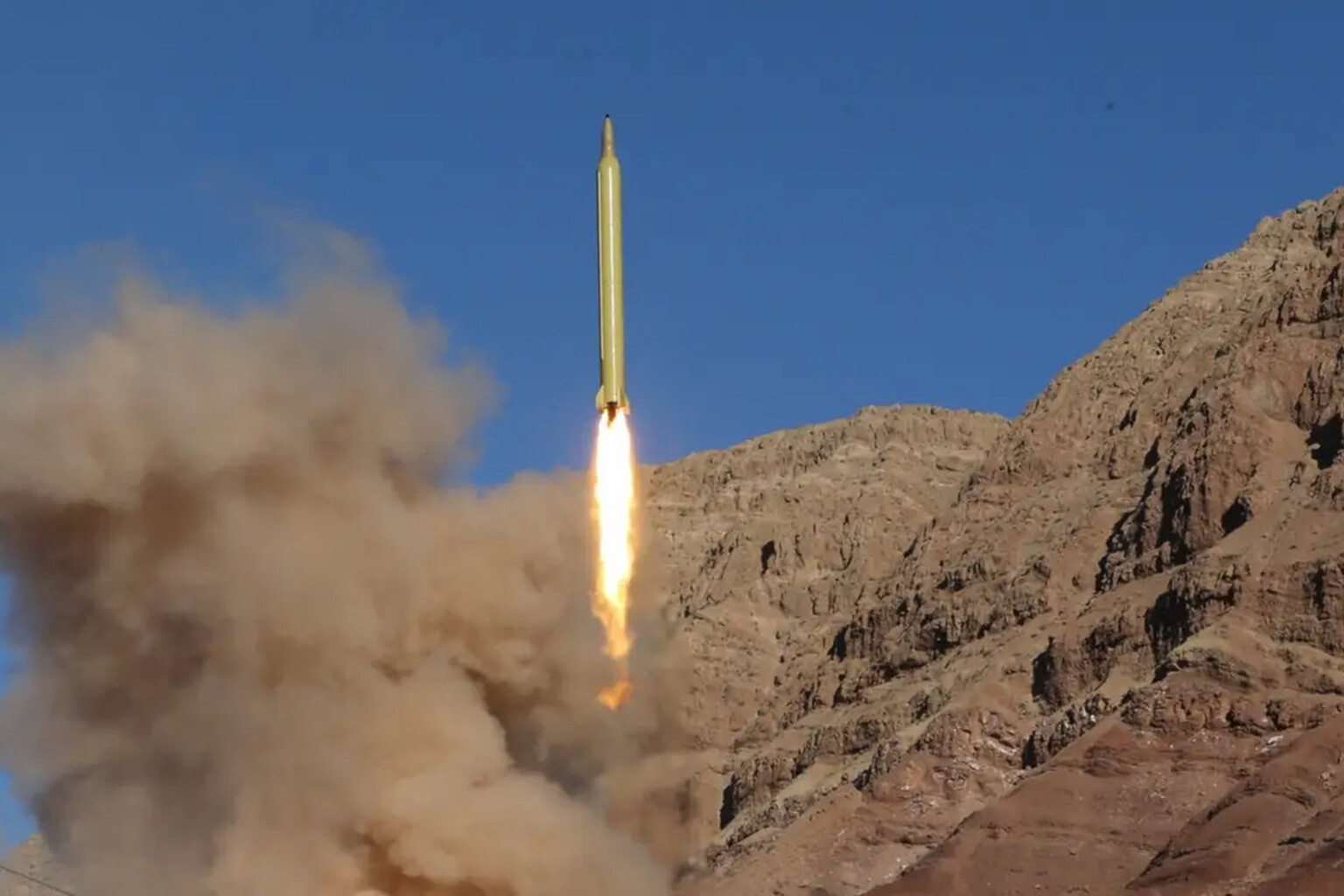
Iranian forces launched waves of new “electro-optical” missiles against American warships in the Strait of Hormuz, marking a sharp escalation in the conflict between Tehran and the Trump administration.
The strikes targeted ten US vessels in the vital waterway, Iranian officials claimed, coming as retaliation for American attacks on five oil tankers near Kharg Island, the country’s critical petroleum refining hub. The regime has branded the new weapon the “Qassem Bassir” missile system, touting its ability to evade conventional defenses.

Tehran’s messaging centers on a single technical boast: the missiles are invisible to GPS and therefore extremely difficult to jam. This electro-optical guidance approach, Iranian officials have suggested, allows the weapons to home in on targets without relying on satellite signals that American countermeasures typically disrupt.
US Central Command offered a starkly different assessment of the engagement. The military command confirmed that every missile fired in the attack had either been intercepted or failed to reach its intended targets, undercutting Tehran’s claims of a devastating new capability.
The failed strike lands in a broader pattern of Iranian retaliation since the Trump administration’s sustained military pressure campaign against the Islamist regime. The tanker attacks near Kharg Island, which preceded this missile salvo, themselves represented a US effort to squeeze Iran’s oil export infrastructure.
The Strait of Hormuz remains the chokepoint through which roughly one-fifth of global petroleum shipments pass, making any military exchange there economically significant far beyond the immediate combatants. Iranian forces have long practiced anti-access strategies in these waters, including mine deployments and fast-boat swarm tactics.
The Qassem Bassir system’s claimed specifications fit into a recognized category of weapons development. Electro-optical seekers use onboard cameras and image-processing to track targets, reducing dependence on external guidance signals that advanced militaries can spoof or block. Several nations have pursued similar technologies for anti-ship missiles precisely to overcome electronic warfare defenses.
Whether the Qassem Bassir performed as advertised in this engagement remains disputed. Iranian state sources have maintained the attack succeeded in its objectives, while American military statements indicate complete defensive success. Independent verification of either claim is not currently available.
The episode adds to a growing tally of direct military contacts between Iranian and American forces since the Trump administration’s return to office. Previous rounds have included Israeli strikes on Iranian nuclear and military sites, Iranian ballistic missile responses, and now this attempted naval engagement.
The broader confrontation shows no sign of de-escalation, with both sides continuing to trade blows across multiple domains. Iranian officials have additionally warned of expanded targeting against US and Israeli bases throughout the region, while the Trump administration has pressed its economic and military pressure campaign.