

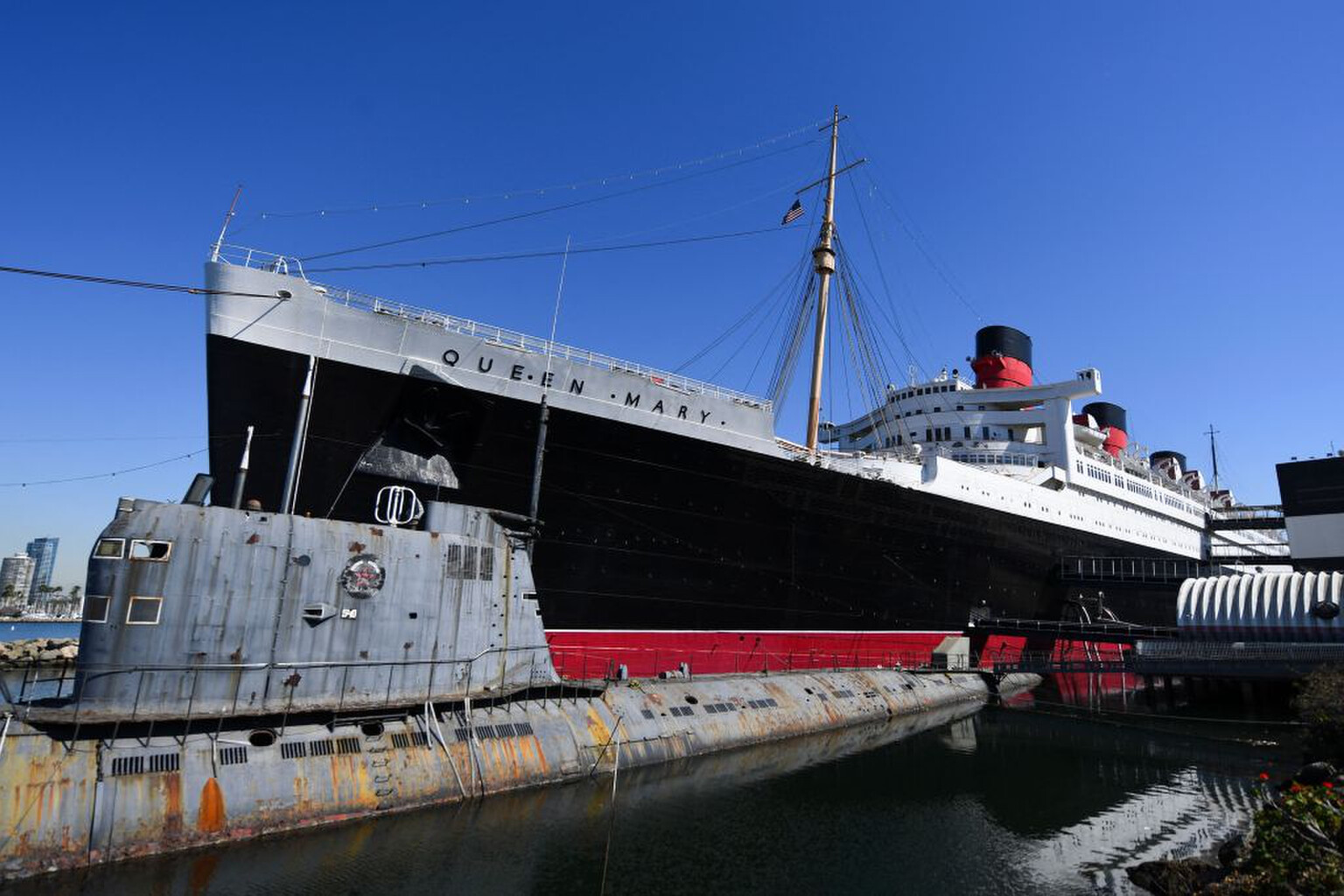
Long Beach is weighing how to dispose of a decaying Soviet submarine that has become an abandoned liability beside the Queen Mary.
City officials in the Southern California port have begun soliciting contractor bids to haul away the 299-foot B-427 attack sub, which has sat alongside the historic ocean liner since 1998. The vessel, launched by the Soviet navy in 1971 and decommissioned in 1994, attracted nearly 8,000 tourists monthly at its peak before a 2015 hull rupture ended public access and left it to the elements.
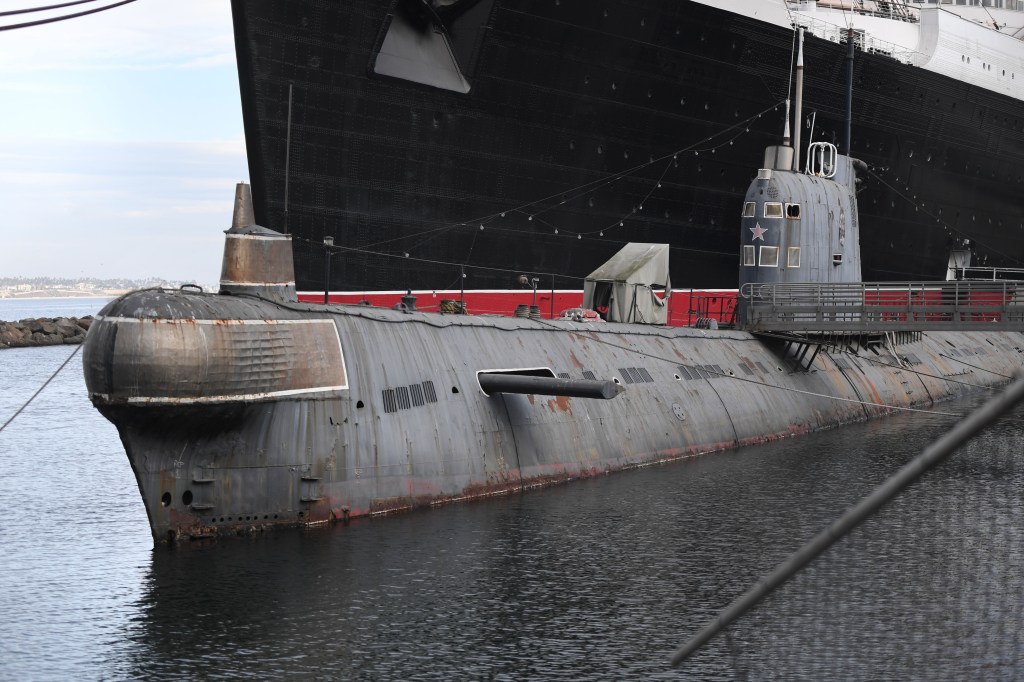
The city does not own the submarine, and its ownership status is murky. Australia-based NEWCO Pty Ltd., the most recent known owner, dissolved in 2020. Ed Skowron originally purchased the vessel for $970,000 after it had served as an attraction at the Australian National Maritime Museum, bringing it to Long Beach to operate as a tourist draw.
Public Works spokesperson Jocelin Padilla addressed the situation in a statement, outlining the city’s rationale for removal.
“In the interest of safety, water quality, and to mitigate any risk of damage to the Queen Mary, the vessel has been identified by the City as an abandoned asset for removal, pending any future legal or administrative actions required for its removal,” Padilla wrote.
“However, further analysis has to be conducted to determine the most appropriate course of action, taking into account safety, risk, impacts, and costs.”
The logistics of extraction present formidable challenges. Previous estimates ranged from $8.6 million for land removal to nearly $22 million for waterside disposal, though current costs likely exceed those figures given continued deterioration.
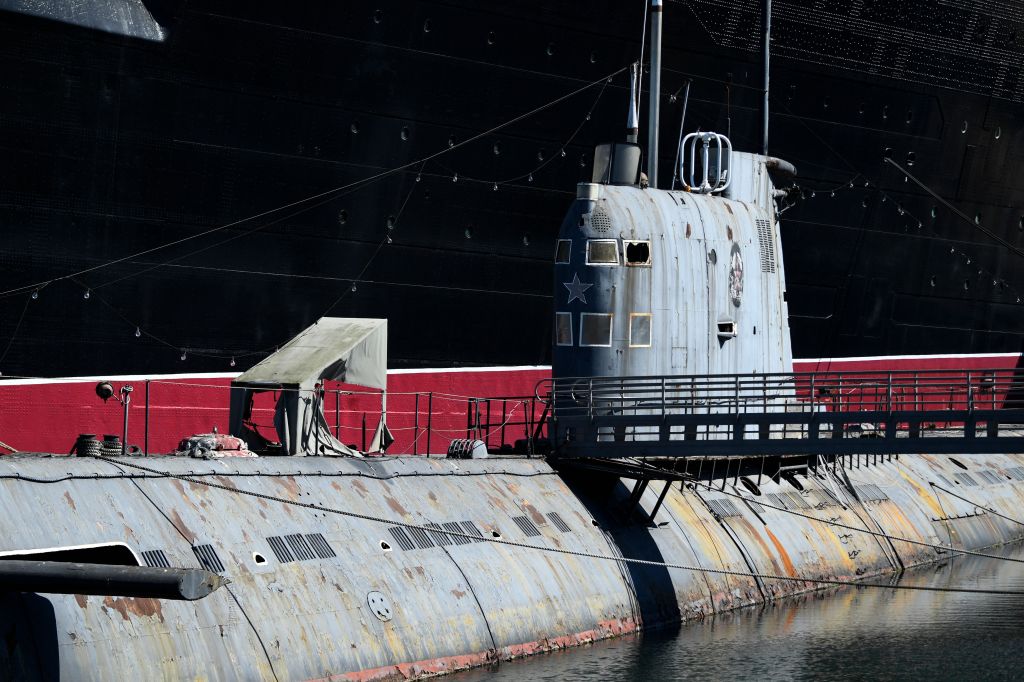
Ralph Botticelli of Curtin Maritime Corp., a marine construction and salvage firm, emphasized the environmental hazards complicating any removal plan. The submarine contains asbestos piping, batteries, and steel of uncertain integrity after decades of saltwater exposure.
“There’s no rule of thumb,” Botticelli said. “It’s just what is deemed appropriate at the time and most cost-effective and most safe.”
“Thirty years in this business and I’ve never seen anything like this.”
The B-427 served in Russia’s Pacific Fleet, tracking enemies through Pacific waters during the Cold War before its decommissioning. For 17 years in Long Beach, visitors explored its interior, getting a rare glimpse into Soviet naval architecture. The 2015 flooding of a ballast tank after a water hull rupture changed everything, forcing closure and beginning its transformation from museum piece to derelict hulk.
Since then, racoons have taken up residence in the abandoned vessel. Rust and holes have spread across its outer layer, accelerated by saltwater corrosion and storm damage. What was once a point of civic pride and tourist revenue has become a potential environmental and safety threat to one of Long Beach’s most iconic landmarks.
The city now faces the dual burden of untangling ownership questions and finding a disposal site willing to accept the contaminated hulk. Whether crews tow it away by water or crane it onto land, the operation will require careful handling of hazardous materials to prevent pollution of the harbor.