

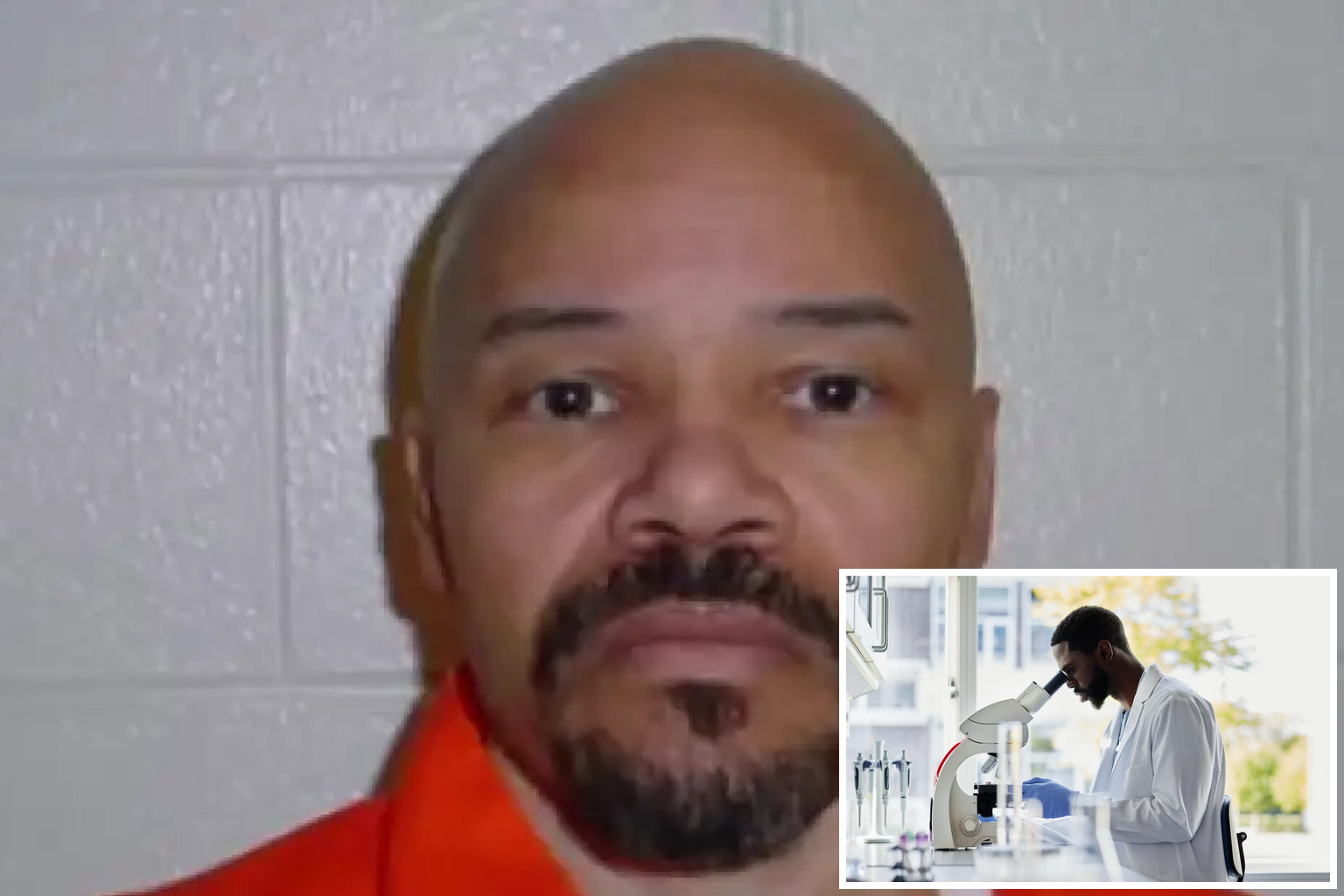
Douglas Stewart Carter, 71, walked out of a Utah jail on bail after more than four decades on death row.
Carter had been imprisoned since his 1985 arrest for the murder of Eva Olesen, 57, a Provo woman who was stabbed multiple times and shot in the back of the head in her own home. Prosecutors accused him of killing her during a robbery, and a jury convicted him based largely on a confession and the testimony of two witnesses who claimed he had boasted about the crime.

Those same witnesses were located in Mexico in 2011. They then recanted, alleging that police had paid them to lie and had threatened to deport their families if they refused to testify against Carter. Carter, for his part, long maintained that detectives coerced his confession through threats.
Despite these claims, appeals filed across the decades were repeatedly denied. Carter was sentenced to death twice — first at his original trial, then again at a 1992 retrial.
The turning point came when the Utah Supreme Court ordered a new trial, citing what it called “multiple instances of intentional misconduct” by investigators. Around the same time, defense attorneys pushed for fresh DNA testing on evidence that had never definitively tied Carter to the scene.
Earlier this month, analysts examined blood from a doorknob at Olesen’s home and genetic material recovered from the knife handle used in the killing. The results ruled Carter out as a possible contributor to both samples.
Defense attorney Neal Hamilton underscored the gravity of the findings. “If the state of Utah had their way, he would have been executed 15, 20 years ago before we discovered the misconduct,” he said.
Hamilton also noted the personal weight of Carter’s release for a man who has not put his “feet on the grass” in roughly 40 years.
Carter’s freedom, however, remains conditional and legally incomplete. He wears a GPS monitor, and prosecutors emphasize that the DNA exclusion does not amount to legal exoneration. A new trial will proceed, and a jury could still convict him based on the remaining evidence.
Olesen’s family has made clear they are not satisfied by the DNA results alone. Her daughter-in-law, Theresa, expressed “serious concern” about Carter’s release.
“We just want justice for Eva. And if he had any part of it we want that to be known,” Theresa said.
She added that the family had hoped for a “concrete match” pointing to someone else, rather than simply an exclusion of Carter.
Utah County prosecutor Erwin Petilos, meanwhile, reviewed the bail decision as “necessary and fair” given the changed circumstances of the case.
Carter’s defense team plans to introduce additional evidence of sloppy or biased investigation at the upcoming trial. They have pointed to reports of an unidentified white man seen fleeing the crime scene, and they argue that other suspects — including Olesen’s own husband — were never properly vetted by detectives.
The state is now reassessing what evidence remains viable as both sides prepare for the new trial proceedings.