


Millions of Americans who struggled to restart their student loan payments after years of pandemic relief are now facing the harsh consequences of default, with the crisis intensifying as government protections have ended and collection efforts resume.
The scale of the problem has become staggering. Roughly 9.2 million borrowers have fallen into default as of mid-2026, representing about 20 percent of the 43 million Americans carrying federal student debt. This marks a record high since the government ended a four-year payment pause that began during the COVID-19 pandemic. The number continues climbing, with projections suggesting that as many as 12.5 million borrowers could be delinquent or in default by the end of the year if current trends persist.
When federal student loan payments resumed in October 2023, borrowers faced an abrupt transition back to repayment after having no mandatory payments since March 2020. Although the Department of Education implemented a 12-month grace period called an “on-ramp” that prevented late payments from being reported to credit bureaus, this protection ended in September 2024. By the fourth quarter of 2025, the first wave of borrowers who had missed payments for 270 days officially entered default status, triggering a cascade of consequences that continues to accelerate.
The profile of those defaulting has shifted dramatically. The average newly defaulted borrower is nearly 40 years old, contradicting common assumptions that defaults are primarily a young person’s problem. Older borrowers, particularly those aged 50 and older, are struggling at rates higher than any other age group. Geographic patterns also emerged, with Southern states like Louisiana, Mississippi, Alabama, Georgia, and South Carolina showing the highest concentration of newly defaulted borrowers. Significantly, roughly 70 percent of those who recently defaulted had been current on their loans before the pandemic, indicating this is not simply a continuation of long-standing delinquency but rather a new crisis affecting borrowers who were managing their payments successfully.
The financial consequences of default are severe and multifaceted. Borrowers face wage garnishment of up to 15 percent of their disposable income, seizure of tax refunds, and withholding of portions of Social Security benefits. Credit scores plummet, with newly defaulted borrowers seeing an average decline of 91 points, making it far more difficult to qualify for mortgages, car loans, or credit cards. These credit damages remain on reports for seven years, constraining borrowers’ financial options for years to come.
The ripple effects extend beyond individual finances. Nearly a third of student loan borrowers report delaying home purchases due to their debt, with even higher percentages among younger generations. Many are struggling to cover basic necessities. Surveys show that 42 percent of federal student loan borrowers say their monthly payments make it harder to cover basic needs such as food and housing. Additionally, defaulted borrowers often face delinquency on other debts simultaneously, with research showing that 40 percent are delinquent on auto loans and 57 percent are delinquent on credit cards, suggesting broader financial strain affecting multiple aspects of their lives.
Contributing to the crisis has been administrative chaos. Staffing cuts at the Office of Federal Student Aid have reduced the government’s ability to communicate effectively with borrowers and help them navigate complex repayment options. The resolution of the SAVE plan, a Biden-era repayment program that provided some of the most affordable options available, has forced 7.5 million borrowers out of forbearance and into active repayment or default. Many are confused about their obligations and the constantly changing rules governing their repayment options.
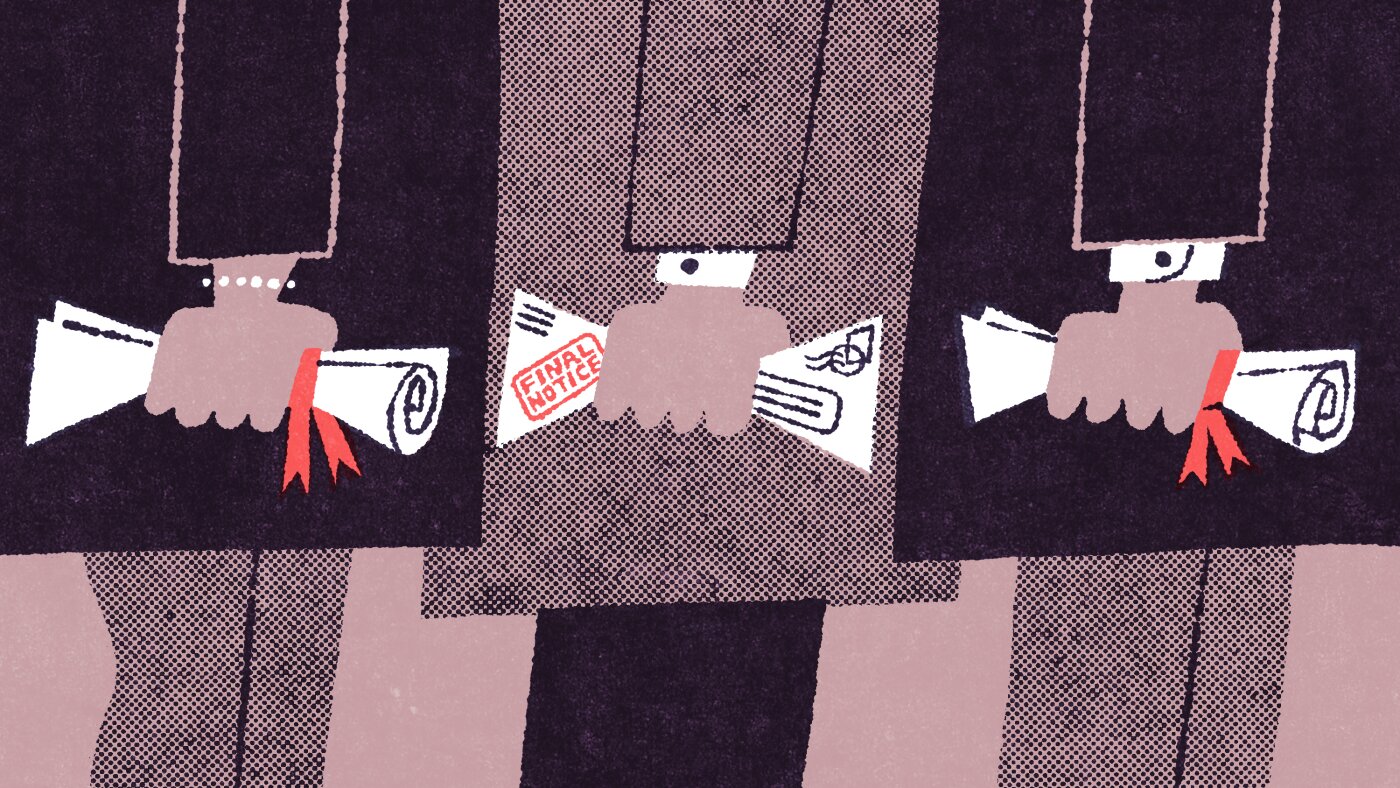
Borrowers have some paths available to recover from default. Loan rehabilitation allows borrowers to make nine on-time, voluntary payments within ten months to bring loans current and potentially remove the default from their credit report. Loan consolidation offers a faster route out of default by rolling defaulted loans into a new Direct Consolidation Loan, though it leaves the default notation on credit reports. Both options restore access to federal aid and repayment plans. Starting in July 2027, a new provision will allow borrowers to rehabilitate a loan up to twice, offering a second chance to those who have already used rehabilitation once.
However, accessing these programs has proven challenging. Many borrowers lack awareness of their options or struggle to navigate the application process, which often requires mailing documents and communicating with Department of Education contractors. Some have experienced long wait times when attempting to contact loan servicers for assistance.
The government has taken steps to incentivize repayment. A temporary one percent interest rate reduction is now available for borrowers who enroll in automatic debit, up from the usual quarter-point reduction. The Department of Education has also delayed collections through wage garnishment indefinitely, though tax refund and Social Security offsets resumed in May 2025. The new Repayment Assistance Plan, rolling out July 1, 2026, aims to provide more manageable payment options, though critics argue it will result in higher payments for many struggling borrowers compared to the plans it replaces.

For millions trying to rebuild their financial lives after default, the path forward remains uncertain. Many are working with loan servicers to understand their options, attempting to enroll in income-driven repayment plans, or making the difficult decision between rehabilitation and consolidation. Experts emphasize that borrowers who act quickly—logging into StudentAid.gov, contacting their servicers, and exploring available programs before default occurs—have far better outcomes than those who wait.
As the student loan system continues its dramatic transformation, borrowers are left navigating a landscape of constant policy shifts, shrinking repayment options, and mounting financial pressure. For those in default, reclaiming financial stability is possible but requires both immediate action and navigation of an increasingly complex system.