

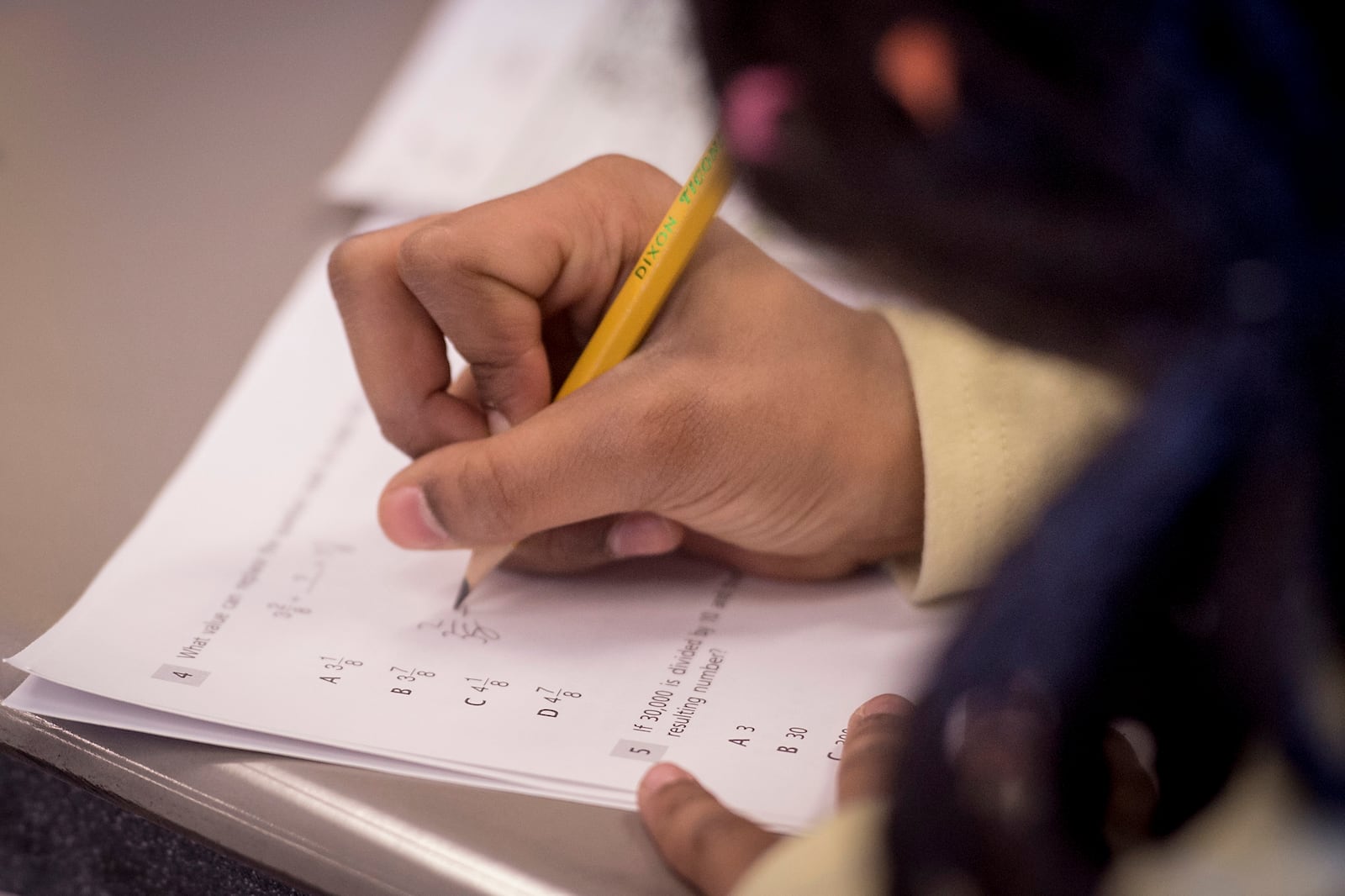
Alarming new data shows that more than half of third-, fourth-, and fifth-grade students in New York State failed their reading proficiency exams, revealing a troubling decline in early literacy skills across the Empire State and raising urgent questions about the state’s approach to education despite record spending levels.
Preliminary results released this week by the New York State Education Department revealed that 57 percent of third graders, 52 percent of fourth graders, and 57 percent of fifth graders failed to demonstrate proficiency on the 2025-26 English Language Arts tests. Overall, just 48 percent of students in grades 3-8 rated proficient on the ELA tests—a significant five percentage point decline from the previous year.
The performance was even more troubling in New York City, where approximately 40 percent of the state’s public school students are enrolled. City students in grades 3-8 saw a six percent drop in their ELA scores from the previous year, with roughly half of students overall achieving proficiency. Third graders in the city were the poorest performers, with scores plummeting 13.8 percent from the prior year as only about 44 percent ranked proficient. Fifth graders followed with a 13.1 percent drop.
The most dramatic decline appeared at the fifth-grade level statewide, where reading proficiency declined by 14 percentage points—the largest drop of any grade level. This unusual year-over-year swing has raised eyebrows among testing experts, who noted that state test scores typically change gradually. The sharp fluctuations have prompted the education department to conduct deeper analysis into the causes of the dramatic swings.
The reversal represents a stark contrast to the previous year. Fifth-grade scores had soared 13 percentage points in the year prior, and New York City had recorded a seven percent increase in reading proficiency overall just the year before. That previous year’s gains have now been nearly erased by this year’s decline.
In response to the preliminary results, the State Education Department acknowledged the concerning trend. A department spokesman stated that officials “take this decline seriously” and pledged to “conduct a detailed analysis to better understand where students are experiencing challenges, which student groups and communities have been most affected, and where additional support and resources are needed.” The department emphasized that “we will not minimize or attempt to explain away what the data tell us.”
The decline comes at a time when New York is spending more on public education than any state in the nation. The state invests approximately $37,000 per student, about double the national average of around $17,619. In New York City specifically, per-student spending rises to about $44,000, making it the most expensive school system to operate in the country. Governor Kathy Hochul has dedicated a record $39.3 billion to the state Education Department for the 2026-27 academic year, with specific investments aimed at training teachers in “evidence-based math and reading instruction.”
Despite the massive expenditures, experts are questioning whether spending alone is sufficient without fundamental changes to teaching methods and curriculum implementation. Zilvinas Silenas, president and CEO of the Empire Center for Public Policy, pointed out that if spending determined results alone, “New York should be on top of the world,” noting that the state’s education system is “on average, very mediocre” though it has “some islands of excellence.” He called for examining why such high-performing schools within the system are not being replicated across the entire state.
The education community has fractured into different camps on how to address the crisis. The administration of Mayor Zohran Mamdani and his Schools Chancellor Kamar Samuels have touted a literacy program called NYC Reads in their statements accompanying the disappointing test scores. However, some education experts have criticized the initiative as part of a patchwork approach that may be undermining student progress.
Eric Nadelstern, who served as deputy schools chancellor under former Mayor Michael Bloomberg, argued that implementing a one-size-fits-all approach in a city as diverse as New York is problematic. “There is no one-way for all kids to learn how to read,” he said. “If you allow teachers to determine how the students they know by name and family and neighborhood can learn best, they will do whatever is necessary to make sure their kids succeed.” He contended that trying to force uniform programs across such diverse needs and teaching styles ends up alienating staff, who implement the programs poorly as a result.
Mary Vaccaro, vice president of education for the United Federation of Teachers union, similarly blamed changes in curriculum and teaching strategies, noting that “we have to refocus on what we know works in literacy—a clear plan, a tailored science of reading curriculum, and meaningful professional development for educators.” She stated that this past school year, “the system abandoned that approach and, with no real plan in place, simply piled on additional programs, assessments, consultant’s recommendations and curriculum in the hopes that ‘more’ would equal better, and we lost ground.”
Charter schools, which operate independently but are publicly funded, have consistently outperformed traditional public schools despite opposition from teachers unions. One of the largest charter networks, Success Academy, achieved a 92 percent pass rate on the English test in 2025 in New York, ranking second only to the public schools in Scarsdale—one of the state’s wealthiest districts.
Public school students performed somewhat better on the math examination, with about 57 percent in grades 3-8 passing the test, a slight increase from the prior year. However, the sharp decline in reading proficiency, combined with the state’s inability to convert record spending into strong achievement gains, has intensified debate over whether New York’s education policies are moving in the right direction.
The state and city both pledged to conduct thorough investigations into the test score fluctuations and student performance, with officials insisting they would not downplay or minimize what the data reveal. However, the year-to-year volatility in scores and the persistent gap between funding levels and achievement outcomes suggest that New York’s approach to education reform may require more fundamental changes than additional resource allocation alone can provide.