

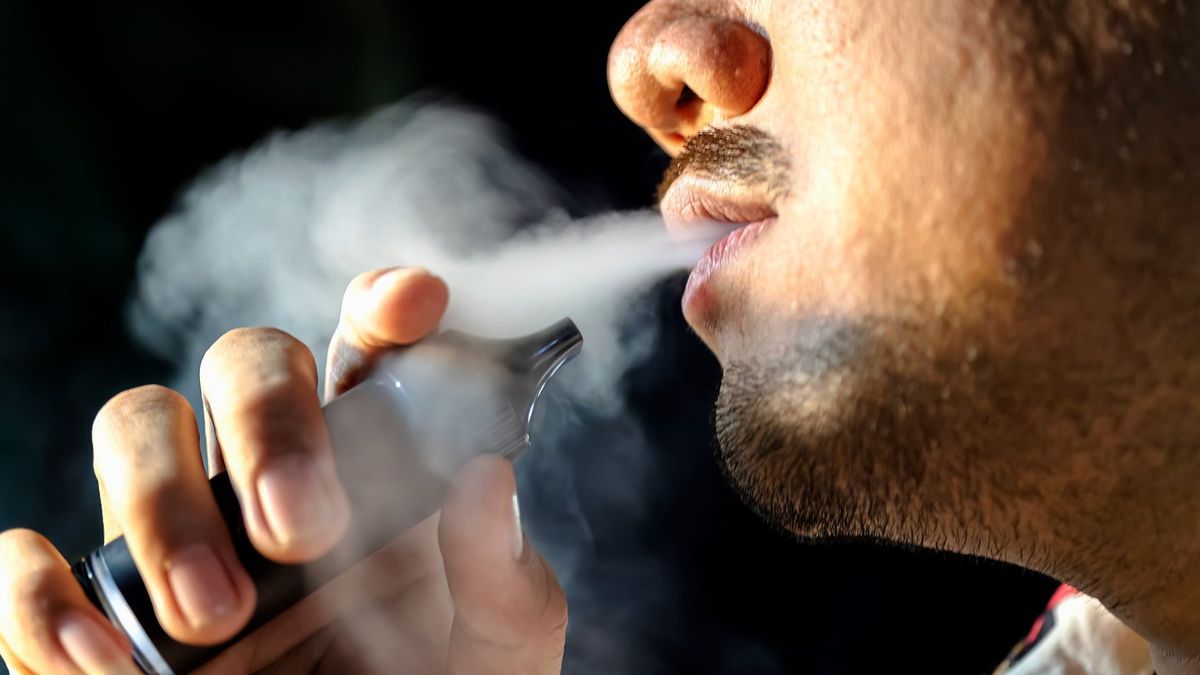
A leading British medical body has warned that vaping must be made “less attractive” to children after reviewing dozens of studies linking e-cigarettes to widespread health problems in young people.
The Royal College of Paediatrics and Child Health (RCPCH), which examined 81 separate studies, found vaping connected to wheezing, coughing, poor oral and dental health, disrupted sleep, mental health problems and eye symptoms in youth users. Professor Will Carroll, 58, co-authored the review and pushed for immediate regulatory action.
“The evidence shows clear links with respiratory symptoms, nicotine dependence and subsequent cigarette smoking, while concerns about wider impacts on young people’s health continue to grow,” Carroll said. “We must act to make vaping less attractive and accessible to children.”
Carroll added that vaping should not be seen as a “harmless part of growing up.” The RCPCH vice president, whose name was not provided in the review materials, echoed that urgency. “Vaping is still a relatively new product, and there is much we do not yet know about its long-term impact on children and young people but a clear and concerning picture is emerging,” the vice president said, adding that action needs to continue to “protect children from nicotine products.”
The British findings land amid mounting international alarm. In the United States, CDC data shows that 1 in 6 Americans aged 21 to 24 now vape regularly. Overall adult e-cigarette use in the US has nearly doubled since 2020, climbing to roughly 8 percent. The RCPCH review specifically flagged that adolescents who vape face heightened risk of transitioning to combustible cigarettes, a gateway pattern that has drawn parallel warnings from American clinicians.
Dr. Rayyan Zafar, a researcher who spoke, offered measured context on relative risks. “Cigarettes, by a very large margin,” remain the worst option for overall health when weighing vaping, tobacco and smoking together, he said. His primary guidance was blunt: “If you do not use nicotine, do not start.”
Zafar told the outlet that vaping aerosol may carry fine particles, metals, aldehydes and airway-irritating chemicals. Those exposures can produce dry mouth, sore throat, headaches, nausea and other acute symptoms, though he emphasized that physicians still have far more to learn about long-term effects given how recently e-cigarettes entered widespread use.
The policy responses are already taking shape on both sides of the Atlantic. In the UK, a generational tobacco ban will make it illegal to sell tobacco products to anyone born after January 1, 2009, starting January 1, 2027. In the US, 22 Massachusetts towns led by Brookline have enacted lifetime sales bans for anyone born on or after January 1, 2000. The federal minimum purchase age of 21 remains the national standard elsewhere.
A 12-year-old UK girl named Sarah Griffin fell into a coma after her lungs collapsed from excessive vaping that began when she was 9. She had consumed a 4,000-puff vape in just days. An X-ray revealed only one lung functioning properly, and she did not respond to initial treatment. A separate case in Thailand involved another 12-year-old girl whose lungs were so severely damaged that she required a ventilator. These cases, reported across multiple outlets, have become flashpoints in the broader debate over youth access to flavored nicotine products.
American clinicians are tracking similar patterns. At Cedars-Sinai in Los Angeles, Dr. Mariam Torossian has noted that roughly 80 percent of teenagers who begin with vaping go on to continue smoking. Dr. Irina Dralyuk, a pediatric pulmonologist at the same institution, has described how flavors mask nicotine’s harshness for children who would naturally reject tobacco taste. “Most 10-and 12-year-olds don’t like the taste of alcohol or tobacco,” Dralyuk said. “What they like are the side effects.”
The RCPCH review arrives as the American Lung Association and other public health organizations expand cessation resources for young users seeking to quit.
The American Lung Association’s “Freedom from Smoking” program offers resources and professional support for those attempting to stop nicotine use.