


Key facts:
– The law takes effect today, August 5
– Gov. Kathy Hochul signed it on February 6
– It makes NY the 13th or 14th jurisdiction to legalize medical aid in dying
– The law applies to terminally ill patients with less than 6 months to live
– Amy Paulin (D-Westchester) is the Assembly sponsor; Brad Hoylman-Sigal is the Senate sponsor
– There are multiple safeguards: 5-day waiting period, mental health evaluation, two physician confirmations, recorded oral request, written request with two witnesses, patient must self-administer
– Catholic Church and healthcare providers have opposed it
– Disability advocates filed a lawsuit that was dismissed July 30
– Catholic healthcare ministries got a temporary restraining order on July 30
– Governor Hochul cited her mother’s suffering from ALS as motivation
New York’s Medical Aid in Dying Act becomes available today for terminally ill residents with less than six months to live.
Governor Kathy Hochul signed the Medical Aid in Dying Act on February 6, and the law took effect on August 5.
The legislation makes New York the 14th U.S. Jurisdiction to legalize medical aid in dying.

The law applies to “mentally capable” patients who have six months or less to live, as confirmed by two independent physicians.
“Beginning today, terminally ill New Yorkers facing unimaginable suffering have the comfort of knowing they have one more compassionate option available to them,” Assemblywoman Amy Paulin said in a statement.
Patients must undergo a mental health evaluation, make both a written and verbal request and wait at least five days before a prescription may be filled, and the medication must be self-administered to ensure the decision is voluntary.
State Senator Brad Hoylman-Sigal said, “Today, we make history. This agreement on Medical Aid in Dying is a monumental victory for every New Yorker who has wished to peacefully end their suffering from a terminal illness.”
Hoylman-Sigal added that since introducing the legislation nine years ago, he had “consistently said this bill is not about ending life, it’s about shortening death.”
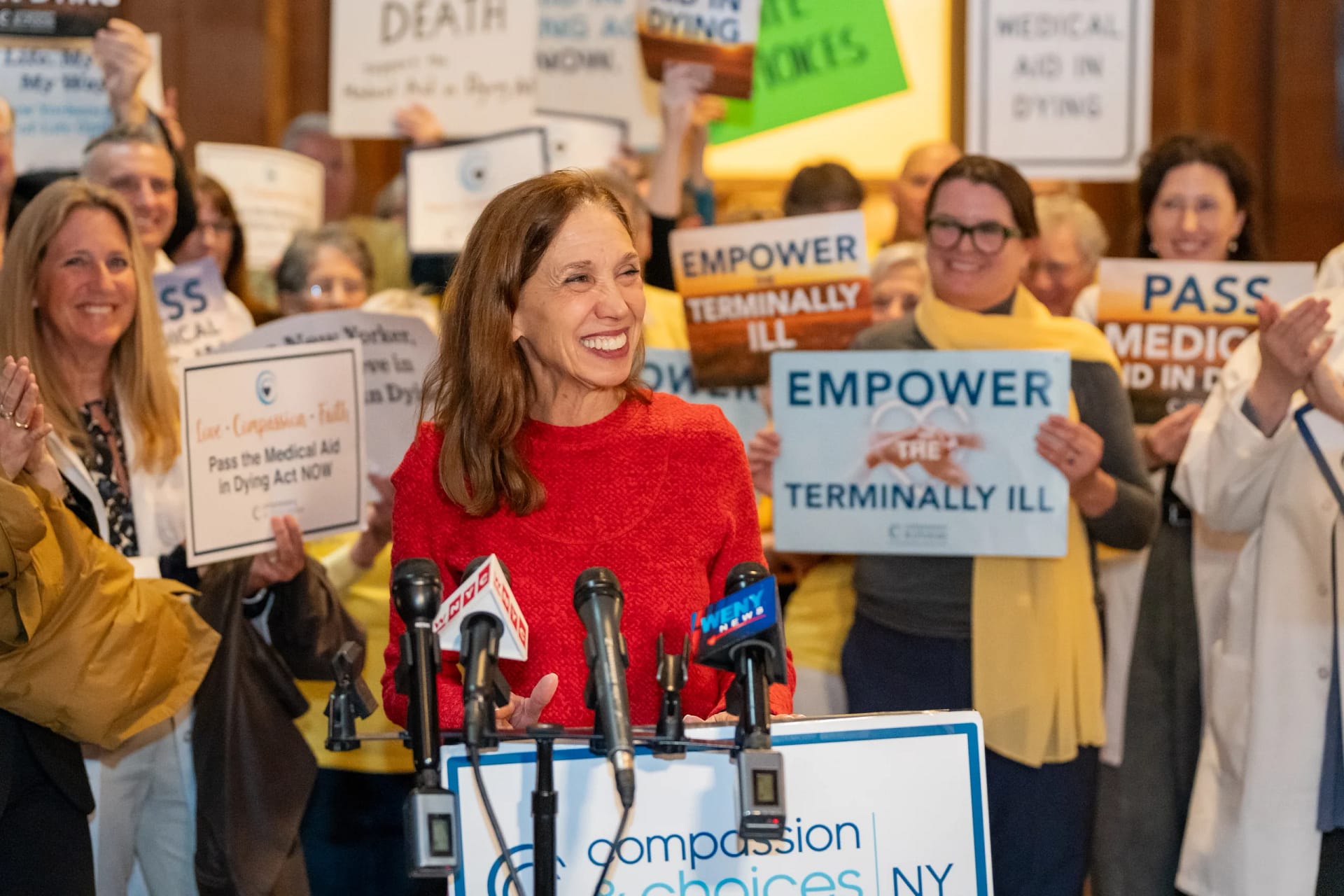
The bill was originally passed by the state Legislature in June 2025, but several provisions were added before Hochul signed it, including the five-day waiting period, a requirement for an audio or video recording by the patient requesting the medication, a mental health evaluation and barring any financial beneficiary from serving as a witness for the request.
Governor Hochul said the journey was deeply personal for her, recalling that witnessing her mother’s suffering from ALS was an excruciating experience.
“Our state will always stand firm in safeguarding New Yorkers’ freedoms and right to bodily autonomy, which includes the right for the terminally ill to peacefully and comfortably end their lives with dignity and compassion,” Hochul said.
The measure faced opposition, particularly from the New York Catholic Conference.
The New York State Catholic Conference said physician-assisted suicide conflicts with Catholic teaching on the dignity of human life from conception until natural death.
Catholic plaintiffs argue the law would force them to take part in end-of-life practices that violate their faith, including counseling patients about assisted suicide, helping them qualify for lethal drugs and directing them to providers willing to prescribe the drugs.
A federal judge on July 30 temporarily barred enforcement of disputed provisions against the Catholic ministries while the lawsuit proceeds.
A group of disability rights advocates filed a lawsuit over the law in June in the U.S. District Court for the Eastern District of New York, claiming that people with life-threatening disabilities belong to a protected class under the 1990 Americans with Disabilities Act and are at risk of harm if the law goes into effect.
Denise Figueroa, executive director of the Independent Living Center of the Hudson Valley, said that “if you are in this class of people whose lives are threatened because of a medical condition, you can be offered assisted suicide without being offered other services that are available to other people in the community.”
A federal judge in the U.S. Eastern District of New York in Brooklyn dismissed a June 11 lawsuit filed by a group of disability advocates, including the Brooklyn Center for Independence of the Disabled and Independent Living Center of the Hudson Valley.
Advocates pointed to real stories of New Yorkers facing terminal illness.
Democratic Assemblymember Amy Paulin was motivated by her sister’s death from ovarian cancer.
Supporters and advocates sent over 3,600 letters to lawmakers in support of the bills.
Polling showed 67 percent of the public supported the legislation.
Despite overwhelming public backing, the bill was introduced multiple times over nine years before finally passing in June 2025, delayed by legislative opposition and concerns about religious conscience protections.
New York joins twelve other states and Washington, D.C., including nearby New Jersey, Vermont, and Maine, in offering this end-of-life option.