

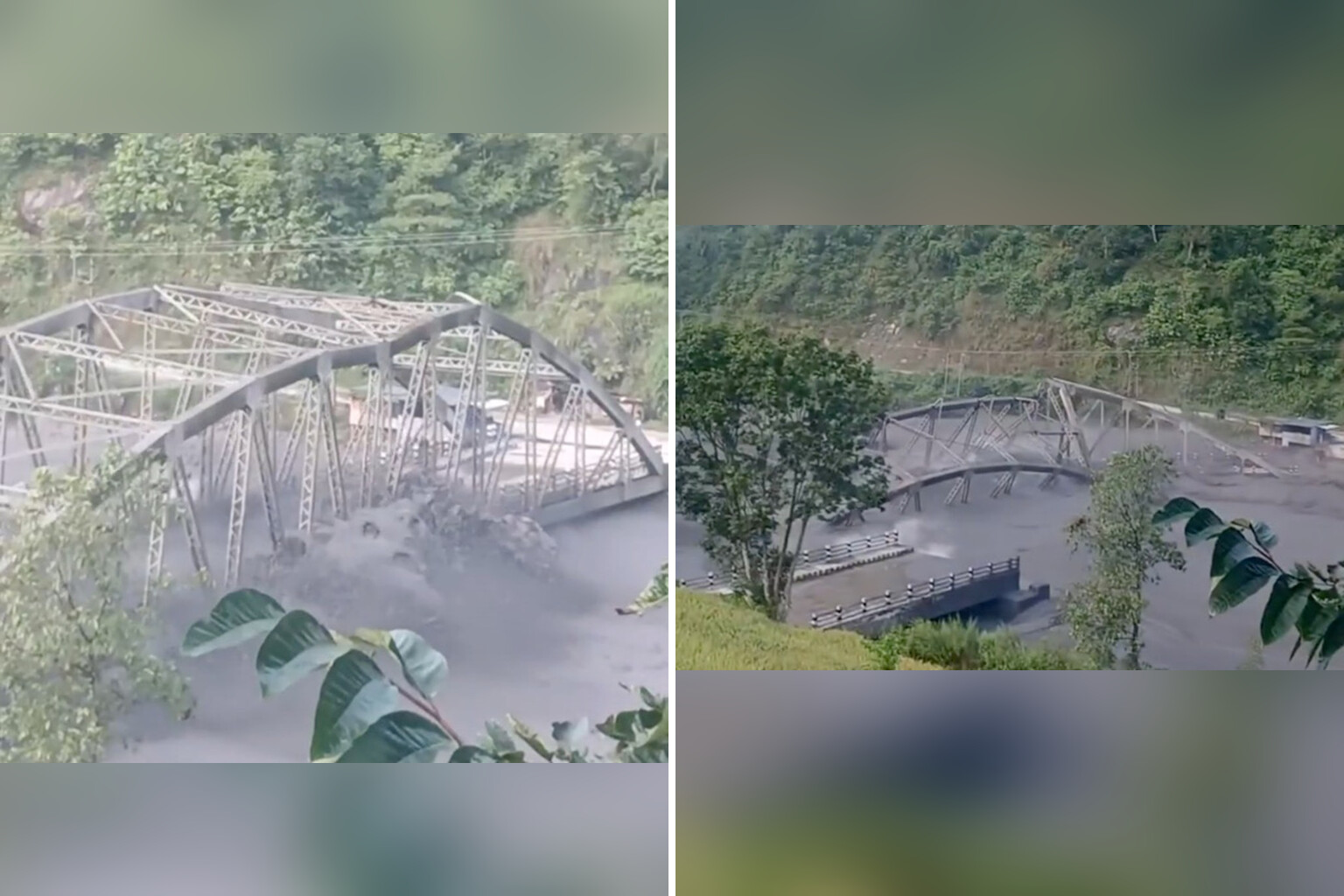
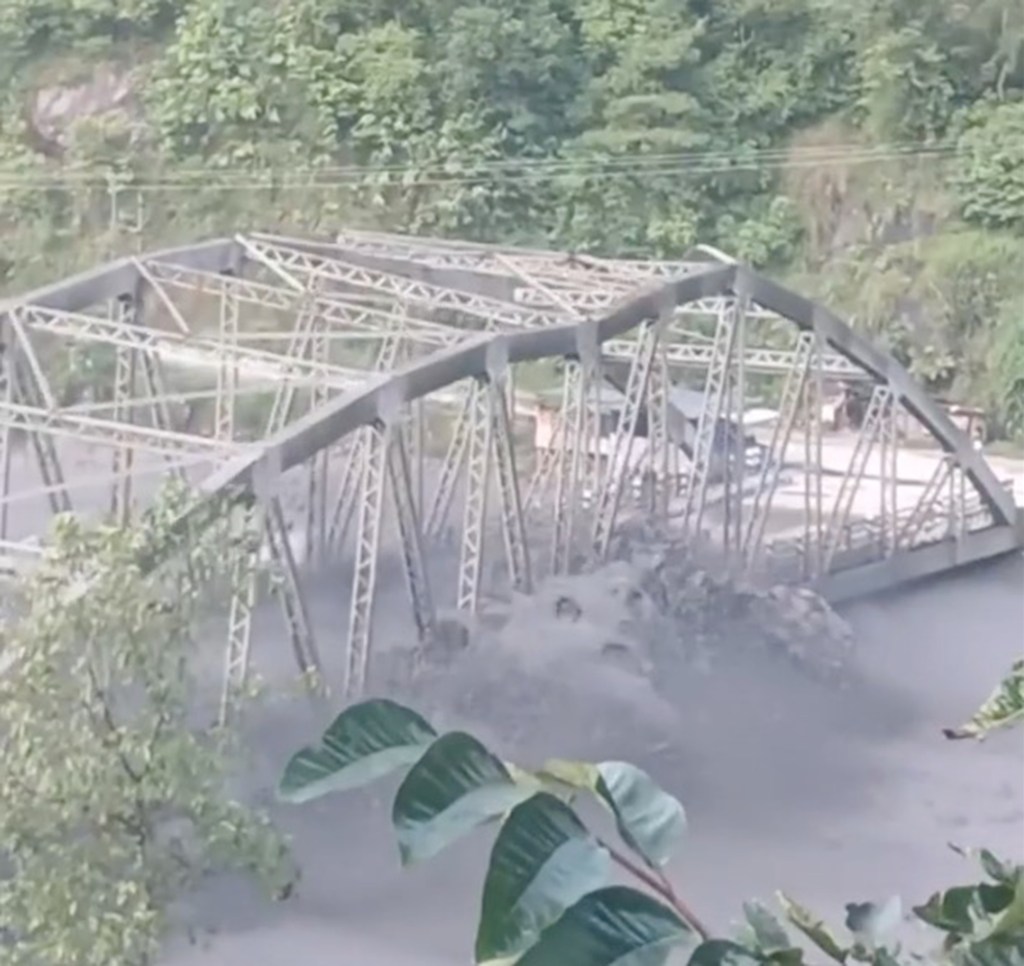
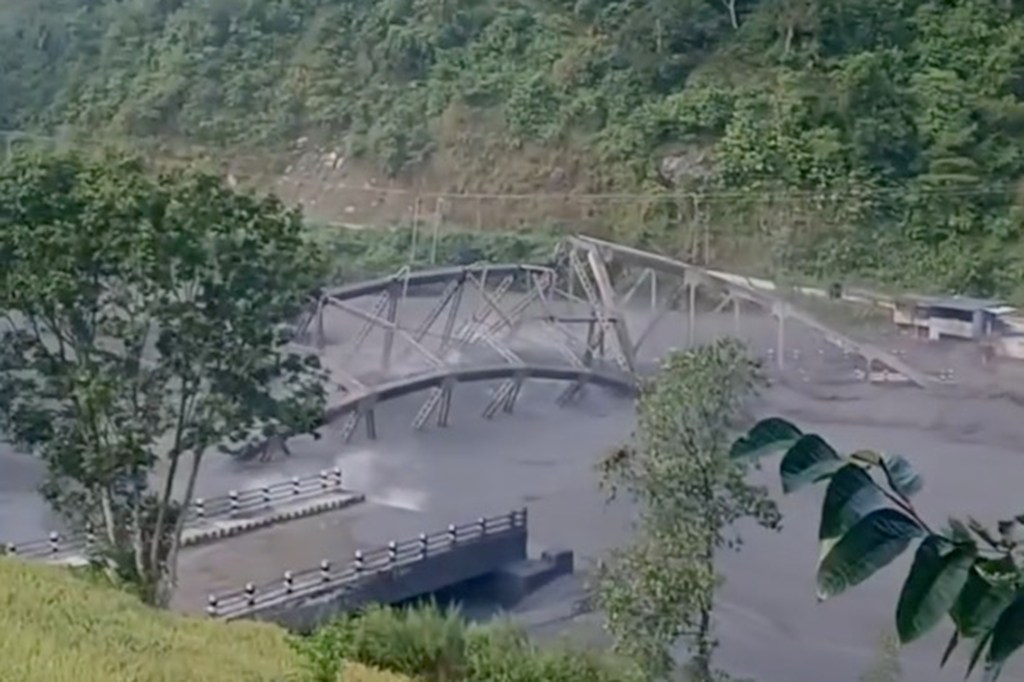
Raging floodwaters obliterated a bridge over the Budhi Gandaki River as Nepal absorbed its second catastrophic deluge in eight weeks.
The span collapsed under the pounding surge in Gorkha district over the weekend, WABC Eyewitness News footage shows, sending the structure tumbling downstream. Authorities said at least five people remain missing from the latest disaster.
Prime Minister Balendra Shah announced on social media that more than 80 people had been pulled from the dangerous currents. He added that roughly half a dozen were rescued from landslide-prone Jagat.
Dharmendra Kumar Mishra, a senior official in Gorkha district, issued a statement urging immediate evacuation for communities in harm’s way.
“We have asked villages living along the river banks downstream to evacuate and remain safe,” he said.
The weekend destruction follows an Aug. 26 avalanche triggered by a collapsing glacier near Nepal’s border with China. That Himalayan flood killed more than 1,400 people, with thousands still unaccounted for. The two-month interval marks an unusually brutal stretch for the mountainous nation, which now confronts overlapping recovery operations.
Mishra confirmed that authorities have deployed response teams throughout affected villages in Gorkha. Rescue operations continue as swollen rivers threaten additional communities downstream.
The earlier glacier collapse sent a wall of water and debris surging from roughly 2,000 feet of collapsed ice, wiping out settlements and infrastructure in its path. The scale of that disaster overwhelmed local emergency systems and drew international attention to Nepal’s vulnerability to climate-accelerated events.
Shah’s social media updates have served as a primary channel for official casualty and rescue figures as traditional communication lines strain under the dual crises. His posts framed the current Gorkha operation as active and ongoing, with particular attention to Jagat’s landslide risk.
Nepal’s monsoon season routinely brings lethal flooding, but the concatenation of back-to-back major disasters has tested national capacity. The Budhi Gandaki River, a tributary of the Gandaki system, runs through terrain prone to sudden inundation when upstream conditions destabilize.
Mishra’s evacuation directive targets populations settled along downstream banks where the collapsed bridge once provided crossing. The loss of that span complicates both escape routes and the movement of relief supplies into cut-off areas.
The death toll from the August glacier disaster remains provisional, with the number of missing suggesting figures could rise substantially. International tourists from the UK, US and Canada were among those unaccounted for in that earlier flood, according to subsequent reports.