

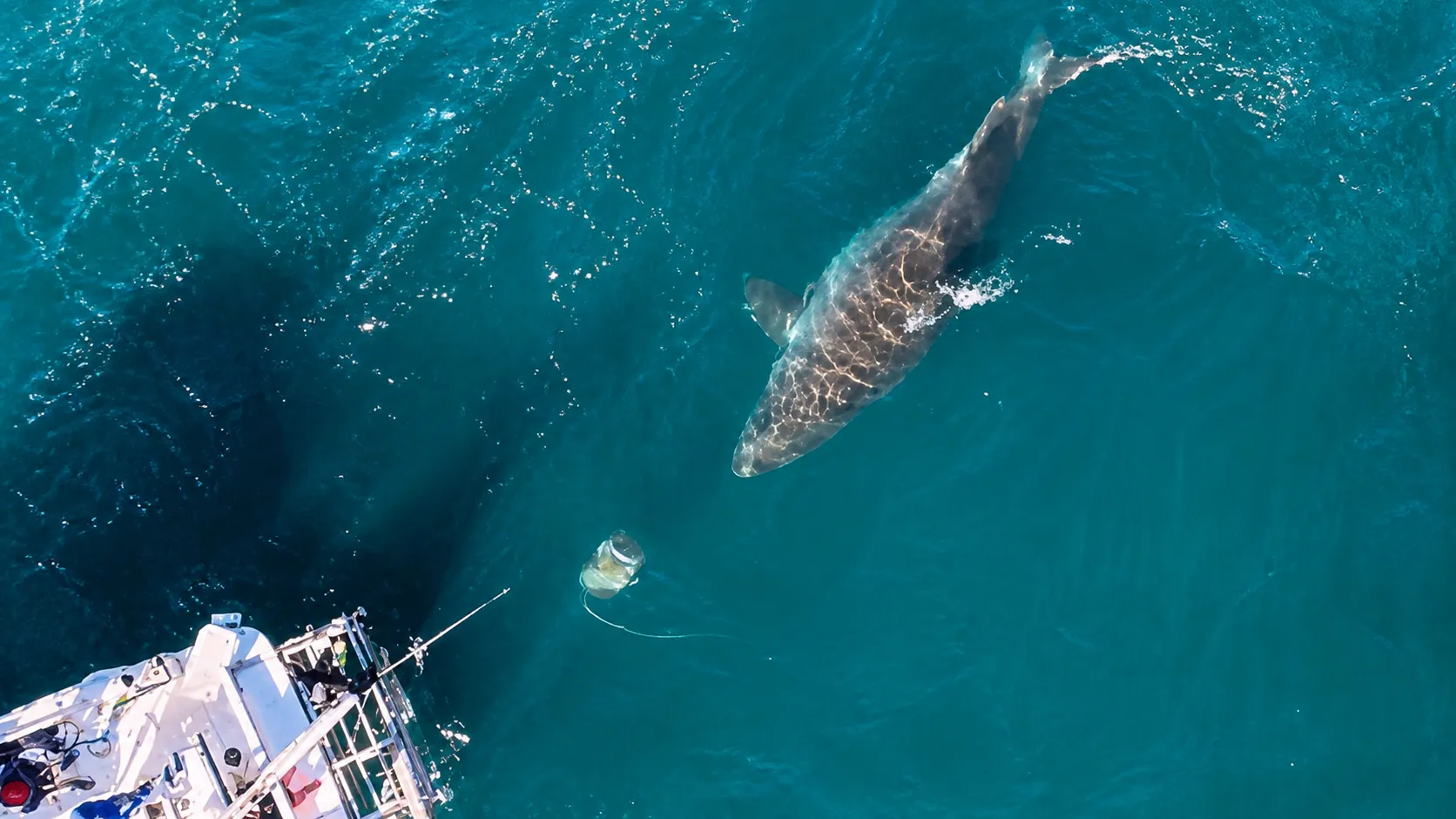
Scientists following a mysterious group of enormous sharks believe they may have identified the biggest female in the area, a giant known as ‘Big Rose’.
Estimated to weigh around three tons, Rose is thought to rank among the largest sharks in the North Atlantic.
Great white sharks can grow to about 20 feet long and weigh more than 4,000 pounds, but most are smaller. Researchers also say the species remains difficult to study in the Atlantic because it is wide-ranging, highly mobile and often spends long periods in deeper water.
The mission was led by shark researcher Dr Neil Hammerschlag, who first encountered her in these waters last year. In the latest episode of Discovery’s Shark Week: Invasion of the Mega Sharks, which aired today (July 26), he is seen trying to locate and tag her so her movements can be monitored.
What unfolded, though, was far more challenging than the team expected, as Rose did not easily reveal herself from the depths.
The crew headed to Mud Island, the last known location where Big Rose had been spotted alongside smaller sharks, including 10-foot great whites.
Getting close enough to study a shark of that size is difficult, and the bait has to be substantial enough to draw them in.
Before long, several sharks surfaced near the boat, giving the researchers a close look at what was moving through the area.
Three of the sharks measured more than 14 feet, and one 16-foot female called Sweetheart also appeared. Even so, Big Rose remained out of sight. After Hammerschlag tagged the sharks that had surfaced, fresh data about their movements helped point the team in the right direction.
By the next morning, it seemed the sharks had shifted to the opposite side of the island. But when the team followed, none of them initially came up.
Using a large slab of bluefin tuna as bait, the crew eventually noticed a massive shape moving through the cloudy water. Shark Week expert and shark attack survivor Paul de Gelder then entered a cage and descended 50 feet to the ocean floor to get a better view.
He could not confirm it was Big Rose, but he knew the animal was every bit as huge as expected.
The team then lowered another piece of fish, this time closer to the surface, and waited.
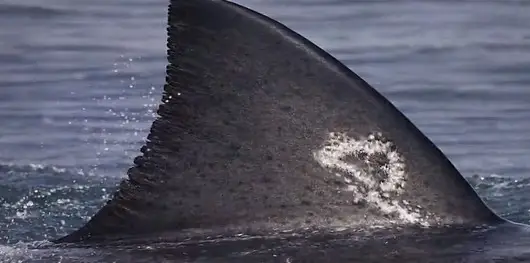
Not long after, she finally appeared, showing the distinctive rose-like marking on her dorsal fin that gave her the name.
Big Rose was estimated to measure about 20 feet from nose to tail and is believed to be more than 50 years old, making her one of the oldest sharks in those waters.
Although the researchers were unable to get close enough to tag her, they suspected she may have been pregnant because of her extraordinary width.
White sharks in the North Atlantic are still not especially well understood, and scientists continue to piece together where the biggest individuals gather, feed and migrate. The species is also managed and protected in U.S. Atlantic waters, and research has suggested northwest Atlantic numbers have increased since protections were put in place in the 1990s.
With shark sightings increasing in the region while many of the animals seem to stay deep underwater, some researchers have wondered whether there may be a hidden gathering place that has not yet been found.
As impressive as Big Rose is, she is still not considered the largest shark of her kind.
That distinction is often given to Deep Blue, another female great white thought to measure 20 feet or more and believed to be around the same age as Rose.
Deep Blue was first spotted in Mexico by researcher Mauricio Hoyos Padilla, and she has also featured during Shark Week.
She is widely regarded as non-aggressive toward humans, other sharks, and dolphins, but that still does not make seeking out a giant shark a good idea.