

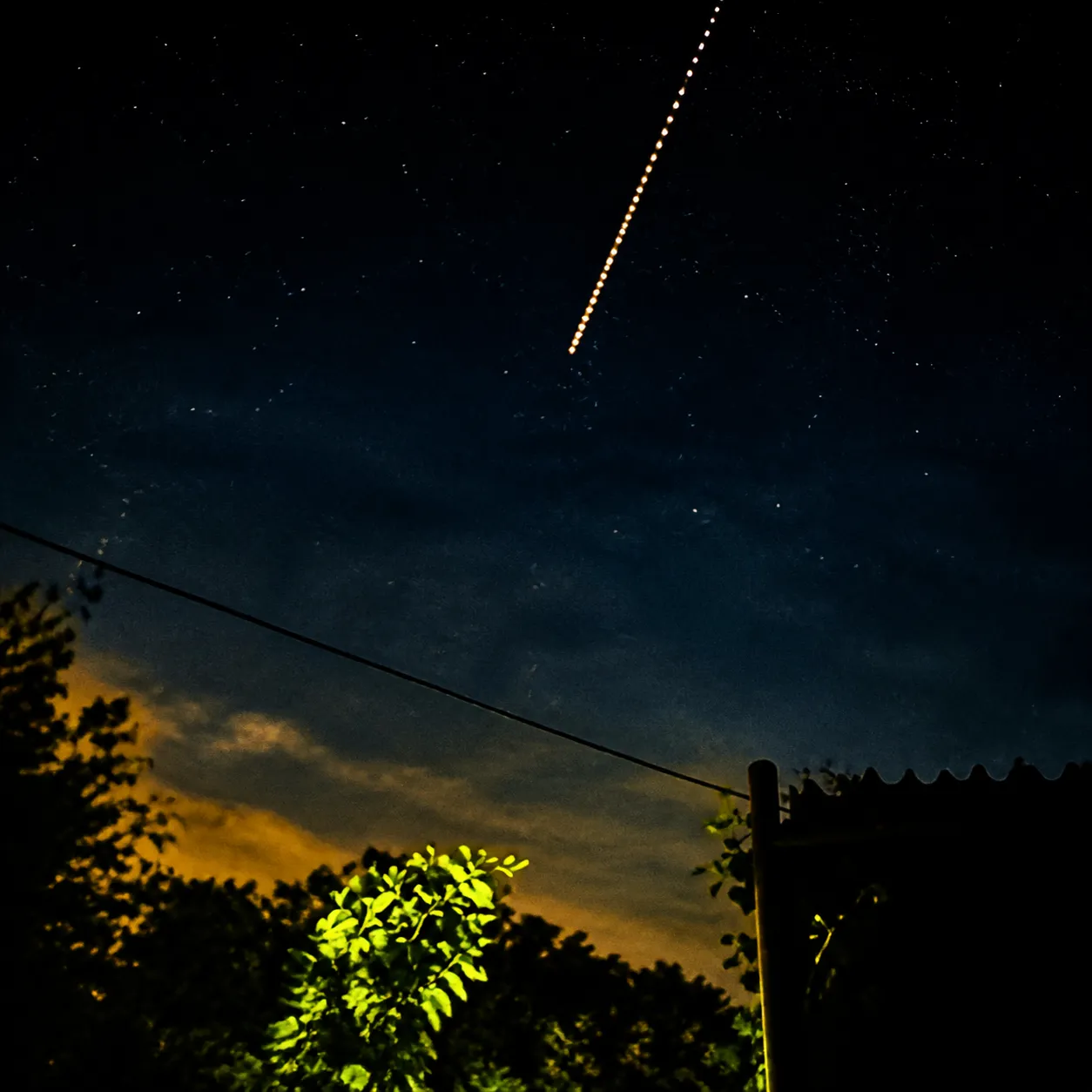
Brits flooded social media Saturday night after a string of strange lights appeared in the sky, sparking fears of an alien invasion.
The illuminous formation, spotted across multiple UK locations on August 22, sent X users into a frenzy as videos showed a long line of white dots moving slowly through the darkness before disappearing. Witnesses from Glasgow to Northampton posted footage and frantic questions about the bizarre sighting.
“What tf did I just see in the sky? ( UK ) Is this aliens? Missiles?” One user wrote on X. Another user posted: “Very VERY strange flight pattern over Glasgow tonight??? I’m not a UFO guy but….!”
A third person sharing video wrote: “What on earth was this in the night sky. Straight line of slow moving lights that disappear. Ufo??”
Other social media users responded with similar confusion, with one person replying: “I saw it from Northampton in the east mids, was well confused,” Another said: “Anybody else in Glasgow see that big line of lights in the sky about 15 minutes ago? What the f*** was that?”
The mystery was solved quickly by more experienced skywatchers who recognized the pattern. One user wrote: “The first time I saw it was two days after the first lockdown and the train was much much longer so I genuinely thought we were being invaded.”
Another clarified for the alarmed posters: “Starlink friend! Got me thinking the same thing years ago. They always form in a line like that.”
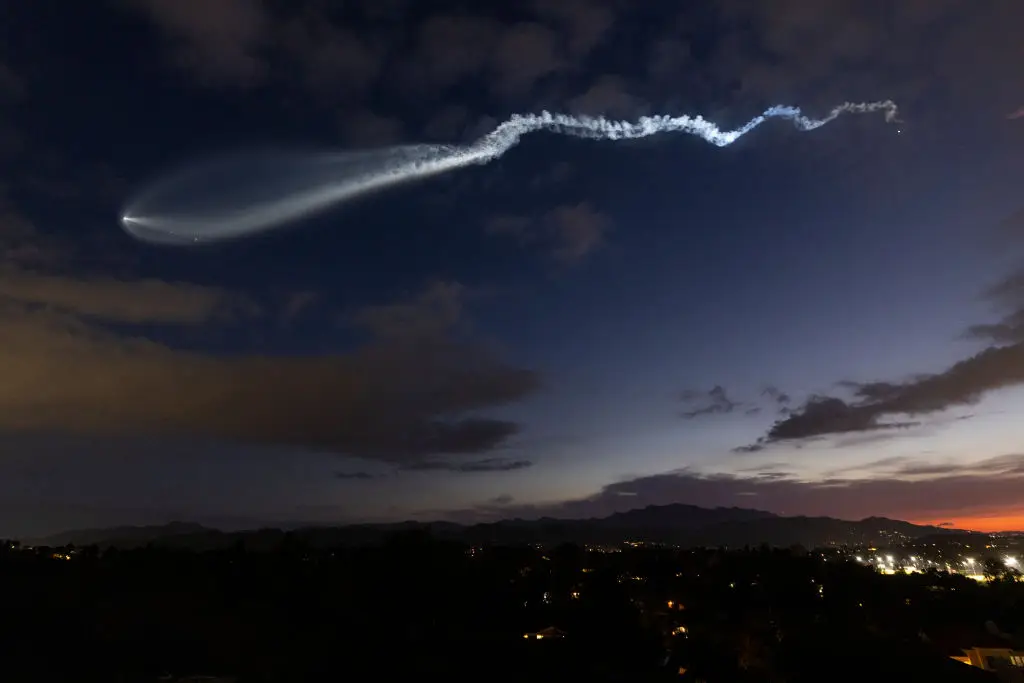
The lights were identified as Elon Musk’s Starlink satellites, part of SpaceX’s growing constellation of internet-providing spacecraft. The satellites operate in low Earth orbit at roughly 550 km above Earth, receiving internet signals from ground stations and transmitting them to users’ dishes. Because each satellite covers only a small area, thousands are required for continuous global coverage.
After launching aboard Falcon 9 rockets, the satellites appear as a train of bright dots moving across the night sky in formation, creating the exact linear pattern that confused Saturday’s observers.

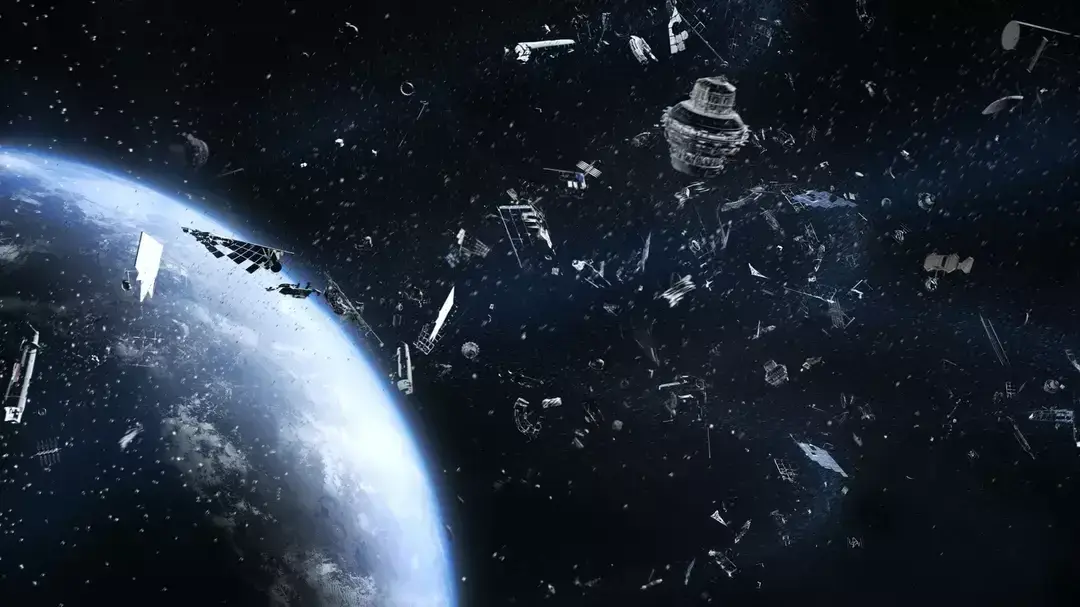
The Starlink network has faced growing scrutiny over safety concerns. There are currently around 9,000 satellites in low Earth orbit, raising fears about the Kessler syndrome theory first proposed by NASA scientists Donald Kessler and Burton Cour-Palais in 1978. The theory warns that crowded orbits could trigger a chain reaction of collisions, creating debris rings that would make low Earth orbit uninhabitable for new satellites and threaten essential services from crop monitoring to international communications.
“Spent rockets, satellites and other space trash have accumulated in orbit increasing the likelihood of collision with other debris,” NASA has explained regarding the growing risk.
Earlier this year, concerns were raised about satellites falling out of the sky and potential impacts on human health. Michael Nicolls, vice president of Starlink engineering at SpaceX, announced plans to lower nearly half of the constellation from approximately 550 kilometres to around 480 kilometres over the course of this year.
He shared the plans on social media, revealing the ‘significant reconfiguration’ would ‘increase space safety in a number of ways.’ Nicolls explained that atmospheric density decreases as solar minimum approaches, meaning ballistic decay increases at any given altitude, so spacecraft at lower altitudes will take less time to deorbit through atmospheric drag if they cannot actively deorbit. The change also reduces orbital congestion, addressing Kessler syndrome fears.
The satellite train’s distinctive straight-line formation and slow movement across the UK night sky led multiple witnesses to conclude that extraterrestrial contact or missile activity might be underway. The confusion spread rapidly across X as users in different cities posted similar sightings within minutes of each other, amplifying the sense that something extraordinary was occurring on a national scale. The episode demonstrated how the increasingly common Starlink launches continue to catch unsuspecting observers off guard, even years after the first satellites began appearing in the sky.
SpaceX continues expanding the network that caused Saturday’s brief alien scare.