

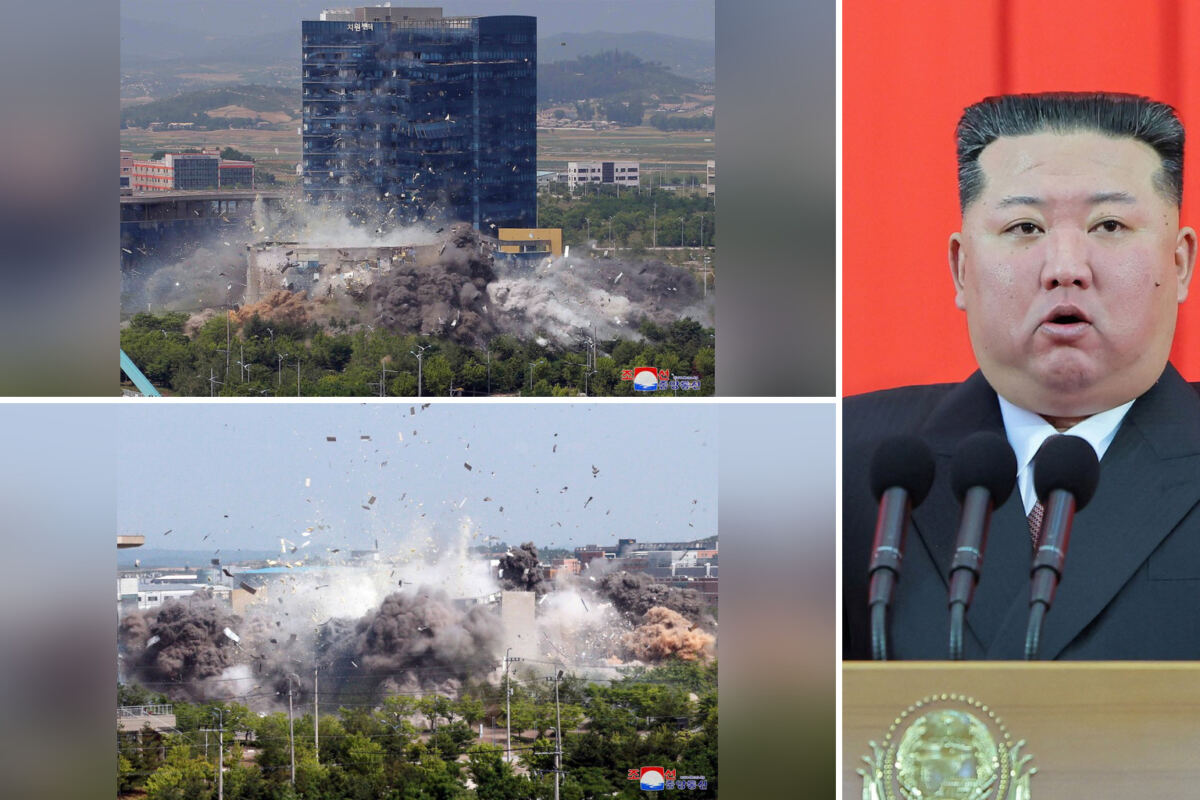
A Seoul court has ordered North Korea to pay 44.6 billion won in damages for destroying the inter-Korean liaison office in 2020.
The Seoul Central District Court issued the ruling Wednesday in a case brought by South Korea’s government, marking the first time Seoul has sued Pyongyang rather than leaving such action to individual litigants. The damages convert to roughly $32.5 million at current exchange rates. Officials have no practical mechanism to enforce collection against a government that has cut nearly all diplomatic contact and declared the South its foremost adversary.
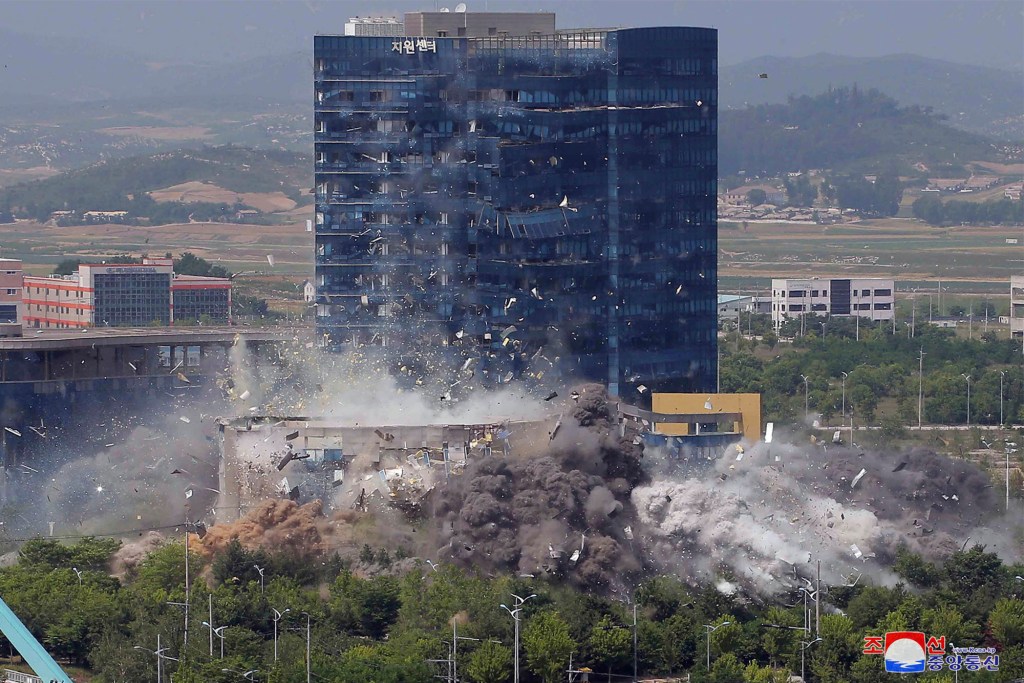
The lawsuit originated under former conservative president Yoon Suk Yeol, who was removed from office in December 2024 after his brief martial law declaration. His administration had pursued harder-line policies against Pyongyang, emphasizing trilateral security cooperation with Washington and Tokyo while condemning North Korean military assistance to Russia’s Ukraine invasion. South Korea filed the suit in 2023, characterizing the Kaesong detonation as an unlawful breach of bilateral agreements that wrecked mutual trust.
The current government of liberal President Lee Jae Myung, who took office last year, has shifted toward engagement rhetoric. South Korea’s Unification Ministry, which manages cross-border affairs, responded to the ruling by urging renewed diplomacy between the divided Koreas. “All issues between the South and North can be resolved through dialogue and cooperation,” the ministry stated, adding that it respects the court’s decision. North Korean state media had not issued any immediate response to the judgment.
The destroyed building sat in the North Korean border city of Kaesong, constructed with Southern funds as a symbol of rapprochement during the warmer period of 2018. That June, former liberal president Moon Jae-in had joined Kim Jong Un in opening the facility following their third summit, part of a flurry of diplomacy that also produced Kim’s first meeting with then-U.S. President Donald Trump. The office provided a rare channel for direct communication between the technically-warring governments.
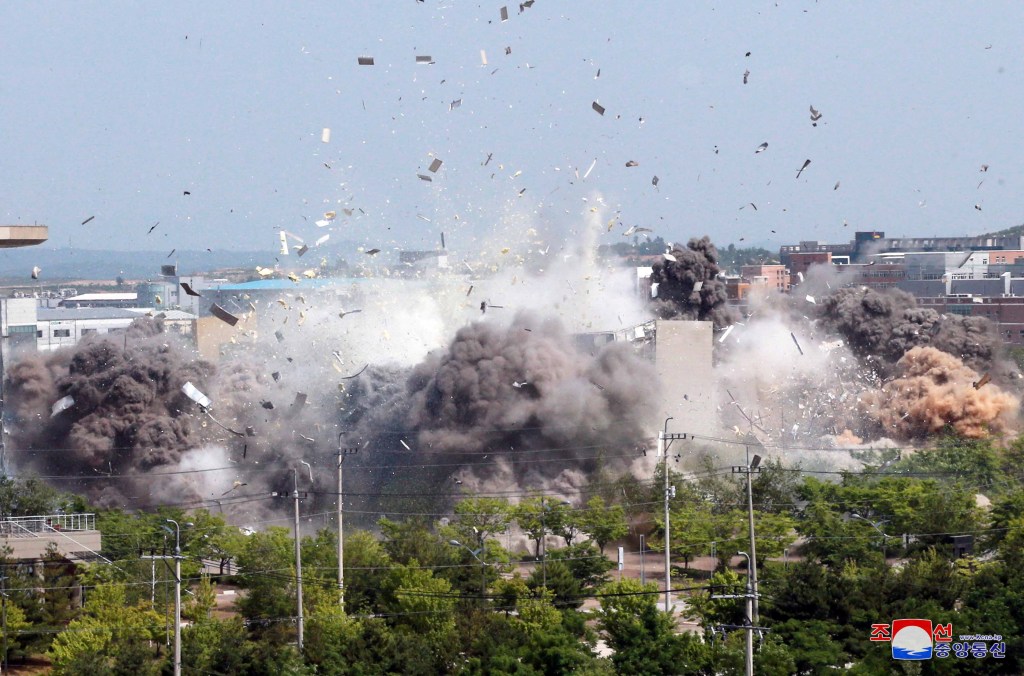
Pyongyang began withdrawing from the arrangement in January 2020, citing pandemic border closures. Tensions escalated that spring as North Korean defectors and activists launched balloon-borne leaflets criticizing the Kim regime from Southern territory. After Seoul failed to halt the propaganda flights, North Korea’s military demolished the empty liaison office with explosives in June 2020. The destruction was widely interpreted as both retaliation against the South and a pressure tactic aimed at breaking the stalemate in nuclear negotiations with Washington.
Those talks had collapsed after the second Trump-Kim summit in Hanoi during February 2019, where American negotiators refused Pyongyang’s offer of partial nuclear disarmament in exchange for sweeping sanctions relief. The diplomatic unraveling preceded years of accelerated North Korean weapons testing and an ever-deepening isolation that Kim has only partially offset through strengthened partnerships with Moscow and Beijing.
Trump, now in his second presidential term, has signaled renewed interest in reviving direct contact with Pyongyang. Last month he directed the Pentagon to scale back a major U.S.-South Korea military exercise, pointing to what he described as a good relationship with Kim. The overture has so far drawn no positive response from North Korea, whose government has instead demanded that Washington abandon its insistence on denuclearization as a precondition for any return to talks.
Kim has meanwhile pressed forward with expanding his nuclear and missile programs while committing substantial military resources to Russia’s war effort, including thousands of deployed troops and large weapons shipments to support President Vladimir Putin’s forces. The North Korean leader has formally enshrined South Korea as his primary enemy and rejected all meaningful inter-Korean dialogue.
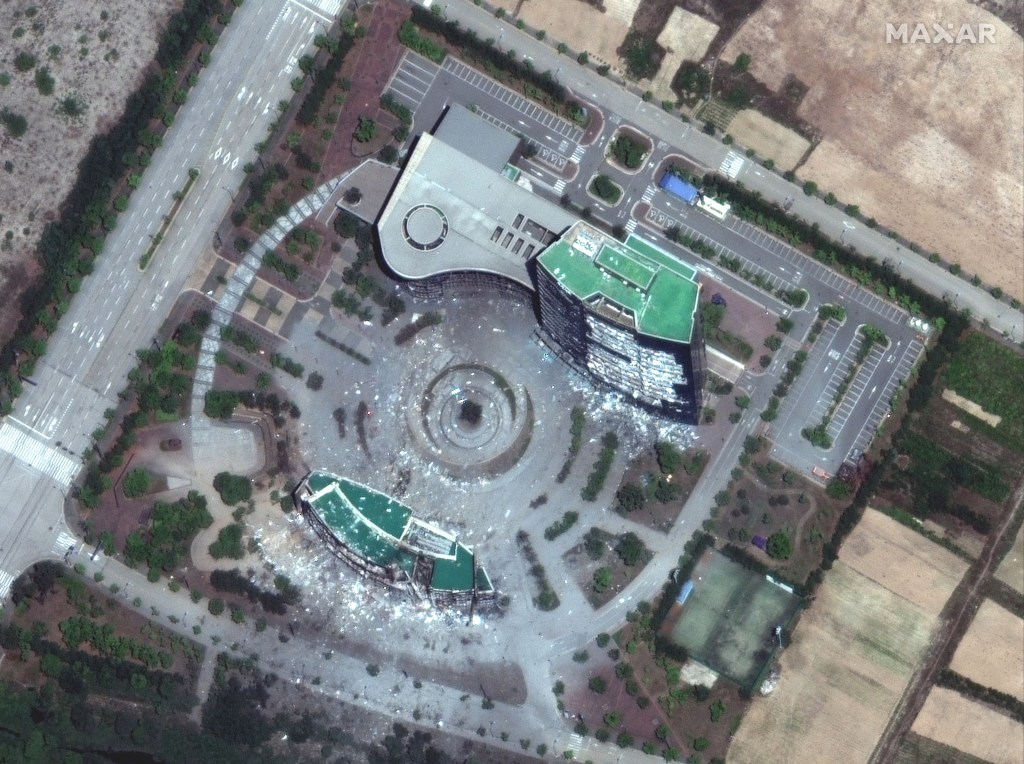
The court ruling thus arrives at a moment of profound diplomatic estrangement, carrying symbolic weight rather than any near-term prospect of compensation. Legal specialists note that previous individual lawsuits against North Korea over human rights violations and other matters have similarly produced uncollectible judgments, given Pyongyang’s non-participation in international enforcement frameworks and its refusal to recognize South Korean judicial authority.