

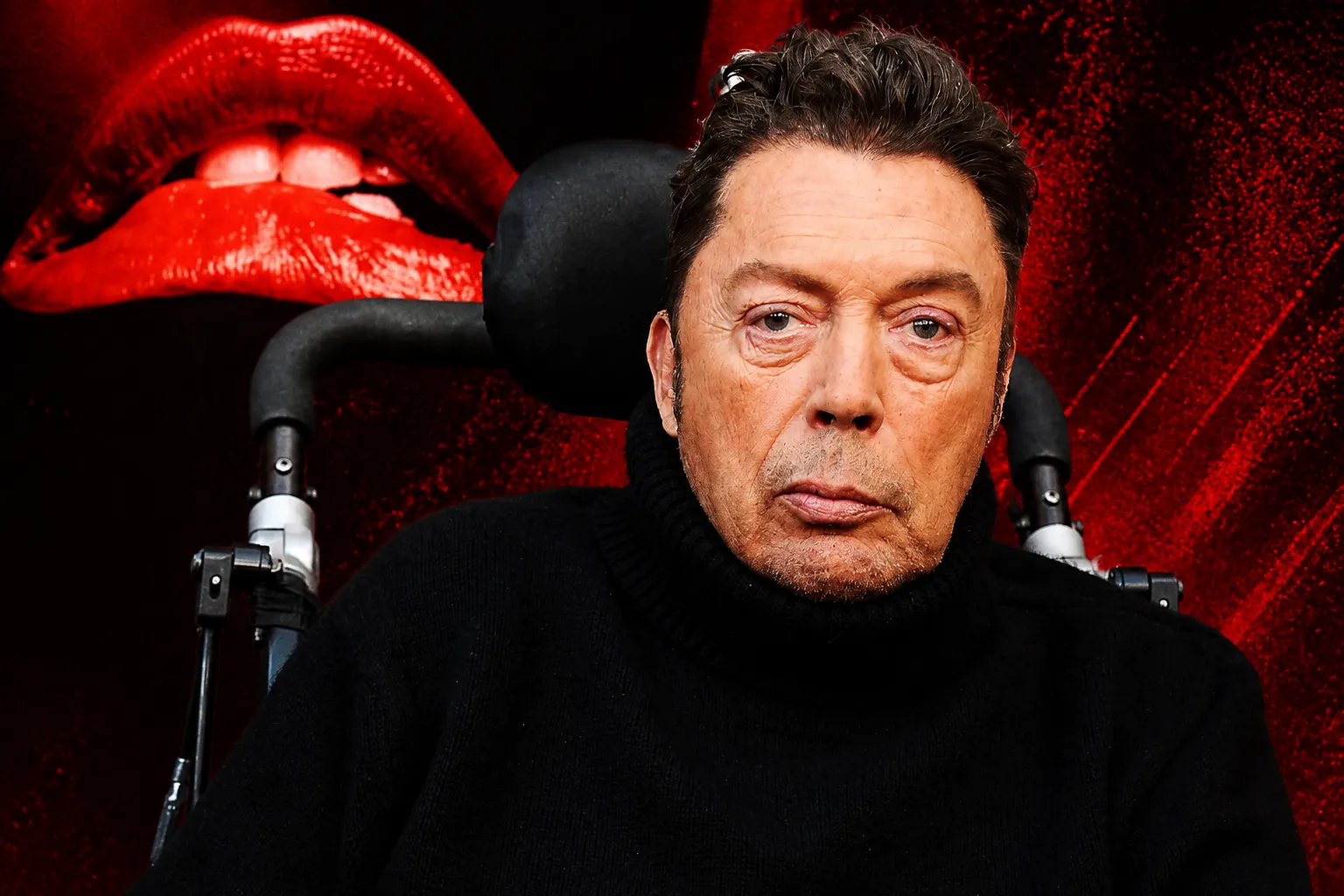
Tim Curry spoke about his health struggles in his final public appearance before his death at 80.
The British actor, known for his electrifying turn as Dr. Frank-N-Furter in “The Rocky Horror Picture Show” and his chilling portrayal of Pennywise in “It,” died peacefully at his home in Toluca Lake, Los Angeles, on Aug. 25, his representative Sean Katz confirmed in a statement. He was 80.
In a segment broadcast on CBS Sunday Morning, Curry addressed the physical limitations that defined his later years after a devastating 2012 stroke. The actor, who had remained largely out of public view, spoke with characteristic candor about his condition and his perspective on mortality.
“I want to earn it,” Curry said during the interview. “I want to earn the privilege of not being here. … I think I might very well embrace it.”
He added that it would be “very comforting to ‘go bye bye’,” though he clarified he was “not galloping toward it.”
Curry suffered a stroke in 2012 that initially left him confined to a wheelchair and unable to speak. The medical emergency required brain surgery and approximately a month of hospitalization, followed by extensive rehabilitation. He continued to work in limited capacity, primarily through voiceover roles including work on “The Wild Thornberries.”
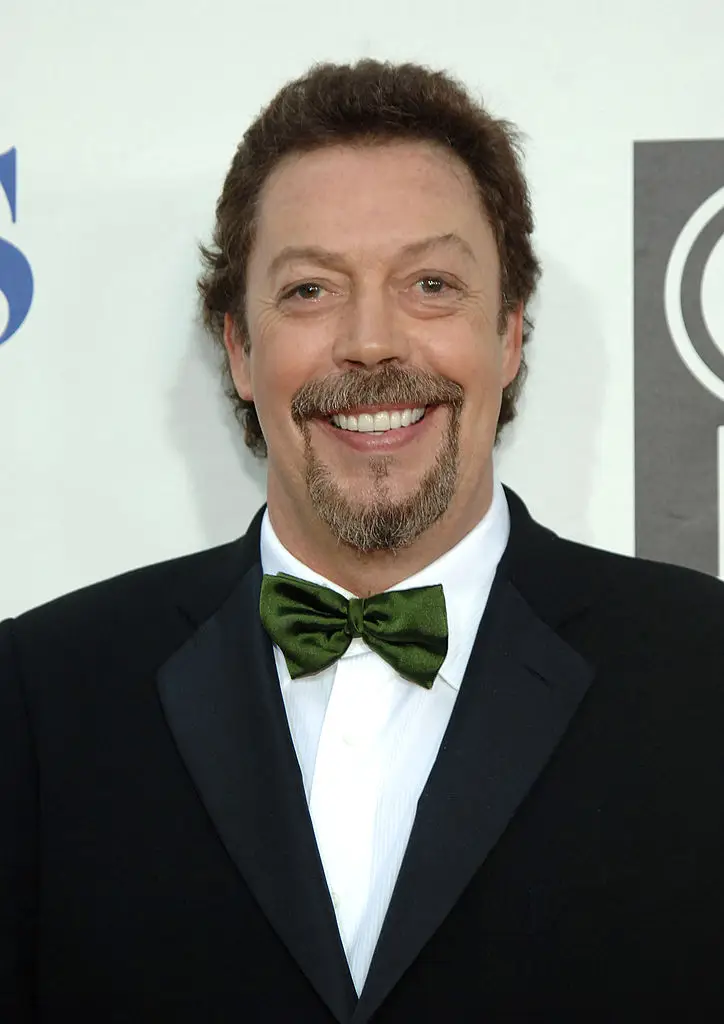
Opening up about the immediate aftermath of his stroke, Curry drew a connection to his father, James Curry, who had died of a stroke in 1958. “I knew that a lot of people didn’t survive a stroke, and that he was an exception. So I was scared,” he said.
He detailed the severity of his medical crisis: “I had two blood clots in my brain. I had brain surgery, and I was in the hospital for awhile. I think about a month. I had a certain amount of rehabilitation.”
One aspect of recovery particularly tormented the famously verbose performer. “I had to learn how to speak again that was very weird,” Curry recounted. “I hated not being able to speak because I have to be told to shut up a lot. I love words. I love to communicate.”
By the time of the interview, Curry noted he was not “paralyzed anymore,” though he remained “very sensitive” and experienced pain in his left arm and hand. He acknowledged these lingering effects were “very limiting” on his daily life and ability to work.
Despite these challenges, Curry rejected self-pity, attributing this resilience to his mother. “I don’t admire self-pity much,” he stated. “It’s one that I’m thankful for. Why are you so important that we have to pity you?”
Curry first exploded into public consciousness in 1975 as the corset-clad, eyebrow-arched Dr. Frank-N-Furter in “The Rocky Horror Picture Show,” a role he had originated on the London stage. The film’s transformation from box office flop to midnight-movie phenomenon made Curry an enduring icon of gender-bending theatricality and unapologetic excess. He would later bring similarly memorable intensity to roles including the Lord of Darkness in Ridley Scott’s “Legend,” Wadsworth the butler in “Clue,” and King Arthur in the Broadway production of “Spamalot.”
Katz’s statement emphasized the qualities those close to Curry would remember most. “Though widely known for his inimitable, flamboyant characters and colorful stage performances, his greatest legacies to those who knew him were his curious, expansive mind and generous, gentle heart, both of which remained open and filled with anticipation until his final breath,” the statement read.
Curry’s death prompted immediate tributes from across the entertainment industry, with fans and fellow performers alike celebrating a career that spanned stage, screen, and voice work across more than four decades.