

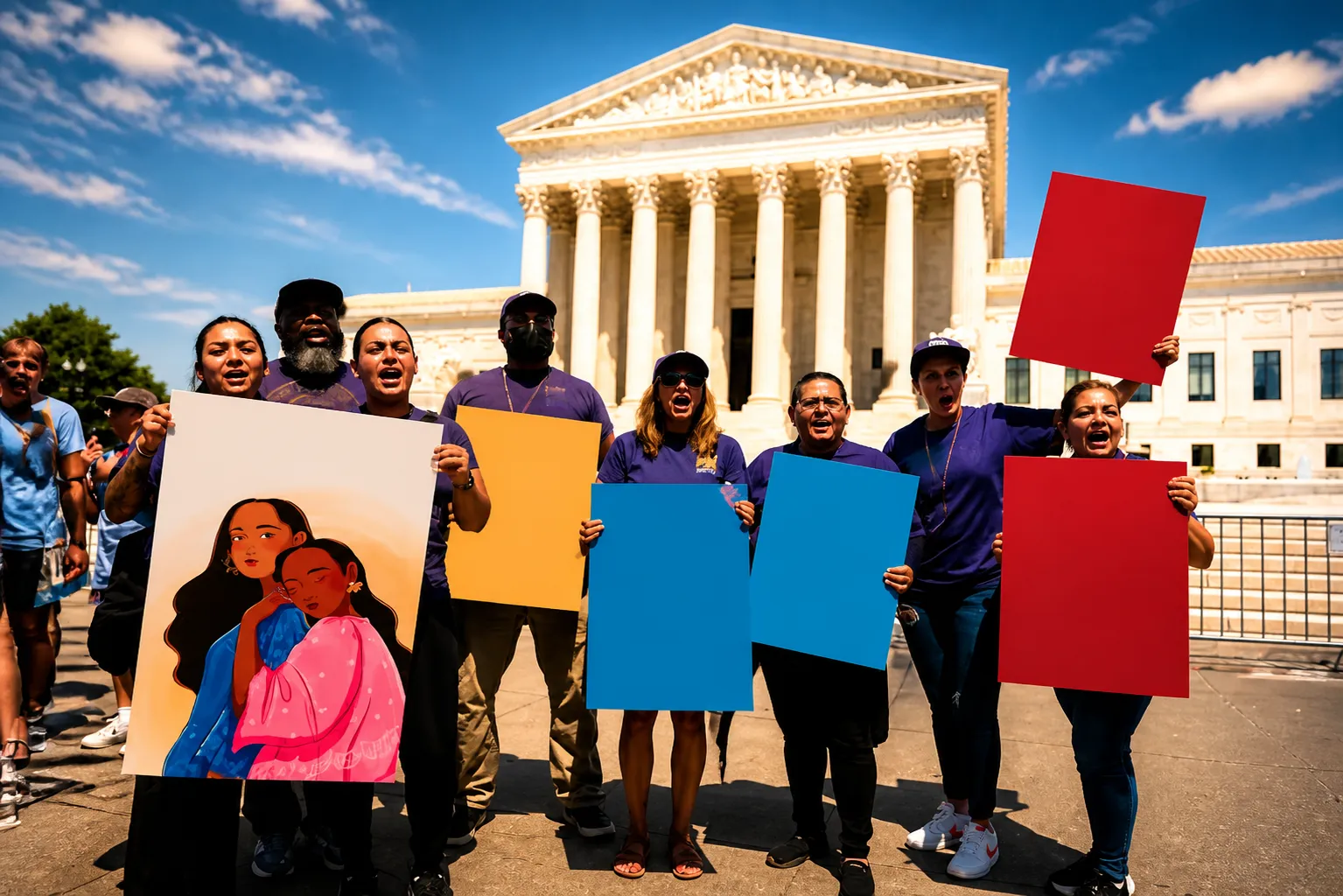
President Donald Trump did not follow through on his vow to seek a Supreme Court rehearing on the birthright citizenship case, as the deadline for filing such a petition has now passed. The 25-day window to request reconsideration of the June 30 ruling closed on July 27, with no filing submitted by the Trump administration.
The Supreme Court’s 6-3 decision in Trump v. Barbara struck down Trump’s Executive Order 14160, which sought to deny automatic citizenship to children born in the United States to parents who are present unlawfully or temporarily. Chief Justice John Roberts, writing for the majority, held that the 14th Amendment’s Citizenship Clause guarantees citizenship to all children born on U.S. Soil, regardless of their parents’ immigration status.
Trump signed the executive order on January 20, 2025, his first day back in office, as a centerpiece of his hardline immigration agenda. The order would have applied to children born after February 19, 2025, denying citizenship to those whose mothers were either unlawfully present or lawfully but temporarily in the country, if their fathers were not U.S. Citizens or lawful permanent residents. The order directed federal agencies including the State Department and Social Security Administration to deny benefits such as passports and Social Security numbers to affected children.
However, the policy never took effect. Federal judges across the country—in New Hampshire, Washington, Maryland, and Massachusetts—immediately blocked the order, finding it violated the Constitution. Every judge who reviewed the measure concluded it likely violated the 14th Amendment. The cases ultimately made their way to the Supreme Court, which heard oral arguments on April 1, 2026, with Trump himself attending the hearing.
Just days after the Supreme Court issued its decision on June 30, Trump posted on Truth Social that he would be “asking for a Rehearing by the United States Supreme Court, IMMEDIATELY.” He criticized the ruling as “a miscarriage of justice” that would “destroy America if they don’t change their absolutely insane decision.” He also claimed the decision was wrong because “American Citizenship is not for sale.”
But despite his public declaration of intent, Trump’s administration did not file a petition for rehearing before the Monday, July 27 deadline. The Supreme Court’s electronic docket for the case shows no rehearing petition or request for an extension of time as of the deadline’s passage on July 28.
The odds of success for such a petition would have been extremely long. The Supreme Court has not agreed to rehear an argued case in more than 50 years, with the last time being in 1965. The last time the court reversed a decision it had previously made in an argued case was nearly a decade earlier, in 1956. Legal experts have noted that granting a rehearing petition would require at least one justice who ruled against Trump to change their mind, along with a majority of the entire court agreeing to reconsider.
The majority opinion was written by Roberts and joined by four other justices: Sonia Sotomayor, Elena Kagan, Amy Coney Barrett, and Ketanji Brown Jackson. Three justices—Samuel Alito, Neil Gorsuch, and Clarence Thomas—dissented and said they would have upheld the order. Justice Brett Kavanaugh took a middle position, finding the order unconstitutional not under the Constitution itself, but under existing federal immigration law, suggesting that Congress could potentially pass new legislation restricting birthright citizenship if it chose to do so.
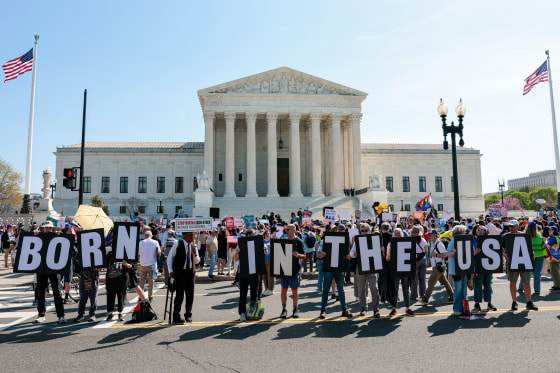
Roberts emphasized in the majority opinion that the Citizenship Clause of the 14th Amendment has been consistently understood for 128 years to guarantee citizenship to children born in the United States and subject to its jurisdiction. “Citizenship, then and now, was the right to have rights—to freely participate in our political community,” the chief justice wrote. “The Framers of the Fourteenth Amendment extended that promise to every free-born person in this land. We keep that promise today.”
The administration has not responded to inquiries about why the rehearing petition was not filed. Trump has indicated he may pursue alternative paths to address birthright citizenship, calling on Republicans in Congress to pass legislation restricting the practice. However, public opinion polls consistently show strong support for birthright citizenship among the American public, and experts note that a constitutional amendment would likely be required to overturn the Supreme Court’s decision.
The case, formally titled Trump v. Barbara, involved challenges from multiple organizations including the American Civil Liberties Union, immigrant rights groups, and several states. The plaintiffs argued successfully that Trump’s order violated both the Constitution and a longstanding federal statute codifying the citizenship principle.