

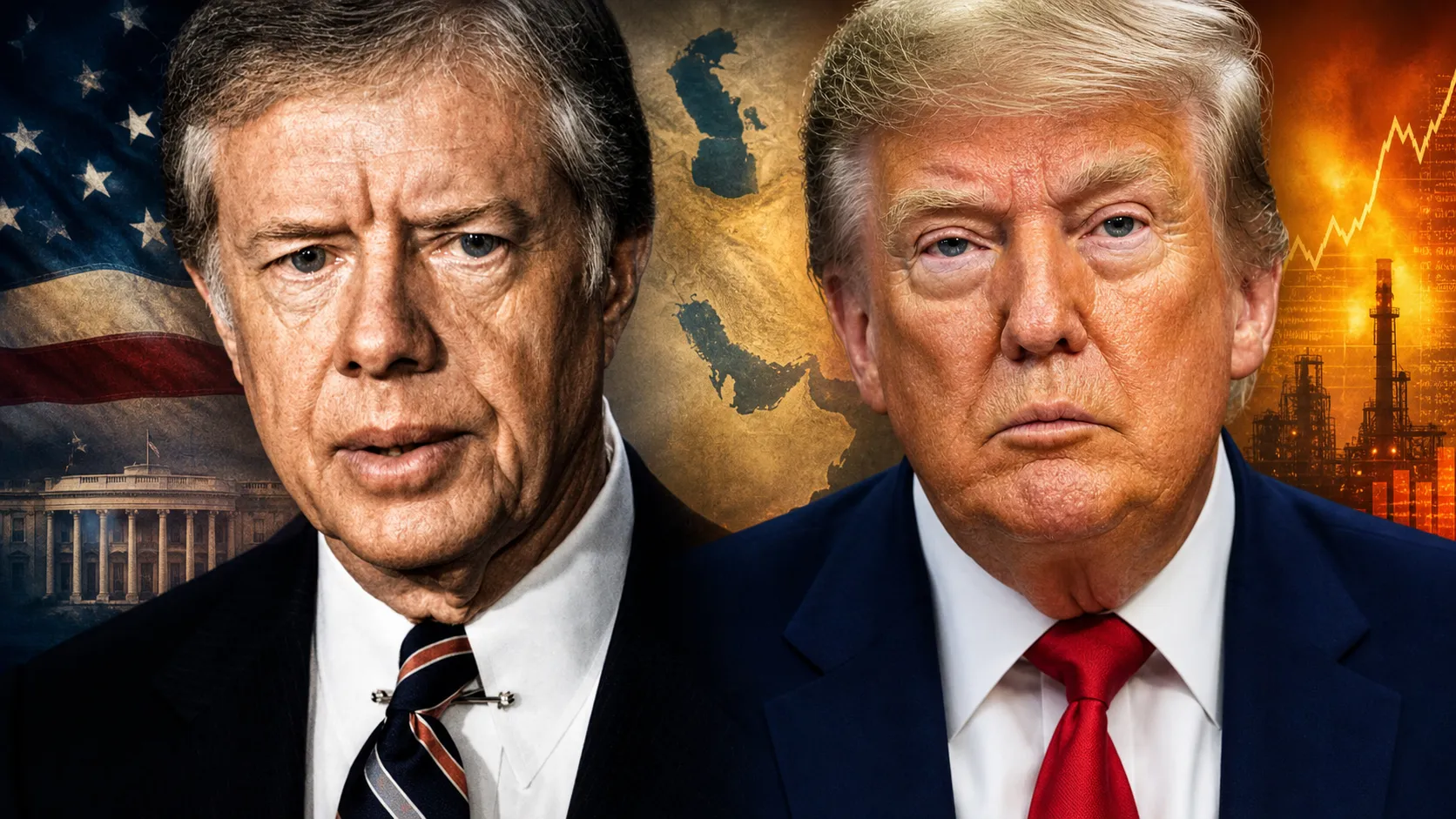
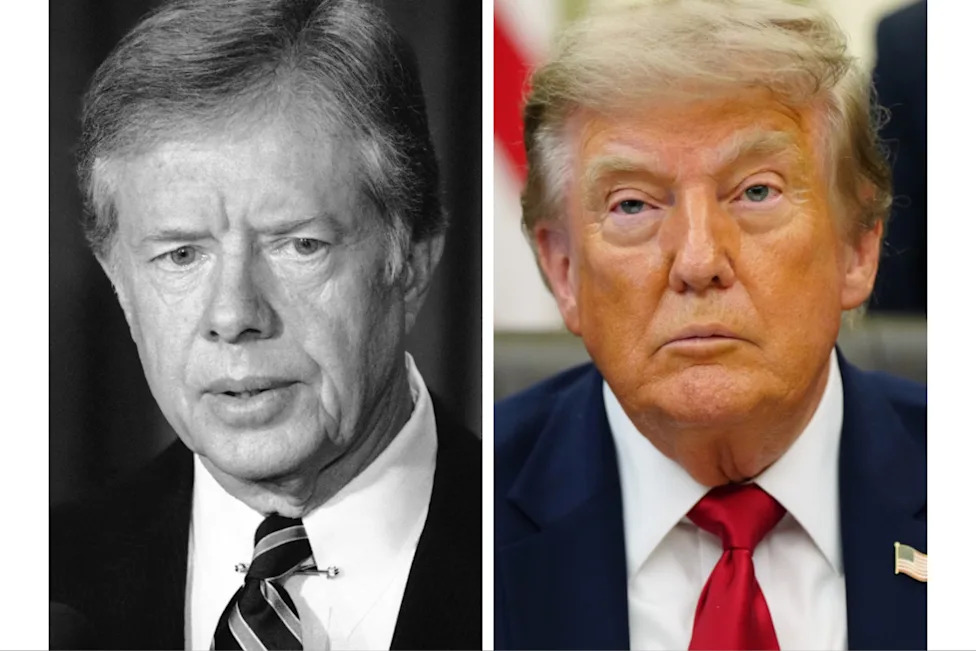
President Donald Trump has adopted a noticeably different tone when discussing former President Jimmy Carter, moving away from the harsh ridicule that once defined his political attacks. The shift comes as Trump confronts remarkably similar challenges that derailed Carter’s presidency: an intractable conflict in Iran and stubborn inflation that has resisted his economic prescriptions.
For years, Trump made Carter a punchline, wielding the 39th president as a symbol of Democratic weakness and incompetence. But in recent months, his sentiments have grown more wistful and seemingly respectful as he grapples with the very problems Carter faced decades ago.
When asked last month why he did not dispatch U.S. Special Forces to forcibly remove Iran’s enriched uranium, Trump responded, “I didn’t feel like being Jimmy Carter,” a reference to the failed 1980 raid that killed eight American servicemen. His comment reflected a newfound understanding of the political risks involved in Iran policy—something notably absent when he previously used Carter as a simple punchline.
In March, Trump further demonstrated his changed perspective by saying the failed 1980 hostage rescue mission “cost them the election” against Ronald Reagan. This observation about historical consequences displayed a sophisticated awareness of political realities that contrasts sharply with his earlier dismissive approach to Carter’s legacy.
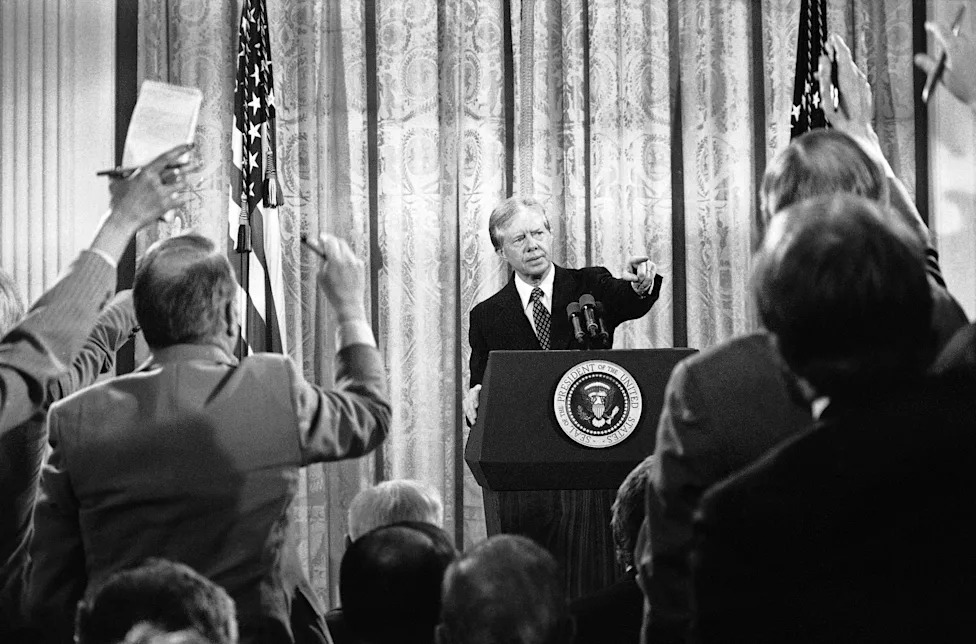
The parallels between the two presidents are becoming harder to ignore. Trump initiated a war with Iran in conjunction with Israel on February 28, a conflict that has escalated despite a preliminary memorandum of understanding signed in June. Consumer prices rose 4.2 percent in May from a year earlier, marking a three-year high. Though that inflation rate declined slightly from June to August, driven initially by lower gas prices from the ceasefire, the agreement has since collapsed as Iran resumed attacks on commercial shipping in the Strait of Hormuz.
When asked whether American financial concerns motivated his Iran negotiations, Trump replied, “Not even a little bit,” stating he did not think about Americans’ financial situation in that context. More recently, when told about inflation hitting a three-year high, Trump told reporters in the Oval Office: “I love the inflation,” suggesting the numbers were lower than anticipated and would plummet once the war ended. The administration’s position, expressed through White House spokesperson Olivia Wales, is that Trump “will never allow Iran to have a nuclear weapon” and “remains laser-focused on implementing his proven economic agenda to lower costs.”
The contrast with Carter’s record remains stark in many respects. Carter faced peak inflation of 14.7 percent in April 1980. While Trump’s inflation numbers are lower in absolute terms, both presidents confronted the political liability of rising prices amid foreign policy challenges. Carter was also confronted by control of the Strait of Hormuz, declaring during his 1980 State of the Union address that the situation “demands the participation of all those who rely on oil from the Middle East and who are concerned with global peace and stability.”
Beyond their economic and foreign policy struggles, the two men differ profoundly in character and governance. Carter was married to his wife, Rosalynn, for 77 years, was deeply religious, and pledged to “never knowingly lie to the American people.” Trump is twice divorced and offers what critics describe as a never-ending onslaught of falsehoods. As president, Carter placed his family’s peanut business in a blind trust. Trump’s control of the Trump Organization has transferred to his sons, but he reported taking in nearly $1.2 billion from crypto businesses last year while continuing to benefit financially from his presidency in various ways.
Carter won the Nobel Peace Prize in 2002, an award Trump has repeatedly claimed to deserve more than any past recipient. Carter also declared in 1977, “We are now free of that inordinate fear of communism,” while Trump has seized on political developments to stoke new fears about communism.
Notably, Trump recently listed some of Carter’s accomplishments on the “Walk of Fame” he installed along the White House Colonnade, a gesture that stands apart from his displays for other Democrats, which include biting attacks on Barack Obama and Joe Biden.
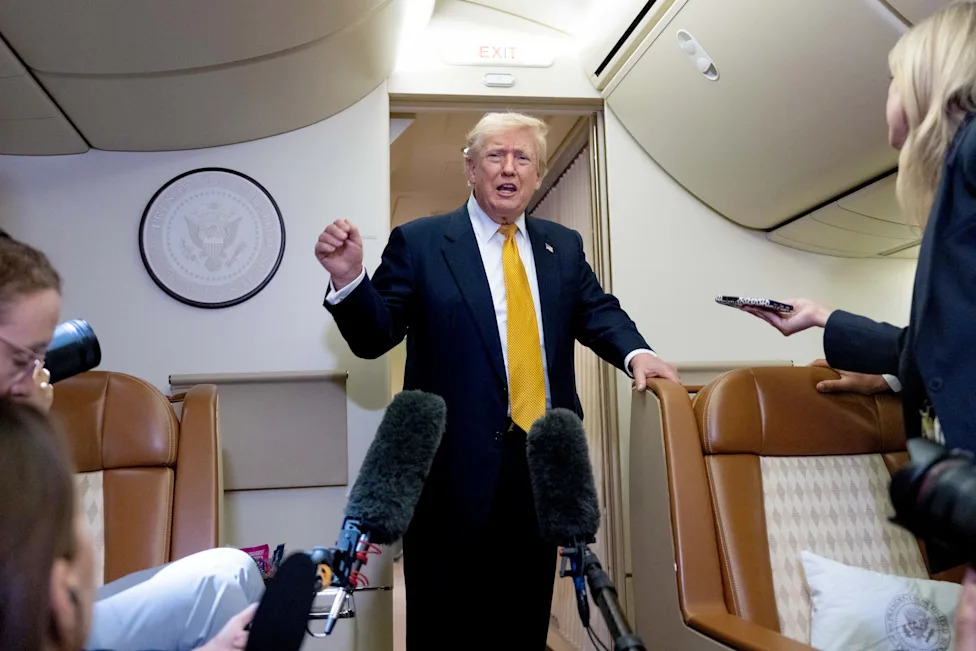
Some observers interpret Trump’s shifting rhetoric as evidence of dawning recognition. Author Jonathan Alter, who wrote “His Very Best: Jimmy Carter, A Life,” said: “I think it is dawning on him—it’s getting through even his thick skull—that he’s kicked over a hornet’s nest and his presidency might be remembered for some of the same things Jimmy Carter’s presidency is.”
Not everyone agrees with this interpretation. Kori Schake, a former member of George W. Bush’s National Security Council, said she does not think Trump is genuinely reassessing Carter, noting that Trump does not “stitch facts together and create theories.”
The president’s focus on legacy considerations appears genuine. He has increasingly referenced past presidents in recent weeks, praising William McKinley’s support for tariffs and Teddy Roosevelt as a “great he-man.” He cited avoiding the “economic catastrophe” that befell Herbert Hoover as a reason for reaching the now-imperiled Iran ceasefire. “I’m a student of a lot of history,” Trump said this week, a statement that would have seemed improbable during his first term, when he frequently compared his populist streak to Andrew Jackson.
Whether Trump’s evolved commentary on Carter reflects genuine reassessment or tactical positioning remains an open question. What is clear is that the president who once used Carter as a reliable political weapon now finds himself navigating similar treacherous terrain, forced to confront both historical parallels and the sobering weight of presidential responsibility.