

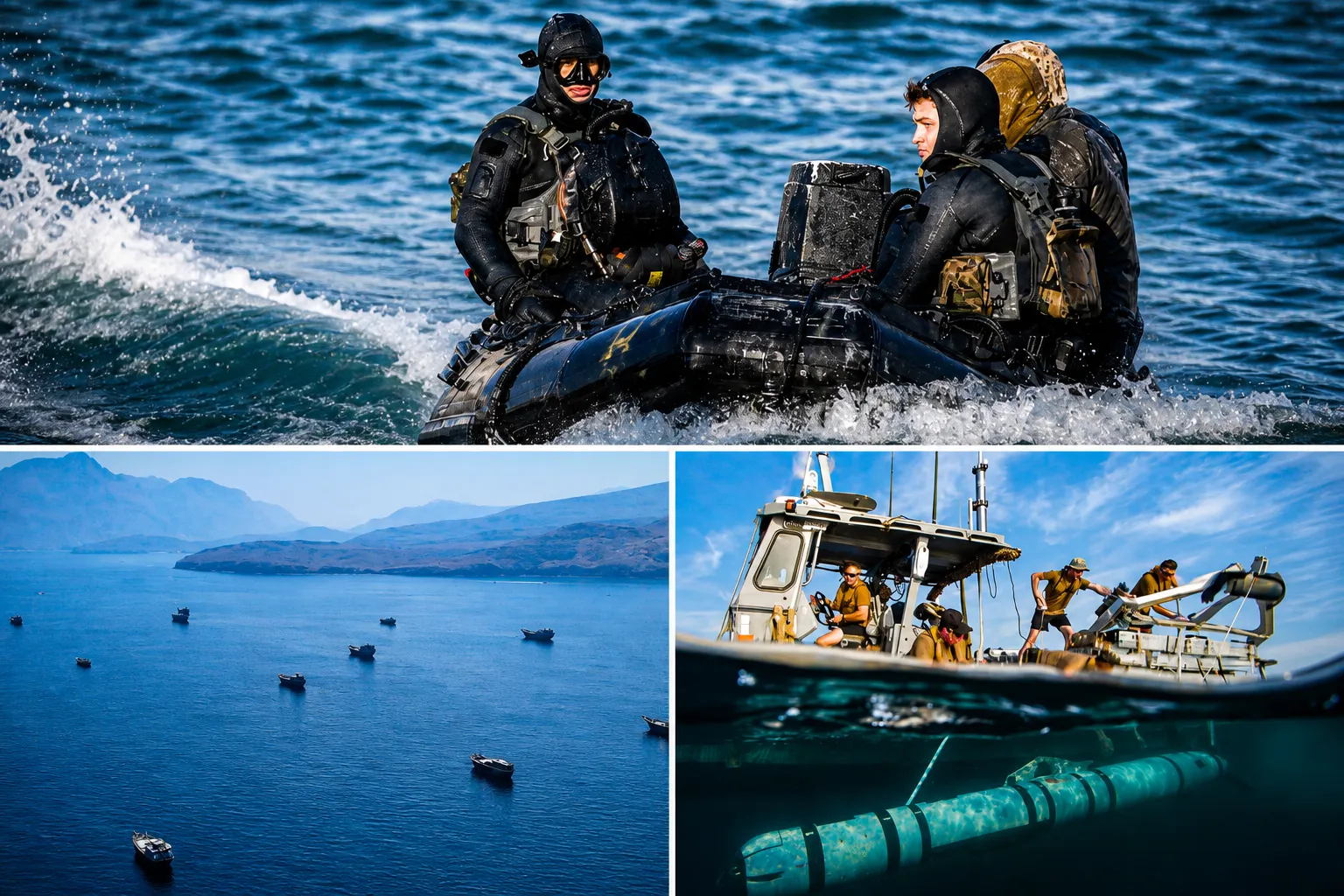
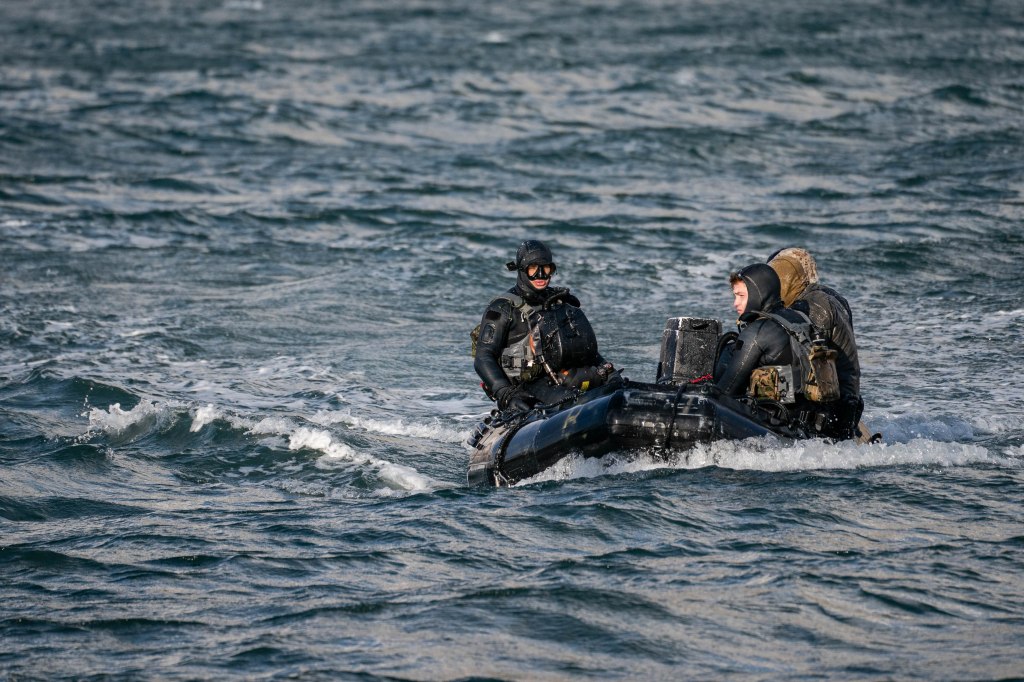
The US Navy wrapped a secret four-month mission to clear Iranian mines from the Strait of Hormuz using SEAL divers, robot boats and advanced sonar, the Financial Times reported.
The covert operations unfolded mostly under cover of darkness, with elite divers making repeated perilous trips through the critical oil shipping lane. Armed with unmanned underwater craft and drone vessels, the teams methodically located explosives and secured each zone before attempting destruction. The SEALs first found the bombs and cleared the surrounding area, then faced the most hazardous phase of the lengthy operation.
“That is usually followed up by a navy diver who’s got to get in the water and approach the mine, and then put a charge on it and destroy it,” Bill Hamblet, a retired US Navy captain who often operated in the Gulf, told the FT.
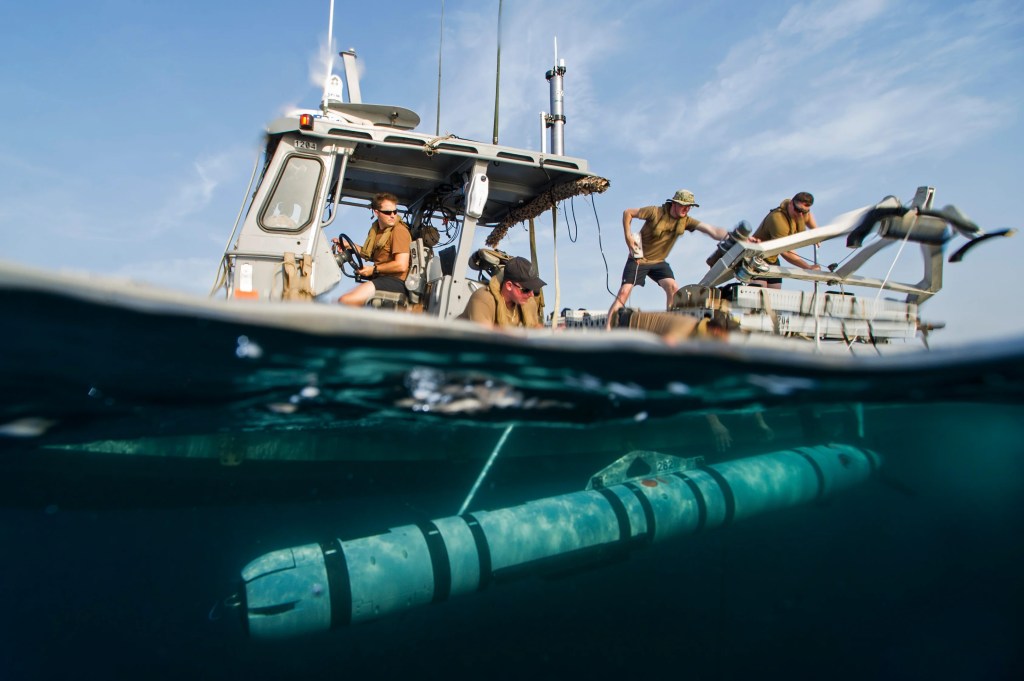
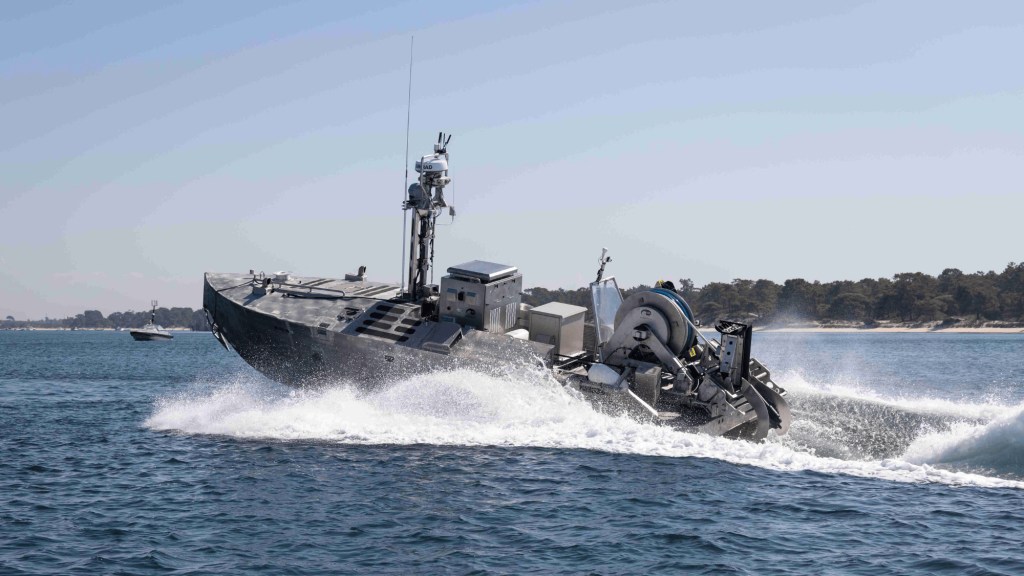
The Navy also likely employed robot drones to approach and blast the mines, a method that trades speed for reduced risk to personnel. Among the specialized equipment deployed was the Common Uncrewed Surface Vessel, a drone boat that tows advanced unmanned submersibles including the MK 18 Mod 2 Kingfish. That underwater vehicle carries sonar capable of scanning the ocean floor for hidden threats.
Despite the constant danger of the nighttime missions, no American casualties were reported throughout the operation.
The scale of the threat was substantial. The United Nations’ International Maritime Organization estimated in June that approximately 80 mines had been seeded along the strait, a waterway through which roughly one-fifth of global oil transports pass.
By August, President Trump announced that all mines had been eliminated from the strait. The declaration came as the US launched repeated attacks on Iran last week, triggered by what American officials described as an Iranian attempt to replenish explosives in the waterway.
The ease with which Iran can re-mine the passage has generated persistent unease among commercial vessels still attempting the journey. Tehran has repeatedly asserted that its mines remain active in the strait, and its military claimed responsibility for two attacks on oil tankers last week.
“It’s hard to know what to believe,” Ethan Connell, assistant director of Taiwan Security Monitor and a mines expert, told the FT. “Iran is certainly trying to re-mine.”
Shipping companies and maritime analysts generally agree that zones near the Omani coast, where US forces have been escorting vessels, are likely cleared. Confidence drops sharply regarding the status of remaining stretches of the waterway.
The combined threat of mines, missiles and drone strikes has driven visible traffic through the strait to its lowest point since May, according to data from Kpler maritime intelligence firm. Only two ships made the crossing on Saturday, with six following on Sunday. Most transits now occur through an Iran-approved route.
Assessing true traffic volume has grown increasingly difficult as captains resort to evasive tactics. Multiple vessels have been slipping through by disabling their transponders and sailing in darkness under US military escort, leaving conventional tracking methods blind to their passage.
The US military is expected to continue escorting commercial vessels through the Omani coastal corridor as tensions with Iran persist.