


Activists from Oakland launched a “Cancel Piedmont” campaign calling for the wealthy enclave’s abolition over stark racial and economic divisions.
Oakland resident Jesse Rosemoore, 44, began handing out “CANCEL PIEDMONT” stickers and selling $10 T-shirts bearing the slogan 14 months ago.
The professional transit planner now regards the campaign as a way to tackle the sharp racial and economic divide between Piedmont and the rest of the city.
A bitter battle has erupted over one of California’s wealthiest enclaves, with activists from neighboring Oakland calling for the predominantly white city of Piedmont to be “canceled.”
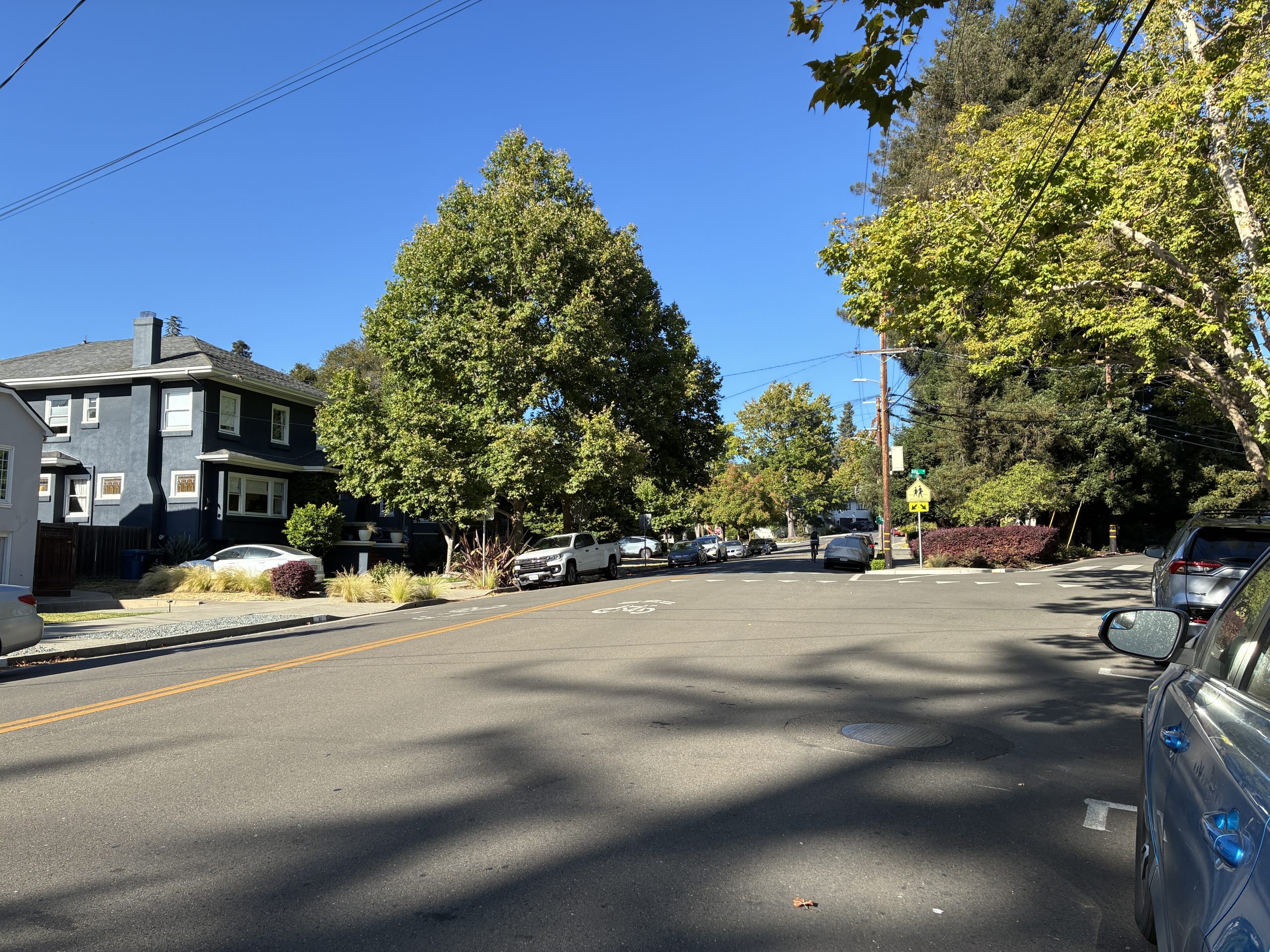
Piedmont is a 1.7-square-mile city of roughly 11,000 people that is surrounded by Oakland but maintains its own schools, police, parks and tax base.
Rosemoore’s stated mission cuts to the heart of what he sees as systemic inequality. “It really is ridiculous that a place like Piedmont even exists,”
he told the outlet.
“I felt like someone needed to bring even more attention to it, because what’s going on there says a lot about our society as a whole.”
The numbers tell a stark story.
The median price of homes in Piedmont is almost $2.6 million, which is more than three-and-a-half times that of Oakland’s.
Census data cited by the outlet shows Piedmont is roughly 70% white and around 1% black, while about one in five Oakland residents is black.
Geographic proximity makes these disparities brutal.
In some places, the divide comes down to a property line, with neighboring households potentially having access to different school districts and police departments depending on which side of the Piedmont-Oakland boundary they fall on.
Rosemoore and other “Cancel Piedmont” supporters argue the city’s efforts to confront its history of racial exclusion have not done enough to address the economic barriers that continue to make living there inaccessible to many people.
Those efforts have included hiring a consulting firm to address implicit bias and organizing community discussions focused on racial equity.
Piedmont officials have hit back.
“I know people want to always think that we’re horrible,” said Jean Chen Takazawa, the Piedmont Unified School District’s director of Diversity, Equity, Inclusion and Belonging.
“The reality is, we’re doing good work here. Stop judging us and let us just do the work.”
The city’s racial history casts a long shadow.
In 2017, Jeffrey Wieler, who was mayor at the time, resigned following his publication on Facebook of derogatory comments about Black Lives Matter and transgender people.
Four years later, the Piedmont Unified School District drew national attention when an email invited students to attend a “White Student Support Group” in order to discuss the verdict finding Derek Chauvin guilty in the case of George Floyd’s murder.
In 2022, the district drew attention again by attempting to secure 200 transfer students from Oakland to boost enrollment, which had been falling, and to increase diversity.
Other wealthy Bay Area communities face similar scrutiny.
Other wealthy Bay Area communities, including Atherton, have also grappled with exclusionary zoning, housing mandates and stark racial disparities.
But Piedmont stands out for the intensity of the backlash.
“We seem to be the only Bay Area town with a campaign to have us canceled,” Piedmont Mayor Betsy Smegal Andersen said.
Rosemoore has been careful to clarify his campaign’s intent. “Rosemoore, meanwhile, insists the campaign is not a personal attack on Piedmont residents.”
He also admits that Oakland has practically no real chance of annexing the enclave since such an action would need the approval of the Piedmont residents.
Instead, Rosemoore frames the entire controversy as a symbol.
Rosemoore sees Piedmont, Northern California’s only incorporated city completely surrounded by another city, as a particularly stark example of the wider Bay Area divide over race, housing and wealth.
His vision for change centers on housing. “Before you can truly be diverse and inclusive, you have to have the housing that supports it,”
said Rosemoore.
The fundamental issue remains simple yet unresolved: Piedmont exists as a legal and political island within Oakland, a demographic and economic fortress that has historically excluded people of color and now faces mounting pressure from those left outside its boundaries. The enclave’s response to these accusations of systemic racism—hiring diversity consultants and hosting community dialogues—has done little to satisfy activists who view such measures as performative gestures that fail to address the core problem of exclusionary wealth and zoning.