1. The new policy announcement and its scope
2. The context of Africa’s maternal health crisis
3. The impact on healthcare services and clinics
4. Harassment and attacks on healthcare workers
5. The efforts by US anti-abortion groups
6. Expert perspectives on consequences
7. Real-world examples and impact
The Trump administration has announced sweeping restrictions on U.S. Funding for organizations working on abortion-related issues overseas, potentially affecting up to $30 billion in aid and reshaping health policies around the world. The dramatic policy expansion comes as experts and healthcare workers in Africa warn the restrictions will deepen a maternal health crisis already claiming hundreds of thousands of lives annually on the continent.
The new rules represent a radical expansion of earlier U.S. Policy that cut assistance to overseas groups providing abortion-related services. In this iteration, the restrictions extend beyond family planning to cover gender-affirming care, diversity initiatives, and humanitarian aid. For the first time, the policy also applies to organizations delivering food, water, and medical assistance during conflicts and natural disasters.
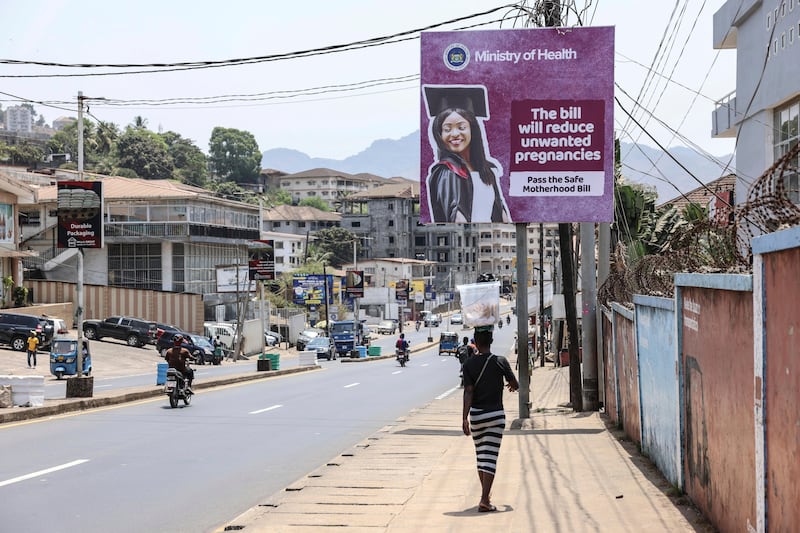
Africa is already the deadliest place in the world to be a woman of reproductive age. The region has the world’s highest estimated proportion of unsafe abortions and highest maternal mortality rates, with around 180,000 pregnancy deaths recorded every year across the continent. Sub-Saharan Africa accounts for 70 percent of global maternal deaths despite having the world’s fastest-growing population.
These restrictions build on years of intensive anti-abortion advocacy work carried out by conservative U.S. Nonprofits abroad, particularly in Africa where healthcare systems are highly dependent on foreign aid. An analysis by the Institute for Journalism and Social Change found that 17 U.S. Anti-abortion nonprofit groups spent more than $9.3 million across Africa in 2023 and 2024, on top of $16 million they sent to the continent from 2019 to 2022. Researchers said those figures represent an underestimate, as U.S.-based churches and some religious groups are not required to disclose their financial activities.
The effect on healthcare delivery has already begun to materialize. Throughout developing parts of Africa, U.S. Funding once provided free birth control, maternity checkups and other reproductive health care via mobile medical clinics and health centers. As the Trump administration has dismantled USAID and slashed funding for family planning, those services have abruptly vanished in many areas. In Tanzania, the funding gap for contraceptives alone is estimated at around $18.3 million this year, a deficit that researchers project would have prevented 1,600 maternal deaths in 2026 alone.
The consequences extend well beyond abortion care itself. Health workers in several countries report that contraceptive provision has dropped sharply, comprehensive reproductive health clinics have closed, and women in rural areas have lost their only accessible source of medical support. One organization in Uganda reported being forced to discontinue a project that reached 14,000 adolescent girls and young women with HIV prevention and economic empowerment services because the prime partner could not comply with the funding restrictions.
Beyond clinic closures and service cutbacks, healthcare providers and reproductive rights advocates across Africa have faced unprecedented harassment and intimidation emboldened by U.S. Support for anti-abortion groups. A 2024 report from Marie Stopes International documented online and legal attacks from U.S.-based anti-abortion groups and U.S.-funded local organizations against staff at reproductive health clinics in several African countries. In the Democratic Republic of Congo, health workers have been detained for days for providing legally permissible services before being released without charge. In Ethiopia, the head of a local office of U.S.-based Family Watch International has targeted and trolled members of reproductive health organizations on social media and released YouTube videos promoting anti-abortion misinformation. In Kenya, the names and addresses of staff at reproductive rights organizations have been published online, accusing them of murder, and staff members at private abortion clinics have been harassed by police and detained.
The impact on African governments’ ability to reform their own laws has proven significant. In Malawi, a government effort to reform abortion law stalled after officials feared losing U.S. Aid. Similar pressures have blocked reform efforts in Kenya, Senegal, Uganda, Ethiopia and Zimbabwe. Even as some African countries have moved toward liberalizing their abortion laws, U.S. Funding conditions have created an atmosphere of fear that constrains implementation and enforcement of those reforms. In June, representatives of 20 African countries finalized a draft charter at a conference in Ghana calling for rejecting sexual and reproductive health rights, with U.S.-based anti-abortion groups actively fundraising for the charter’s passage.
Research published in March projected that the sudden termination of USAID programs could cause maternal deaths to increase by an average of 45 percent across six highly vulnerable countries in West Africa. That would translate to approximately 1,000 additional maternal deaths in a single year among populations in humanitarian need. The findings highlight the sensitivity of maternal health outcomes to financing stability in fragile health systems.
Regional directors at reproductive rights organizations emphasize the contradiction between the stated goal of saving lives and the observable consequences. Healthcare providers and activists warn that while the Trump administration and anti-abortion groups say they are protecting lives, the documented result is more women dying. One regional reproductive rights advocate noted that the combination of advancing U.S. Ideology in Africa with these policy restrictions is “really concerning” and that the consequences are “going to be dire,” especially for women and marginalized communities.