

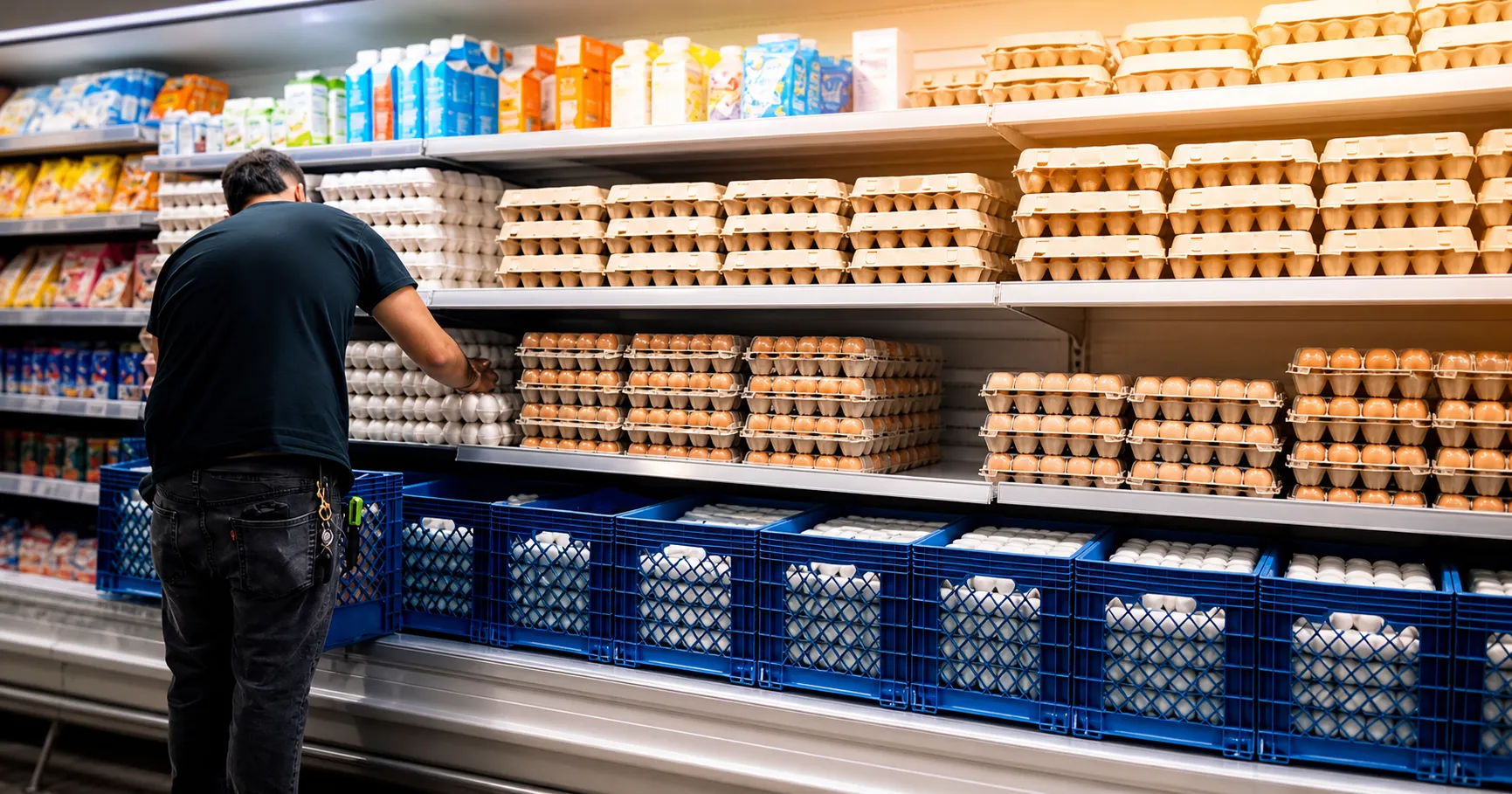
Three major egg producers have agreed to pay $3.3 million and donate 53 million eggs to settle federal and state allegations that they illegally coordinated to inflate egg prices during a period when the cost of the staple food soared to record highs.
Cal-Maine Foods, Versova, and Hickman’s Egg Ranch reached the settlement with the U.S. Justice Department and 17 state attorneys general following an investigation into alleged price manipulation that lasted nearly three years. The companies did not admit wrongdoing under the proposed settlement terms, which must still be approved by a federal judge.
The investigation centered on how the three companies allegedly manipulated Urner Barry Publications, a market reporting company whose daily price quotations serve as the benchmark for wholesale egg prices nationwide. Grocery stores, restaurants, food service companies, and other egg buyers use these daily quotations to determine what they pay for billions of eggs sold each year throughout the United States.
According to the Justice Department and state officials, from June 2022 through March 2025, the companies secretly communicated to coordinate the bids they would submit to Urner Barry. The investigation found they coordinated the timing of bids, placed bids unlikely to result in actual sales, and submitted inflated prices specifically to artificially raise the benchmark quotations. This scheme created the false impression of greater demand than actually existed and resulted in higher prices for retailers and consumers.
In one example cited in the complaint, Hickman’s CEO emailed executives at Versova and Cal-Maine in December 2022 urging them to submit “strong bids, early and often” to push prices higher. All three companies then submitted dozens of bids at higher prices, which led to Urner Barry increasing its published price quotes.
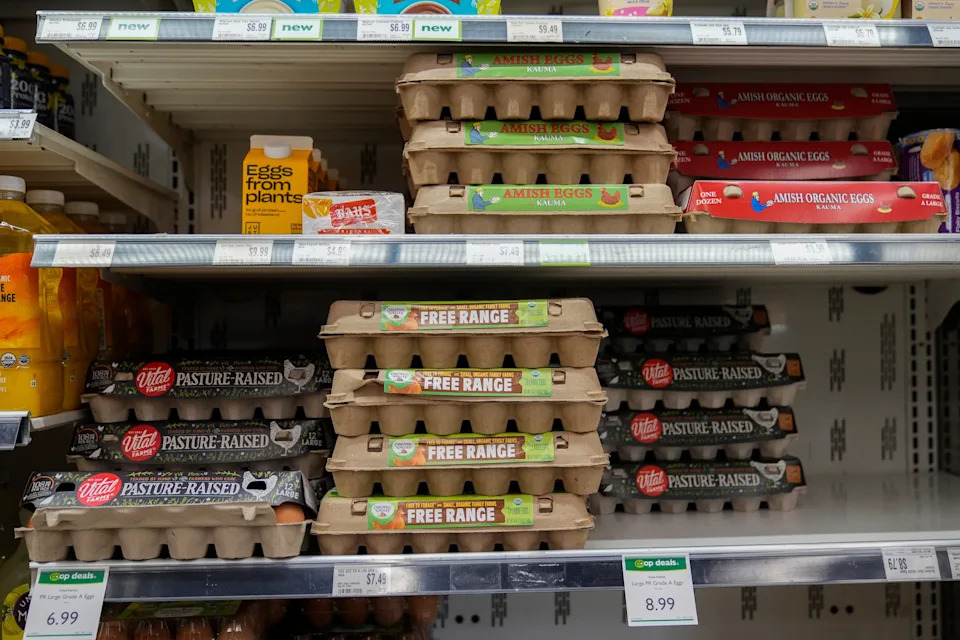
The average price of eggs reached a record high of approximately $6.23 per dozen in March 2025, amid a bird flu epidemic that forced farmers to slaughter millions of egg-laying chickens. While the companies blamed the avian influenza outbreak for the spike, critics and government investigators alleged the producers took advantage of their market dominance to artificially inflate prices beyond what supply disruptions justified.
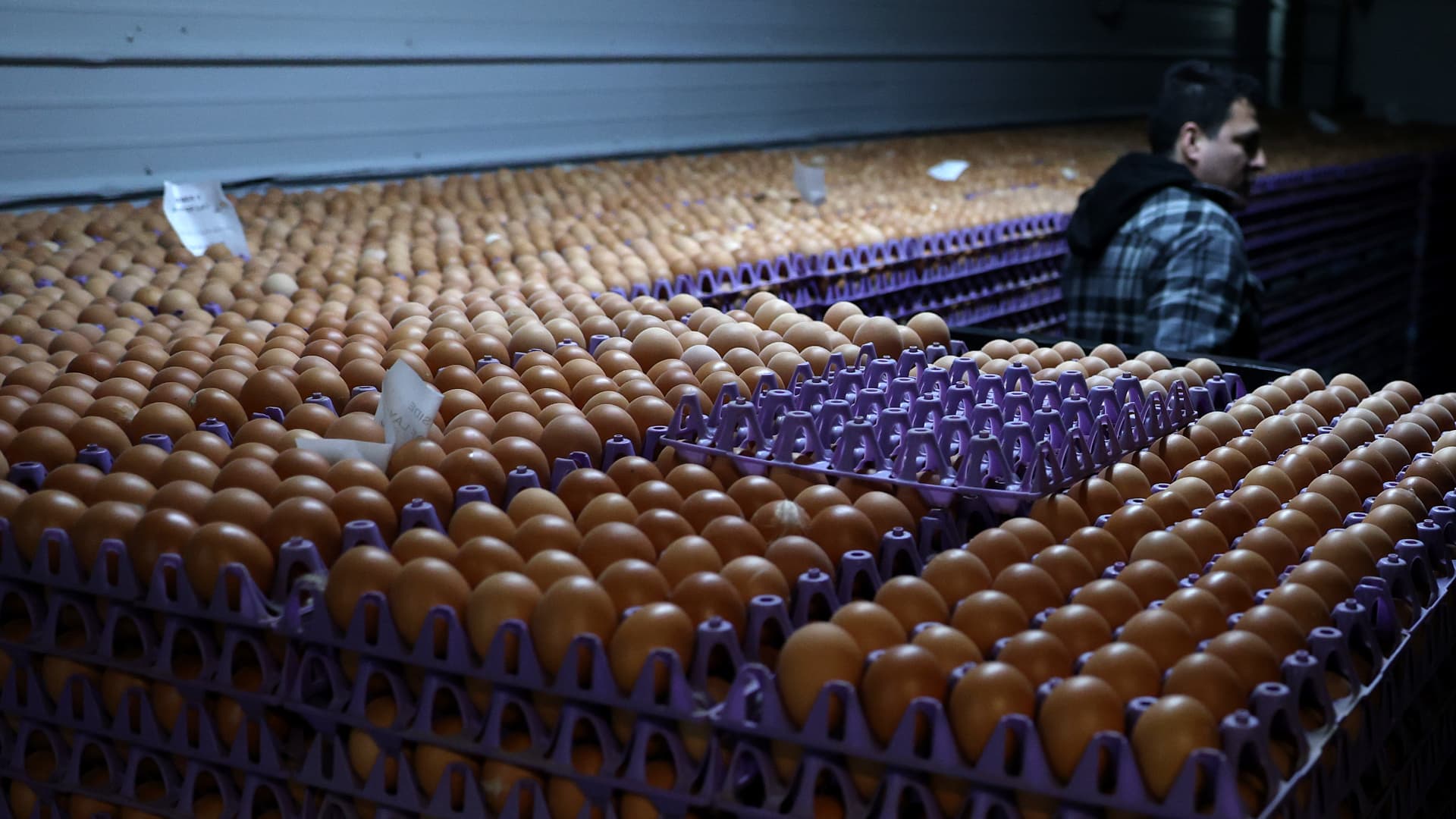
Evidence of the scheme emerged after the companies learned of the federal investigation and were instructed to preserve documents in March 2025. Price quotations dropped significantly from their peak following the notification. Consumer egg prices subsequently fell to under $2.20 per dozen as of May 2026, declining further as replenished flocks caught up with demand.
The financial terms of the settlement break down as follows: Cal-Maine agreed to pay $1.5 million and donate 30 million eggs; Versova will pay $800,000 and provide 20 million eggs; and Hickman’s will pay $1 million and donate 3.25 million eggs. The monetary payments will be distributed to the states, while the donated eggs will go to food banks and nonprofit organizations across participating states at the companies’ expense.
At the retail level, based on current average prices of approximately $2.19 per dozen for large Grade A eggs, the donated eggs could be worth roughly $9.7 million. Cal-Maine reported a profit of $1.22 billion for the 2025 fiscal year during the period of alleged coordination.
If approved by the federal judge in U.S. District Court for the Northern District of Iowa, the settlements would impose strict requirements going forward. The companies would be prohibited from communicating with competitors regarding bidding strategies, prices, the timing and number of bids, and other information they might share with benchmark pricing services. The companies must adopt antitrust compliance programs and appoint antitrust compliance officers. These officers will audit bidding practices twice a year and report any noncompliance to state authorities and the Justice Department within 30 days.
The settlement also prevents the companies from communicating with competitors about transactions or bids that are not based on legitimate business needs or that are intended to affect benchmark publications. However, the companies may discuss prices related to co-packed eggs and can make general statements about prices on earnings calls or in public filings as long as forward-looking information about prices, bid numbers, or timing is excluded.
New York Attorney General Letitia James, who helped lead the multistate investigation, said the settlement represents accountability for illegal market manipulation. “When powerful corporations collude behind the scenes to raise prices, working families suffer the costs,” James stated. “These egg producers manipulated the market to squeeze even more profit out of consumers and businesses.”
The 17 states involved in the settlement include Arizona, California, Colorado, Connecticut, Florida, Hawaii, Iowa, Maryland, Minnesota, North Carolina, Ohio, Pennsylvania, Texas, Utah, Vermont, Wisconsin, and New York.
However, some advocacy groups have criticized the settlement as insufficient. Angela Huffman, president of the organization Farm Action, called it another case where corporations treat a settlement “as the cost of doing business rather than meaningful accountability,” noting that consumers paid record prices while producers reaped extraordinary profits.
Cal-Maine, based in Mississippi and the nation’s largest egg producer, denied wrongdoing in its statement. The company noted that it sold approximately 1.3 billion dozen eggs in fiscal 2025, representing about 24 percent of domestic shell egg consumption. Cal-Maine said it has not been assessed fines or penalties and that its conduct was lawful.
Versova stated that its decision to accept the settlement “simply reflects our firm intention to put this matter behind us and focus on our business.” The company pointed to bird flu losses, noting that its family of companies lost more than 25 million egg-laying hens since the current avian influenza outbreak began in 2022.
The Justice Department has also filed separate antitrust lawsuits against Hickman’s Egg Ranch and Versova in connection with the same pricing practices, though the settlement would resolve the coordinated claims against all three producers.
Under the Tunney Act, the proposed settlements must be published in the Federal Register, and the public has 60 days to submit written comments. At the conclusion of the comment period, the federal judge may enter final judgments if satisfied the settlements are in the public interest.