

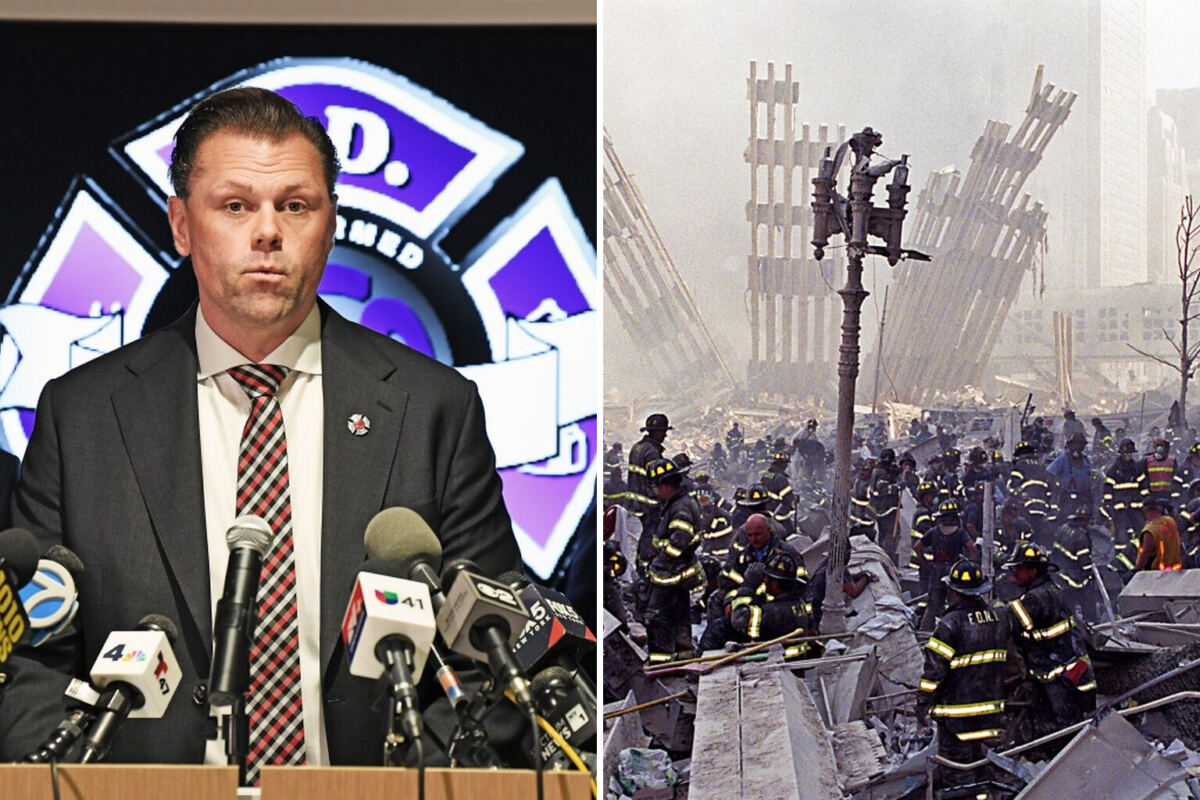
More FDNY members have now died from World Trade Center-related illnesses than were killed in the September 11, 2001 attacks themselves, union leaders announced this week.
The grim milestone was reached Tuesday with the burial of the 453rd firefighter to succumb to a 9/11-linked sickness, pushing the total past the 343 members who died on the day of the attacks, Robert Eustace, president of the FDNY Uniformed Firefighters Association, said Wednesday. Eustace, who leads the union representing active city firefighters, disclosed the figure at a gathering held to mark the release of 170,000 government documents concerning air quality and the aftermath of the attacks.
“For the FDNY, Sept. 11 did not end on Sept. 11,” Eustace said.
The documents, made public recently, detail environmental conditions in the weeks and months following the collapse of the Twin Towers, when first responders worked without adequate respiratory protection amid toxic dust and debris. Advocates have long argued that the full scope of health hazards was downplayed or concealed, leaving workers exposed to carcinogens and particulate matter that would later claim hundreds of lives through cancers, respiratory diseases and other chronic conditions.
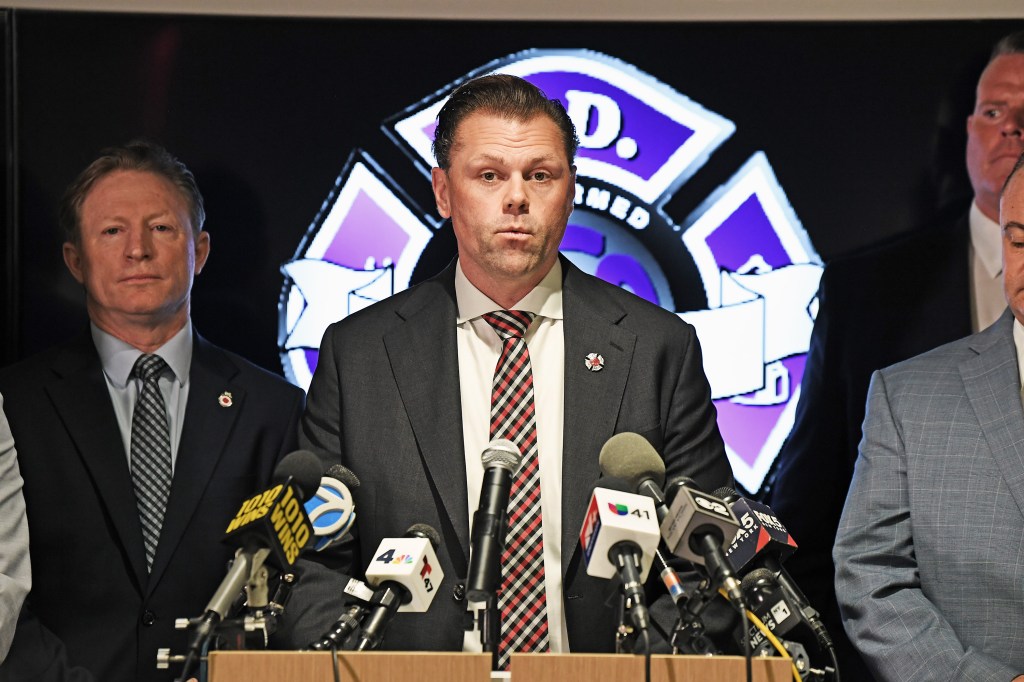
“There are firefighters who cannot make it up the stairs without losing their breath,” Eustace said.
The union president painted a stark picture of the ongoing suffering during his remarks at Wednesday’s event. He described members undergoing chemotherapy, widows forced to tell children their fathers would not return, and retirees who survived the initial catastrophe only to face delayed diagnoses traced to the dust they inhaled at Ground Zero.
“It’s a member who sits with chemotherapy. It’s a widow who has to explain to her children that their father is not coming home. The retiree who survived 9/11 only to find out, years later, that the dust he breathed in is still killing him,” Eustace said. “That’s why today matters.”
The 170,000-document release represents one of the most significant disclosures of information about post-9/11 environmental conditions to date. Union leaders and supporters who assembled Wednesday emphasized that the paperwork offers crucial evidence of what responders faced—and what officials knew about air quality risks—during the recovery and cleanup period that extended for months after the attacks.
The 25-year anniversary of the attacks looms as a somber benchmark for a department still accumulating casualties. While the 343 deaths on September 11, 2001, occurred in a single morning of coordinated terror, the illness-related fatalities have mounted gradually over two decades, with diagnoses often emerging years after exposure as cancers and pulmonary conditions developed.
Federal health programs, including the World Trade Center Health Program and the September 11th Victim Compensation Fund, were established to provide medical treatment and financial support to affected responders and survivors. Advocates have pressed for permanent funding and expanded eligibility as the death toll has continued to climb well beyond initial projections.
The 453rd burial this week underscored what Eustace and other union officials have repeatedly warned: the attacks launched a public health crisis with no clear endpoint, as exposed individuals remain at elevated risk for emerging conditions decades later.