

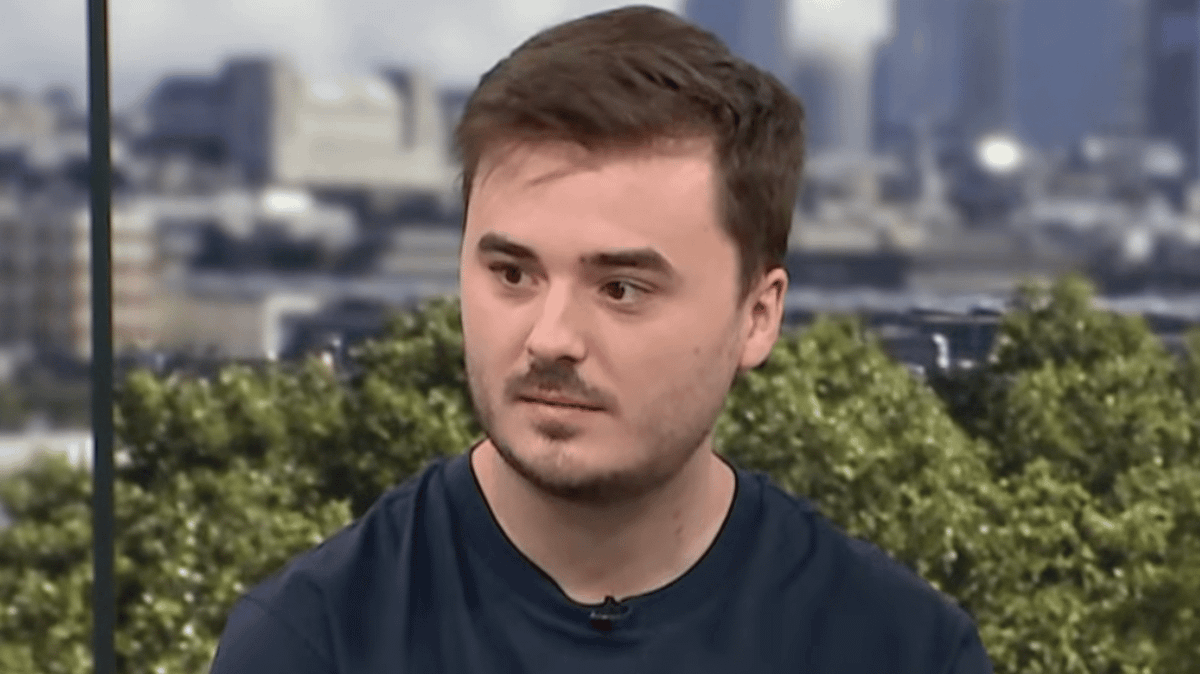
A couple has shared the “unbelievable” ordeal they went through after an expectant father’s heart suddenly stopped, hoping their experience will encourage more people to learn CPR.
Just days before Emma King was due to give birth in April, she woke in the night to discover that her husband Sam was no longer responsive. Sam was 26 years old at the time.
Earlier that evening, the couple had marked Emma’s final day at work by meeting friends at the pub. Sam later said on This Morning that he had run there as part of his half-marathon training, drank a Guinness Zero, ran home again, and after dinner the pair went to bed as normal, with Sam adding, “And that’s all that I can really remember.”
Emma explained that she had got up at around 3am to use the toilet and then stayed awake for a while on her phone. About an hour later, Sam briefly woke up and they had a short conversation, but moments later the situation changed dramatically. As she recalled, “Ten minutes later he’s gasping for breath, like three huge gasps, and then his eyes go to the back of his head.”

Because she was already holding her phone, Emma immediately dialed 999. Even though she was 39 weeks pregnant, she then carried out CPR for 15 minutes while following the emergency call handler’s instructions.
Paramedics arrived and treated Sam for around two hours. Sam said his heart had stopped “for two hours,” and although he had no pulse or blood pressure, there was still some “fluttering,” which gave the medical team reason to continue fighting for him. Research shows that when bystander CPR is administered promptly, survival rates improve significantly compared to those who do not receive CPR.
Emma said she made herself “stay calm” for the sake of her baby and tried hard to keep her own heart rate from rising.
Sam was later taken to University Hospital Southampton and then transferred to St Thomas’ Hospital in London, where doctors placed him in an induced coma to reduce any extra strain on his body. Because of how serious his condition was, he was among the five sickest patients in the country at that time. Sam remained in St Thomas’ for 12 days in the intensive care unit before being transferred back to Southampton General for a further five days in the ICU.
While staying in a nearby hotel, Emma went into labor at 4am three days after Sam’s cardiac arrest.

Four hours after giving birth to Sophie at the same hospital where Sam was being treated, Emma was helped by her midwife to visit Sam in hospital.
Emma said doctors had been reducing his sedation to assess his condition, but they still did not know whether there was any “brain activity or cognitive understanding”. Then, when the midwife lifted baby Sophie up in front of him, Emma said she saw “tears coming down from the side of his eyes.” She later reflected, “It was the craziest experience of my life.”
Sam also described the moment, saying, “It was like a dream. I half remember it. There are certain ways people say things that kind of flash back to your memory, but it’s unbelievable.”
Now, Sam says he feels “normal,” has returned to sport, and has been fitted with an implantable cardioverter defibrillator (ICD), a device that continuously monitors his heart and can detect and correct potentially life-threatening abnormal heart rhythms. He is still undergoing tests, including genetic and exercise assessments, as the cause of his cardiac arrest remains unknown.
The couple say they wanted to tell their story to highlight how important it is to recognize when CPR is needed and to know how to perform it. Research shows that patients with a bystander-witnessed arrest are over three times more likely to survive compared to unwitnessed arrests. Emma said Sam had already received training, and Sam said Emma “saved [his] life”.