

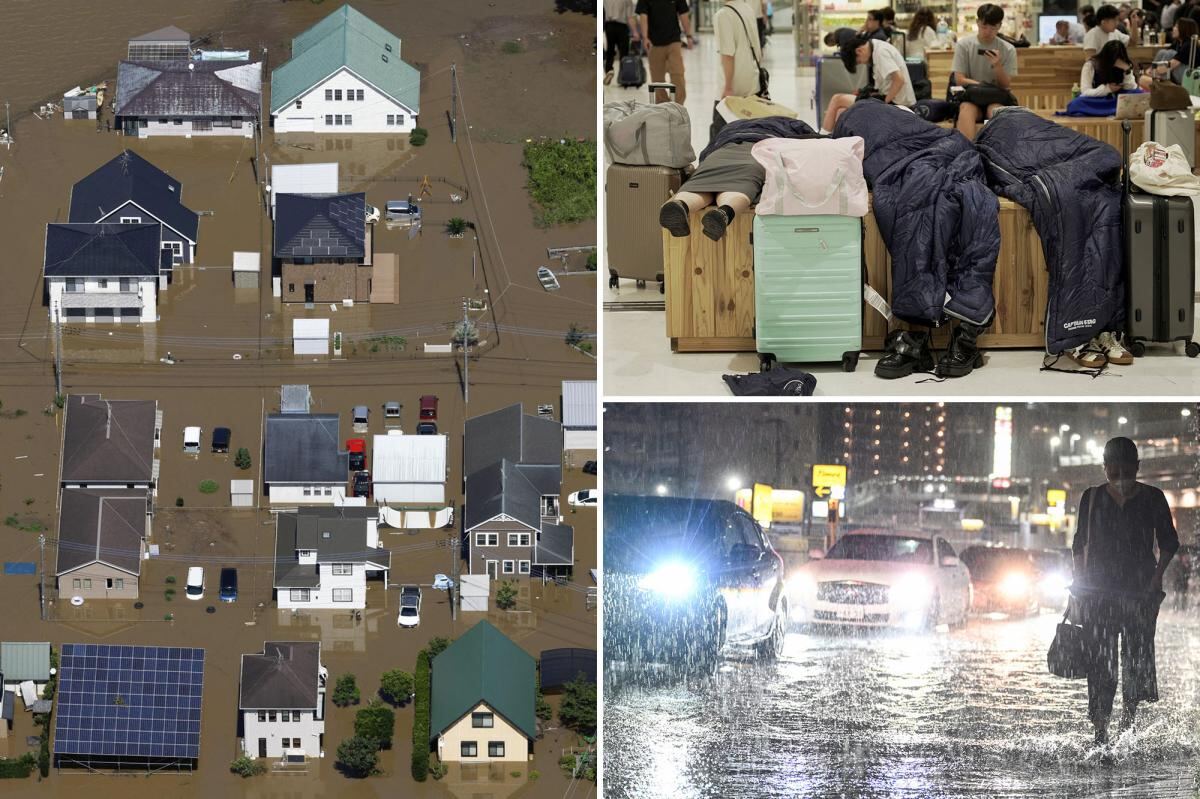
Record-breaking rain has killed at least eight people and left more than 10,000 travelers stranded near Tokyo.
The deluge struck Chiba prefecture, east of the Japanese capital, on Thursday during one of the country’s busiest holiday travel periods. Among the dead was a man believed to be in his 60s or 70s who was found floating on a flooded road in Ichikawa, according to emergency officials. A 66-year-old woman died after becoming trapped inside her submerged car in Sakura.
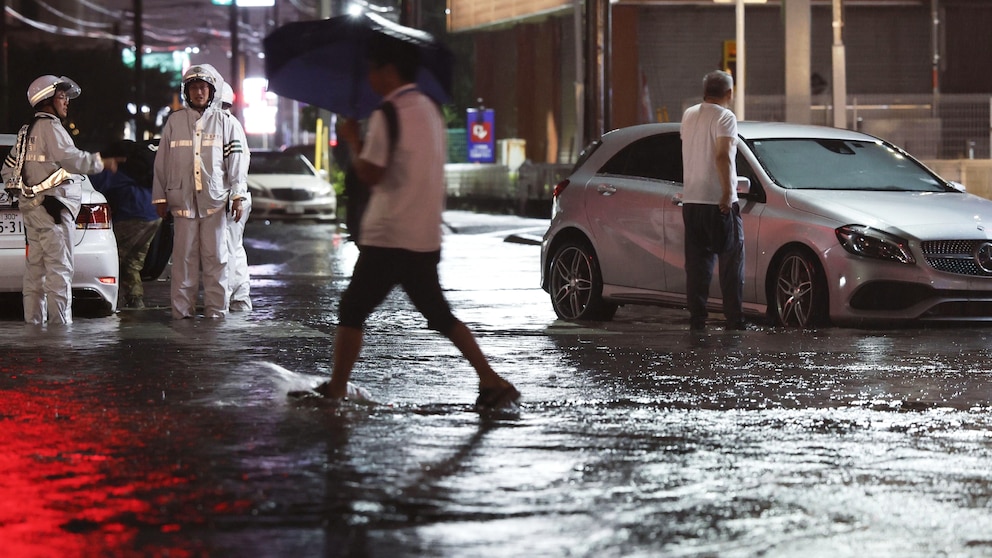
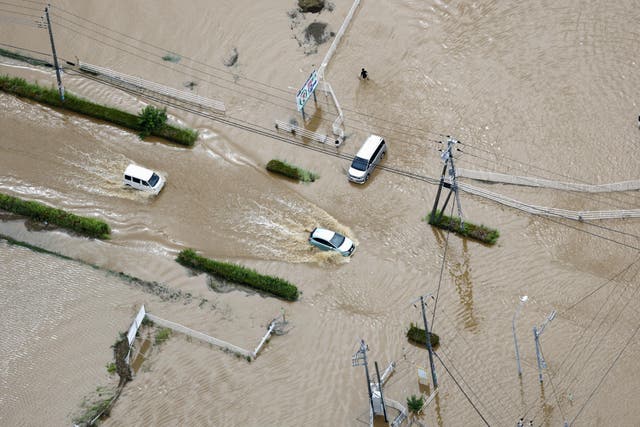
Chiba Governor Toshihito Kumagai addressed reporters on Friday about the extraordinary scale of the disaster. “This case was an extremely unusual situation, even by Japan’s historical weather standards,” he said. “I have responded to many disasters in the past, but I have never experienced a case like this.”
The rainfall totals shattered records dating back nearly six decades. Chiba city recorded 4.5 inches in a single hour on Thursday evening, followed by more than 7 inches over three hours and 11.5 inches in six hours. All three totals broke local records set in 1966. Some areas of the prefecture saw over 14 inches of rain within 24 hours.
The human toll extended far beyond the confirmed fatalities. Almost 230,000 residents were urged to seek safer ground as floodwaters poured through streets, swallowed cars and entered homes. More than 80 homes had been flooded in early damage assessments, though authorities warned that figure would likely rise as emergency crews reached more affected areas.
At the height of the storm, about 68,000 households lost power. Roughly 23,000 remained without electricity on Friday morning, utility provider Tokyo Electric Power reported.
Japan’s Meteorological Agency issued its highest Level 5 heavy rain warning across 22 Chiba municipalities as the deluge intensified, alongside its most severe landslide warning in six areas. Those warnings were downgraded to Level 4 shortly after 5 a.m. On Friday as the worst of the rain eased, though forecasters cautioned that the atmosphere remained highly unstable and further intense thunderstorms were possible.
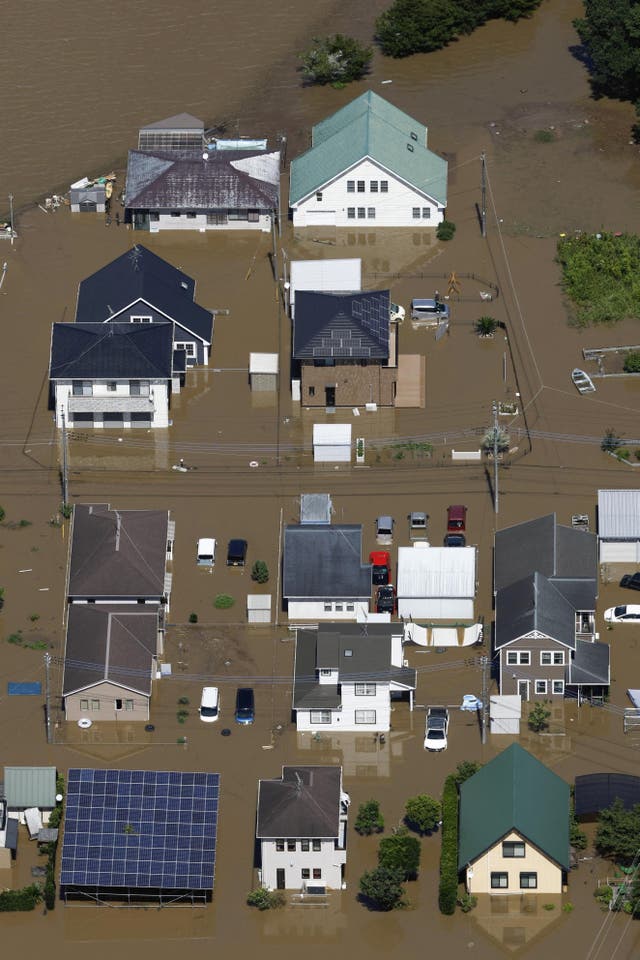
The transportation chaos centered on Narita International Airport, where approximately 7,000 people were forced to sleep inside terminals after floodwaters severed rail and road connections. The airport company confirmed that roughly 7,000 people remained inside the terminals at 4 a.m. After buses and trains linking the facility with central Tokyo were suspended. Emergency workers handed out sleeping bags, water and food as families bedded down across crowded departure halls on Thursday night.
One stranded traveler, speaking to Japanese broadcaster NHK, captured the resigned mood among those trapped. “I never thought I’d spend the night at the airport, but it is what it is and we are learning,” the person said. “We’re never going to forget this trip.”
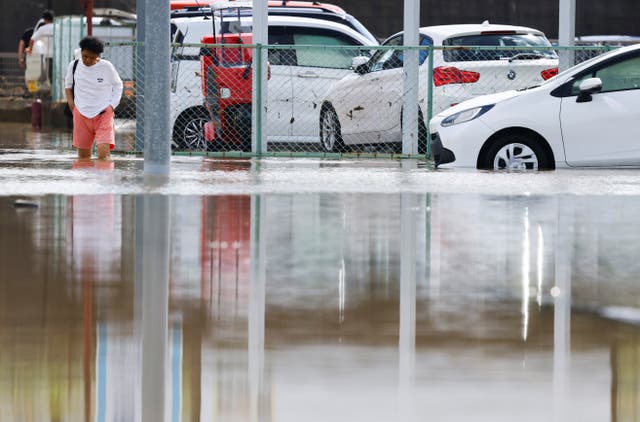
The disruption spread far beyond the airport. More than 4,000 people spent the night inside JR Soga station after surrounding streets were submerged by water that reached as high as an adult’s waist. As many as 1,700 others took shelter inside the Chiba prefectural government building and a neighboring government facility, while 11 temporary accommodation sites were opened across Chiba city.
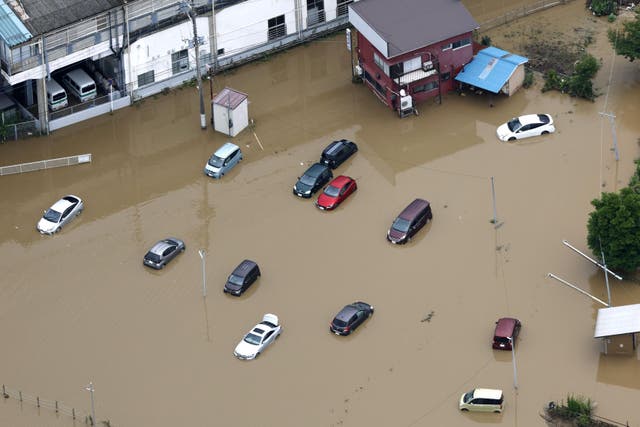
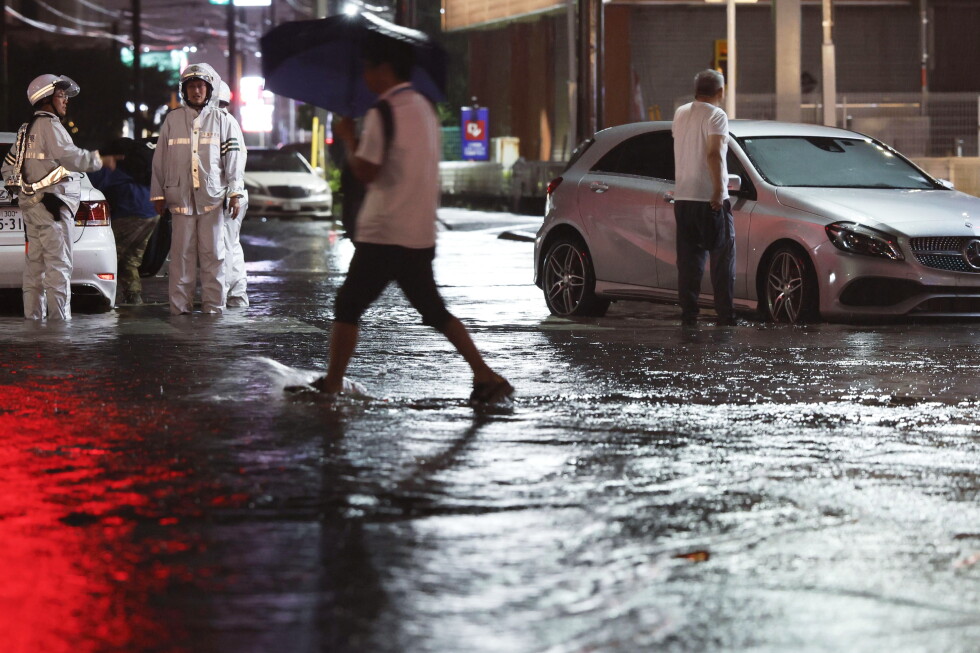
Rail links began reopening in stages on Friday morning, although delays, cancellations and long queues continued. Flights were operating broadly as scheduled, with Japan Airlines warning that some services could be delayed but saying no widespread cancellations were expected. Major highways linking Narita Airport with Tokyo were also closed or heavily congested, forcing motorists onto alternative routes. Dozens of abandoned vehicles remained scattered across flooded roads on Friday morning, with more than 20 vehicles blocking traffic across approximately 492 feet on one stretch of road in central Chiba.
Weather experts attributed the disaster to a rare combination of cold air high in the atmosphere, an enormous supply of warm, moist air and converging winds over Chiba. The event came just a day after tropical storm Chan-hom battered northeastern Japan, injuring at least seven people, toppling trees and causing widespread blackouts.
Japanese Prime Minister Sanae Takaichi said disasters caused by heavy rain had become “increasingly frequent” in recent years. She said authorities would “remain vigilant” to “protect the lives and livelihoods of the people,” and offered condolences to those who had died.
Waterlogged ground and swollen waterways meant even comparatively modest rainfall could trigger fresh flooding or landslides in the coming days.