

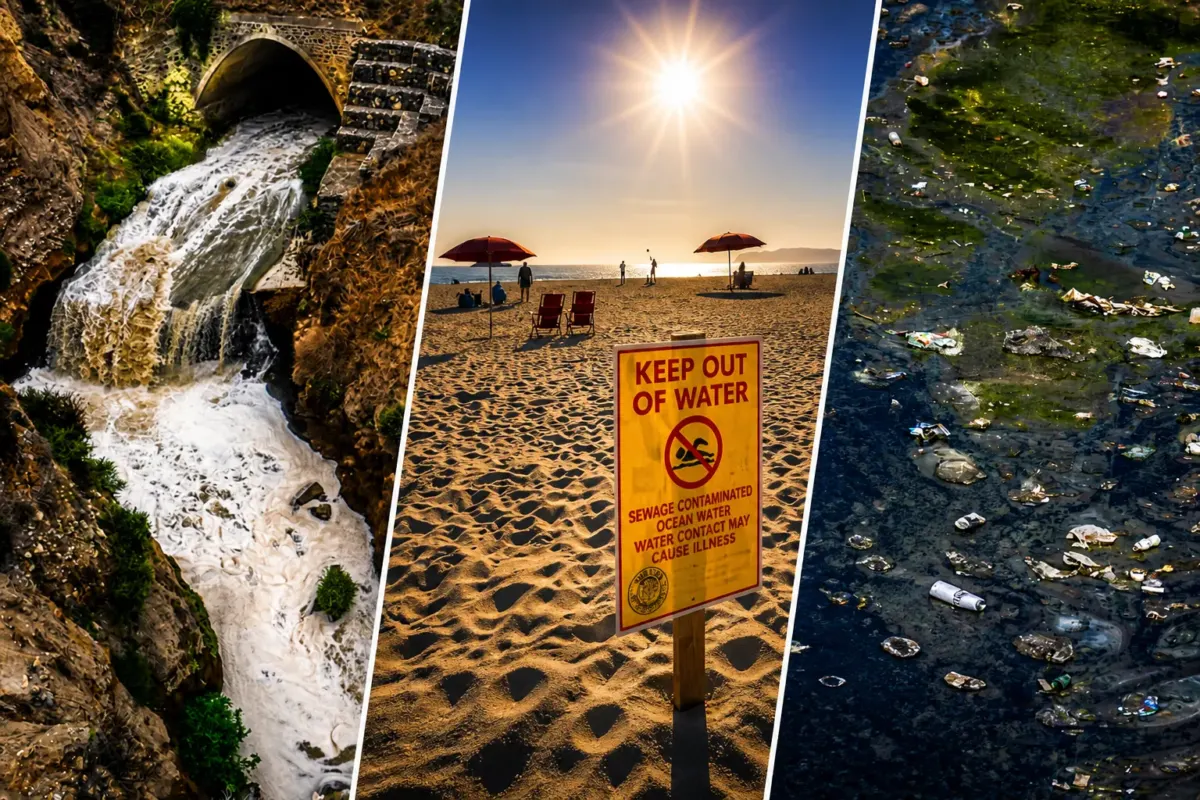
San Diego County supervisors voted this week to build a new sewage treatment system on the U.S. Side of the border to stop Tijuana River pollution before it reaches local beaches.
The plan, led by Supervisors Paloma Aguirre and Terra Lawson-Remer, passed Tuesday with a 4-1 vote and will unfold in three phases. The county will spend $1.8 million over the next 18 months to study potential treatment systems.
Supervisor Joel Anderson cast the sole dissenting vote, warning the project could balloon into a multibillion-dollar burden. “That could lead to billions,” he said. “The county just doesn’t have that kind of money. And it shouldn’t be the county’s responsibility. The state and the feds and everybody else should be involved.”
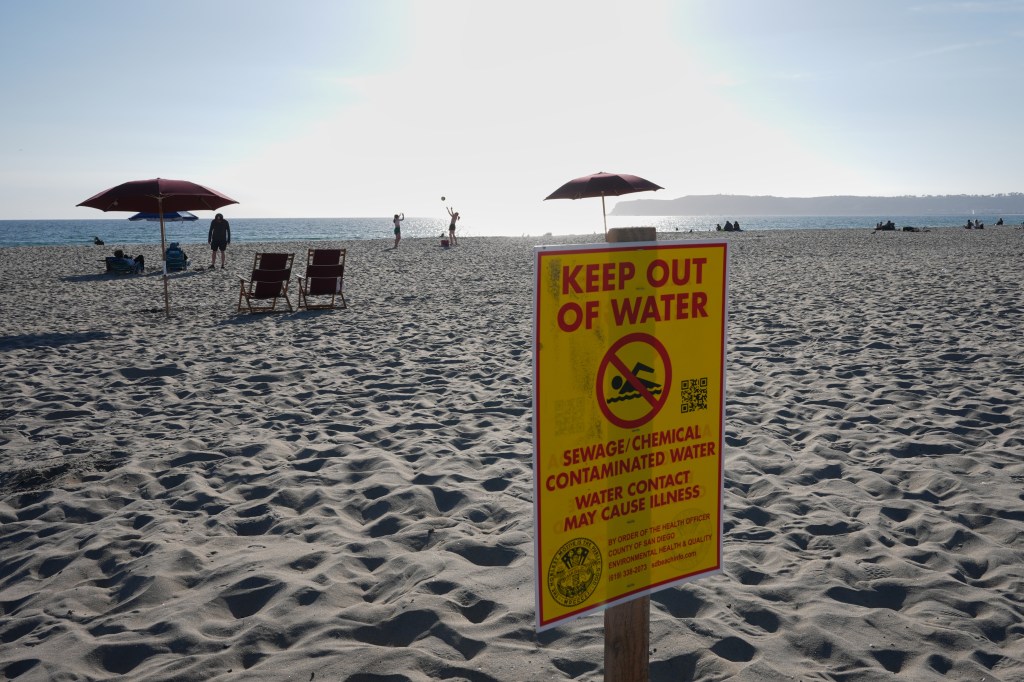
The pollution crisis has plagued South Bay communities for decades. Millions of gallons of sewage-contaminated water regularly cross from Tijuana, fouling the Tijuana River and ultimately washing into the Pacific Ocean. Beach closures have extended as far north as Coronado, one of the region’s most popular summer destinations.
TV personality Chef Andrew Gruel posted video showing murky yellow-green water washing onto Coronado’s normally packed summer beach. “This is Coronado currently,” the post read. “High tourist season. High heat of summer. No beach access.”
The contamination carries serious health risks beyond spoiled vacations. Researchers have found sewage-related contaminants can become airborne, while hydrogen sulfide — the gas known for its rotten-egg smell — has hit levels 4,500 times higher than typical urban concentrations near one South Bay hotspot. County officials have offered eligible households free air purifiers to help residents cope with odors and reduce exposure.
“After 60 years, that is the gap that has no solution: the U.S. Side of the Tijuana River is not treated at all,” Aguirre and Lawson-Remer wrote in a county board letter. “Once sewage and toxic runoff are in the river, nothing protects our coastlines and communities from the impacts.”
Supervisor Jim Desmond, who voted for the plan, maintained that Mexico bears ultimate responsibility for fixing the problem at its source. He said he wants to “see Mexico stand up and fix this issue,” but added that San Diego should “at least plan for the worst-case scenario.”
Aguirre, whose district includes communities directly impacted by the pollution, said residents have endured decades of broken promises. “After 60 years of promises regarding the issue, the skepticism in my community is not just understandable, it has been earned,” she said.
Lawson-Remer framed the vote as a long-overdue response to an inequitable burden. “The time has come to end this environmental injustice,” she said.
Aguirre emphasized that the county will continue coordinating with federal and Mexican authorities while refusing to let outside delays dictate progress. “We’ll keep working with Washington and Mexico, but we will set the pace and we won’t wait on anyone else’s timeline,” she said of Tuesday’s vote.

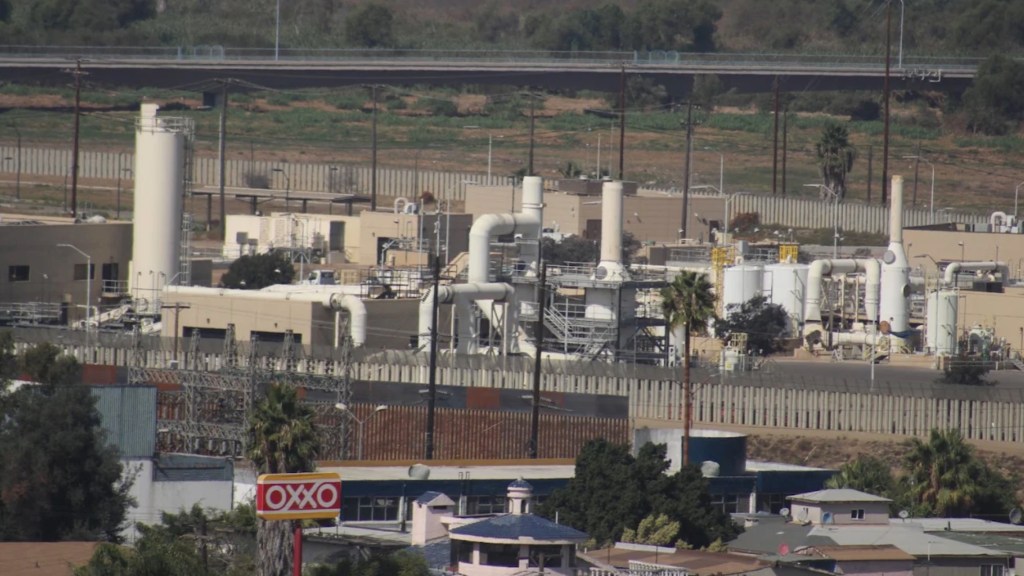
The existing treatment and diversion infrastructure has proven unable to capture all cross-border flows, leaving the U.S. Portion of the river untreated. The new system would add another defensive layer when current facilities fail.
The county board will oversee the 18-month study period as engineers evaluate treatment options for the phased buildout.