

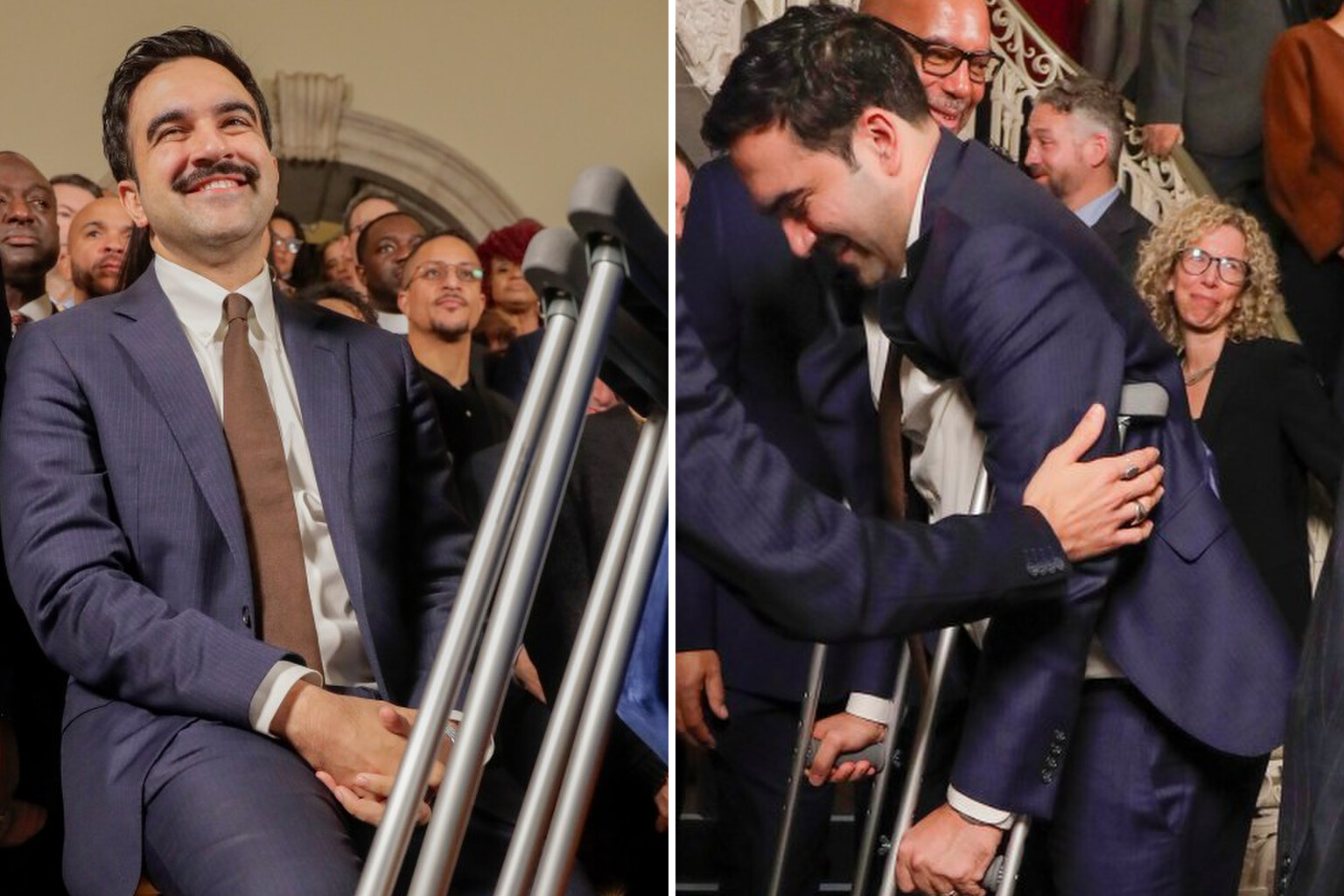
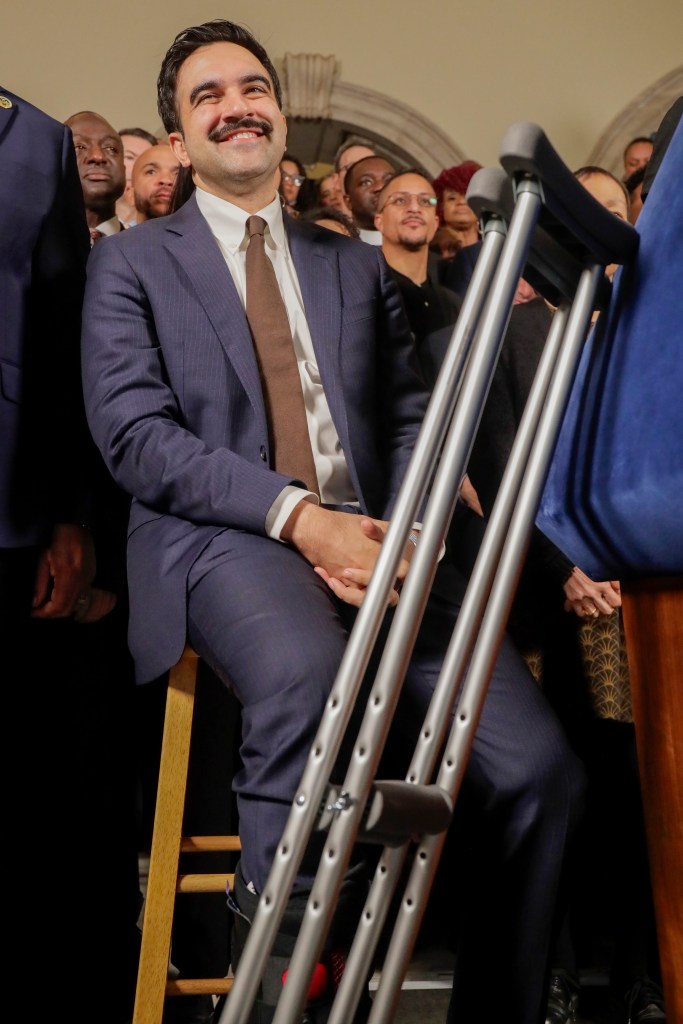
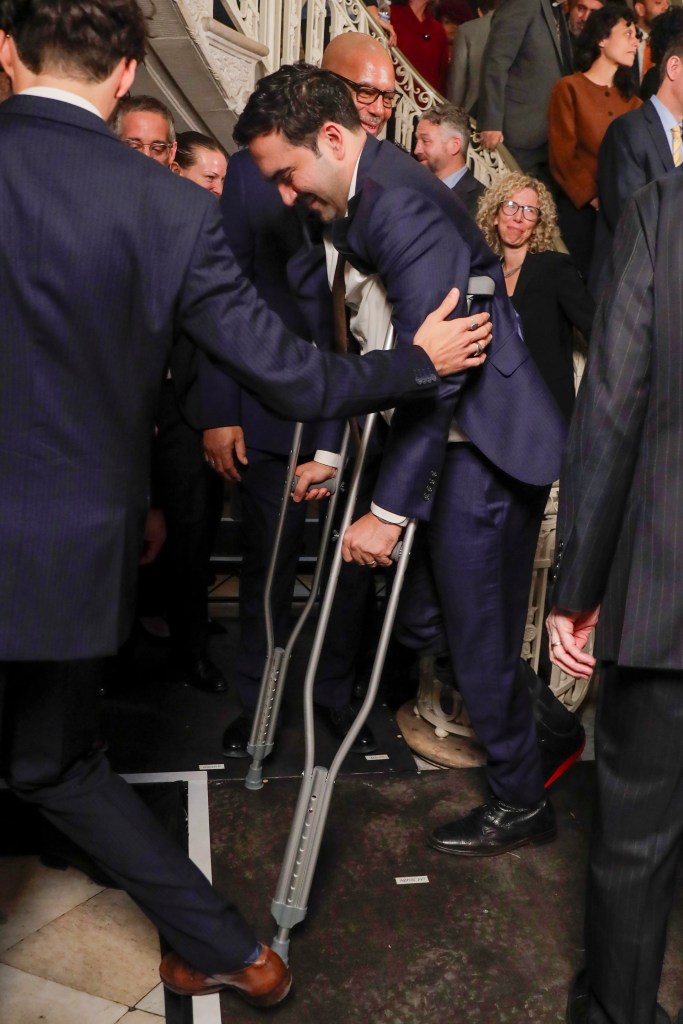
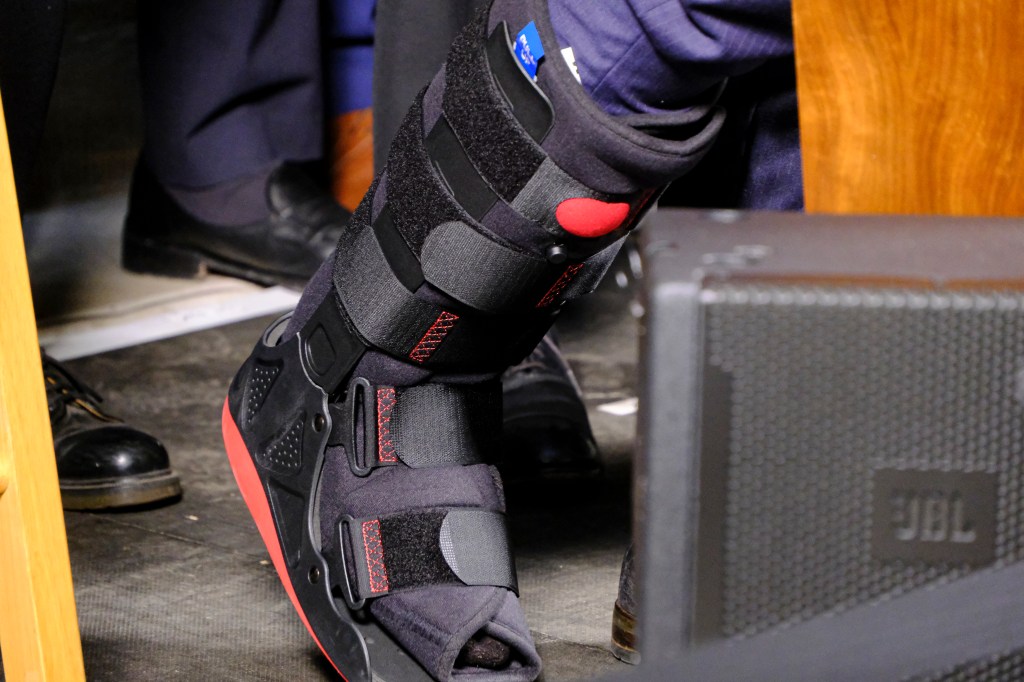
Zohran Mamdani arrived at a City Hall event on crutches Friday morning, revealing a torn Achilles tendon suffered during a friendly soccer match the previous evening.
The 35-year-old mayor had been playing against the press corps Thursday night when the injury struck shortly after he scored a goal. His team still won handily, 10 to 5.
“I forgot that I was 35,” Mamdani joked about the moment, caught up in the competitive spirit of the match.
The injury will sideline him from the sport for months. “I will be in a boot for six to eight weeks and I will play soccer in about nine months,” he said. He has not indicated whether he will undergo surgery.
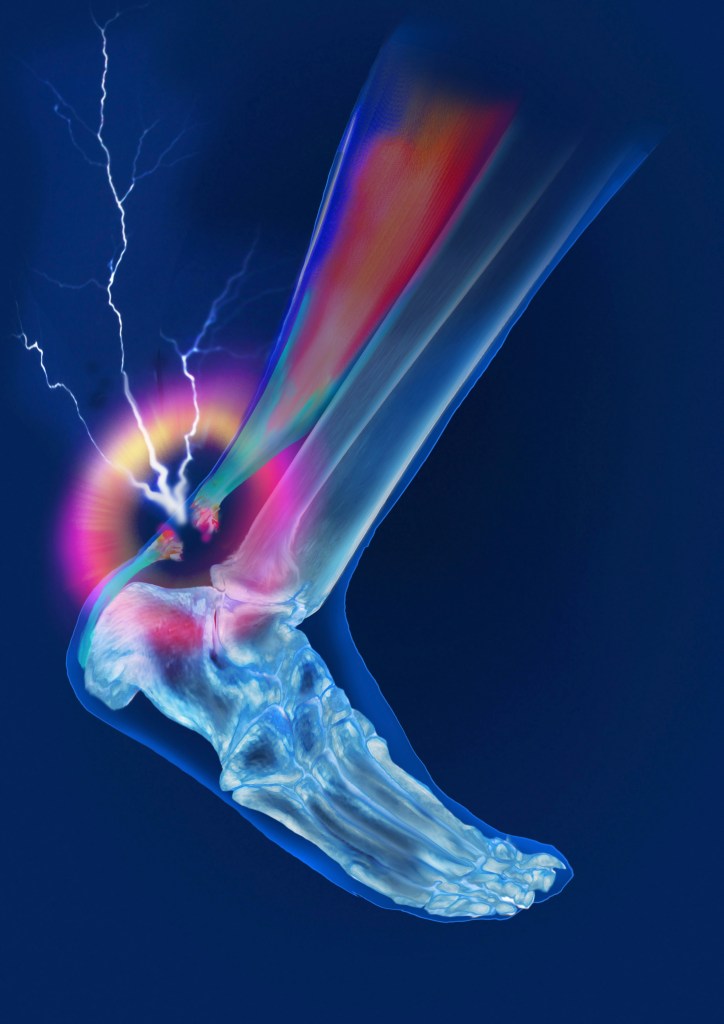
Dr. Laith M. Jazrawi, a sports orthopedic surgeon at NYU Langone, described the typical sensation of such an injury. “Most people say when it happens to them, they feel like someone kicked them in the back of the leg. … Some fall down because of the pain, and it’s uncomfortable,” he said.
The severity of Achilles injuries varies considerably based on where the tendon tears and how many fibers rupture. The tendon, the largest in the human body, can snap from sudden force during explosive movement.
Dr. Adam Bitterman, an orthopedic foot and ankle surgeon and chair of the department of surgery at Northwell Huntington Hospital, explained how these tears typically occur. “A good example is you are walking straight and then you pivot and sprint to the right,” he said. Such movements are common in basketball, soccer, and football when players push off the ground to change direction quickly.
Bitterman noted that orthopedic surgeons are seeing “a tremendous spike” in patients with this injury, though the exact cause of the increase remains unclear. Around 80% of Achilles ruptures are sports-related.
Age appears to have played a role in Mamdani’s case. Blood flow to the area deteriorates significantly after age 30, explained Dr. Rock G. Positano, a podiatrist and co-director of the Non-Surgical Foot and Ankle Service at the Hospital for Special Surgery in NYC. Some thirty-somethings fail to recognize their bodies no longer perform as they did in their twenties.
Mamdani himself seemed to blame skipping a pre-workout stretch along with his age. But Jazrawi cautioned that while stretching has some correlation, “it’s not the main factor.” The Achilles area “doesn’t have the greatest blood supply in the world” and can be a “weak spot.”
“Ruptures are fairly common. Weekend warriors, it happens all the time,” Jazrawi added. “Achilles ruptures can occur in younger patients, but the typical time we start to see them is as patients get into their 30s and 40s.”
Mamdani has played soccer since childhood in Morningside Heights, continued at Bronx Science, and spent time on the pitch at Bowdoin College in Maine. He typically plays left back now.
The treatment path remains unclear. “It wouldn’t be surprising if the mayor decided on a non-operative route,” Jazrawi said. “There’s nothing wrong with that. But one of the issues with non-operative treatment is that sometimes there’s a slightly increased risk of re-injuring yourself, re-tearing the Achilles when going back to sport.”
If surgery proves necessary, timing matters significantly. Bitterman stressed the importance of operating quickly, since tendon edges can scar over time and struggle to reconnect. “The goal of the surgery is to get patients, athletes, normal folk back to their functionality where they were prior to the injury. And that takes a lot of time. That can take nine months to a year,” he said.
Positano predicted Mamdani would return to full activity eventually, though warned that heel and rear-foot conditions can leave lasting weakness. Physical therapy would be advisable.
“The foot never forgets an injury,” he said.
The political implications appear minimal. “This won’t affect the Mayor from ‘running’ for office again,” Positano quipped.
Mamdani is scheduled to present his Rikers Island plan at an upcoming City Hall session while continuing to recover.