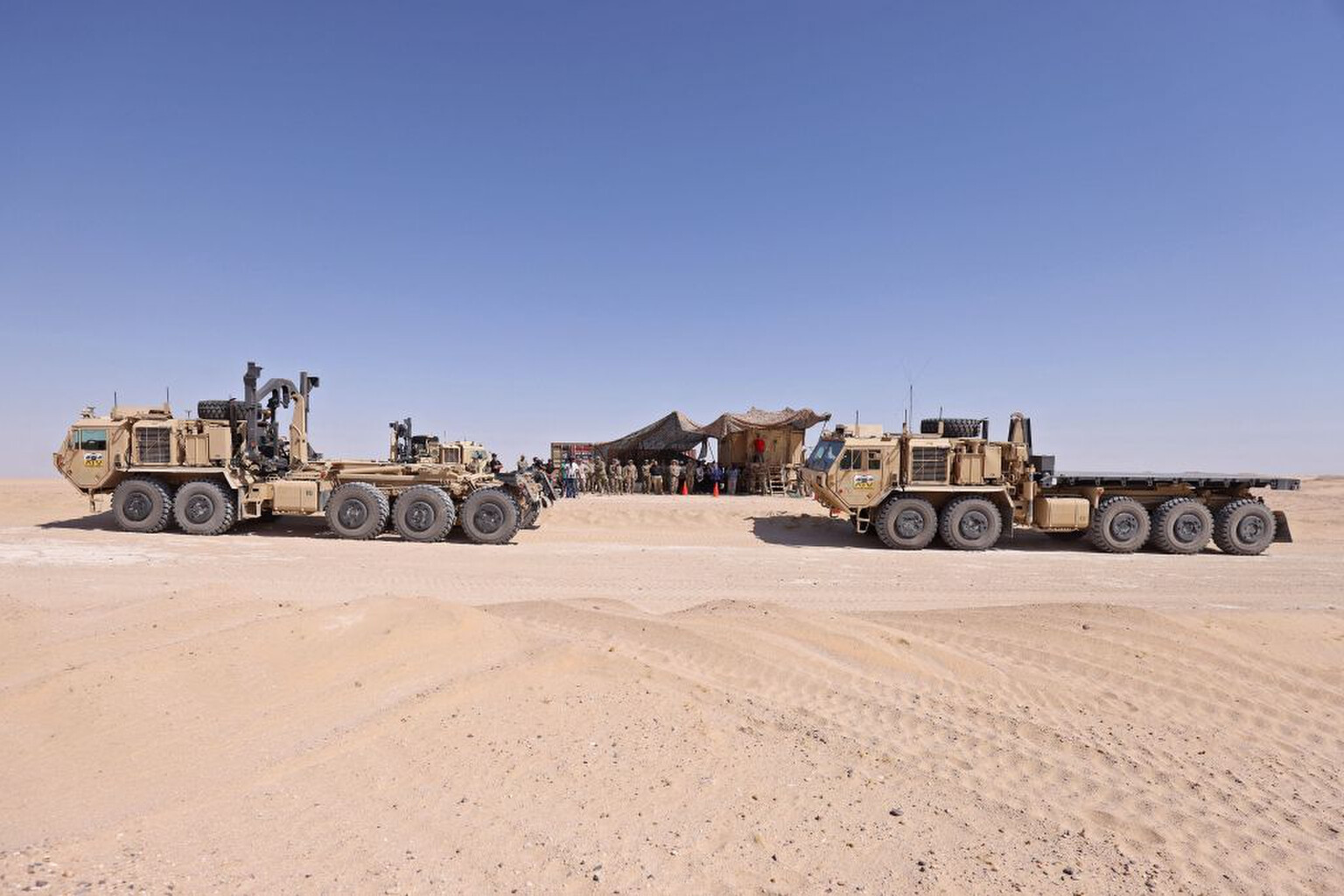
Newly surfaced photos show extensive destruction at American military installations across the Middle East, including the wreckage of a $270 million surveillance aircraft.
The images, provided by active-duty personnel stationed in Saudi Arabia and Kuwait, reveal shattered aircraft, flattened camps, gutted structures and burned-out vehicles resulting from sustained Iranian missile and drone campaigns since hostilities began. One service member who spoke to the outlet described a pattern of concealed failure. “This is major damage to our bases that hasn’t been communicated to the American public,” the soldier said. “We’re standing there with our eyes closed getting punched in the face.”
Among the most costly losses documented: an American E-3 Sentry spy plane, rendered a total loss after an Iranian strike hit Saudi Arabia’s Prince Sultan Air Force Base in March. The Air Force operated only 16 of these airborne warning and control system aircraft worldwide, with six of those permanently assigned to the Saudi facility when the attack occurred.
Additional photographs show obliterated trailers and automobiles at Camp Buehring and Camp Arifjan in Kuwait, both key staging areas for Army ground forces. Camp Arifjan sits mere miles from Port Shuaiba, where Iranian drones killed six American troops in the war’s opening hours.
The visual evidence directly challenges official Pentagon characterizations of the conflict’s defensive performance. One service member who verified the authenticity of the attacks rejected Defense Secretary Pete Hegseth’s recent assertion that only a handful of Iranian projectiles were penetrating US defenses.
“We’re not defending these bases,” the soldier said. “We’re just watching them get destroyed.”
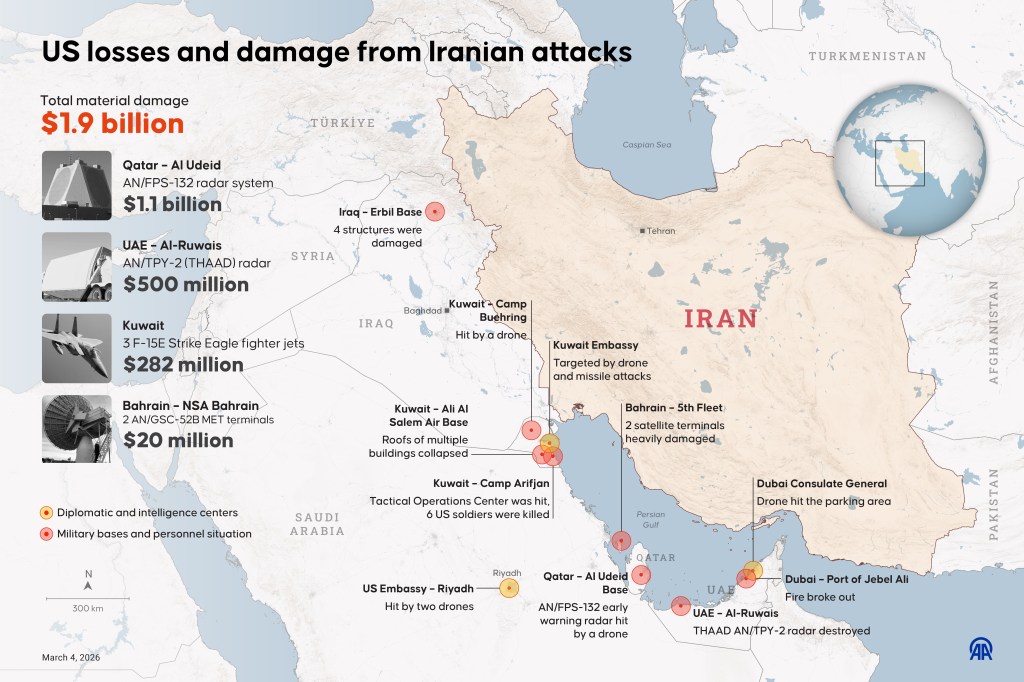
The photographic release arrived just 48 hours after the Defense Department’s Office of Inspector General issued its most recent accounting of the war’s material toll. That report placed total equipment losses at approximately $3.7 billion, encompassing nearly 60 aircraft destroyed or damaged beyond repair.
Compiled with input from inspectors general at the State Department and the US Agency for International Development, the same document calculated the first four months of combat operations at $33.4 billion, a figure that excludes infrastructure reconstruction expenses.
US Central Command had not responded to requests for comment as of press time.
The March strike on Prince Sultan Air Force Base that eliminated the E-3 Sentry represented a significant blow to American airborne surveillance capacity in the region. These Boeing 707-based platforms, first fielded in the 1970s, carry distinctive rotating radar domes and serve as airborne command centers for tracking aircraft and coordinating battle space operations. With production long concluded and replacement programs delayed, each loss shrinks an already constrained fleet.