

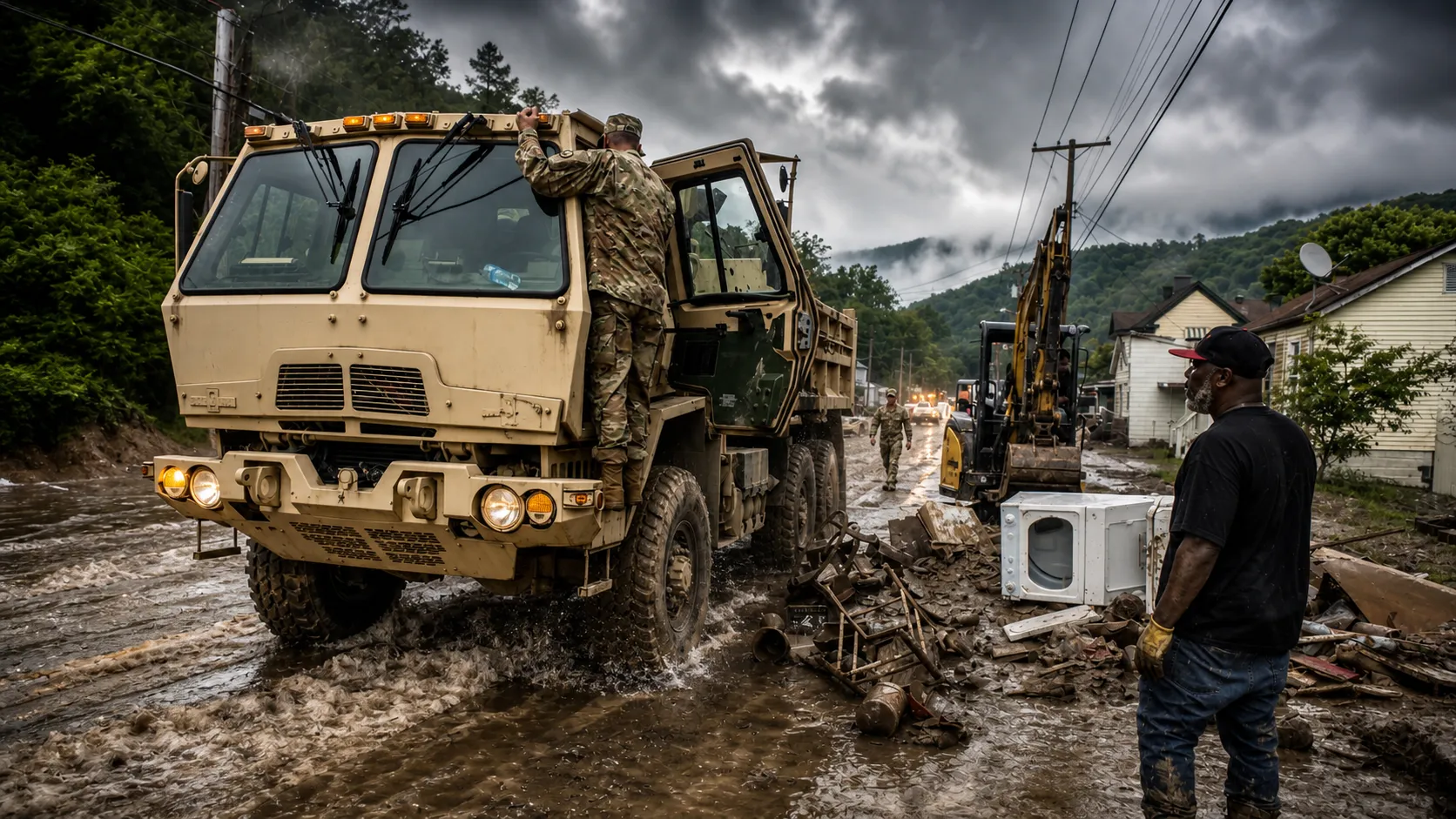
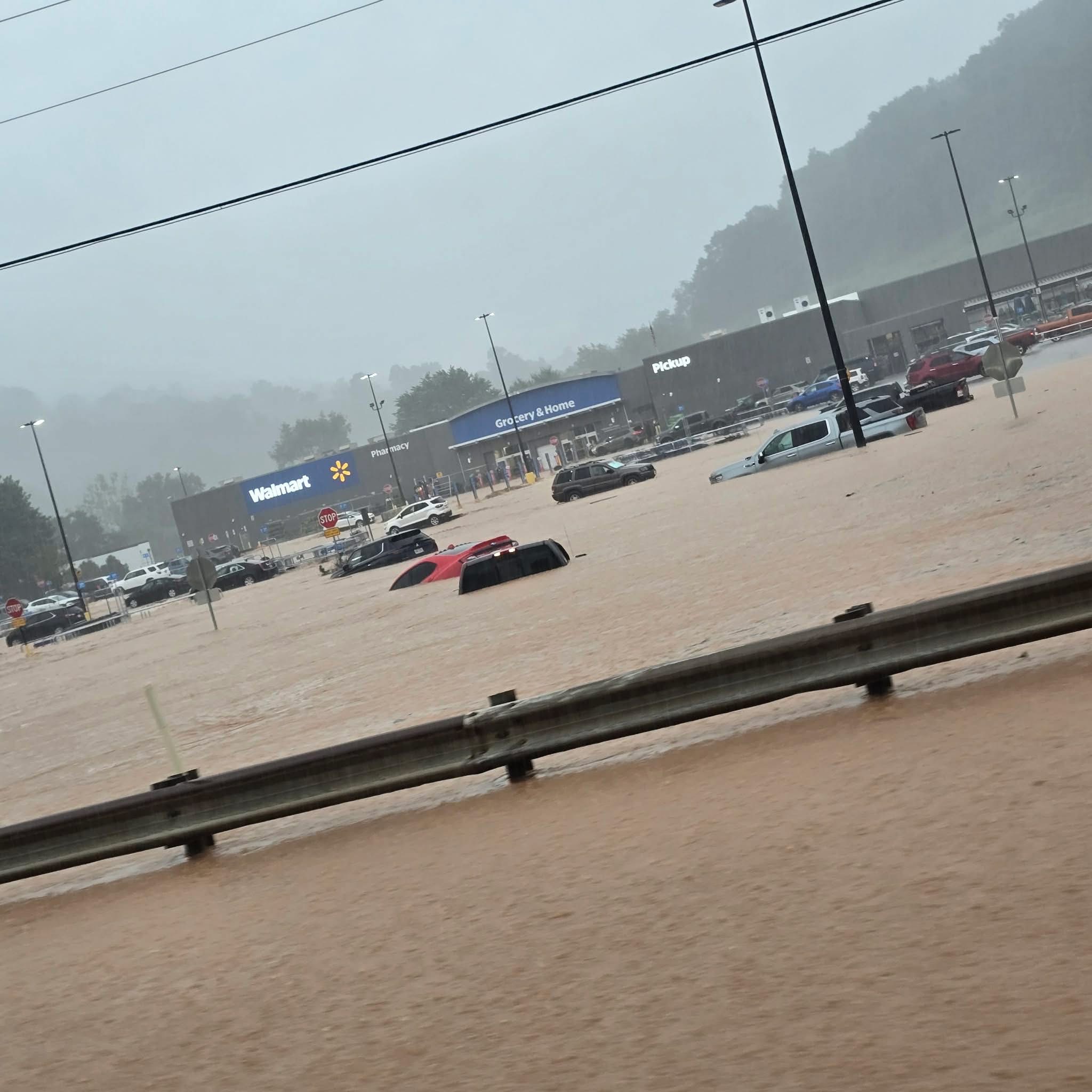
Catastrophic flash flooding swept across West Virginia on Tuesday, prompting Governor Patrick Morrisey to declare a state of emergency for all 55 counties and triggering the deployment of hundreds of National Guard troops. Severe thunderstorms unleashed torrential rain across parts of central West Virginia, with some areas receiving more than five inches of rain in less than six hours, creating what the National Weather Service designated as a “Particularly Dangerous Situation”—a rare classification reserved for the most extreme and life-threatening flash flood events.
The hardest-hit areas included Lewis, Pleasants and Upshur counties, where first responders received hundreds of calls for assistance. In Buckhannon, located in north-central West Virginia, the Sand Run stream crested at record levels, rising more than 10.63 feet—the first time in roughly 80 years of record-keeping that the gauge reached major flood stage. The previous record of 8.3 feet had stood since the devastating 1985 flood, when severe flooding in Upshur County killed 47 people and destroyed thousands of homes and hundreds of businesses.
About 300 West Virginia National Guard members were expected to arrive in the hardest-hit areas by Wednesday morning to support emergency response efforts. The Guard deployed swiftwater rescue teams, engineers and other resources to assist local emergency crews in conducting water rescues and debris removal operations. National Guard liaison officers were stationed at county emergency operations centers to coordinate response efforts, while aviation assets remained on standby to support operations as weather conditions permitted.
The flooding caused significant damage to homes and businesses across the state. Officials documented that Interstate 79 remained closed due to flooding in the Weston area early Wednesday. Roads, bridges, and critical infrastructure sustained major damage throughout the affected counties. Lewis County declared a local state of emergency, authorizing emergency management officials to coordinate all available local resources and request additional assistance from state and federal agencies, including the Federal Emergency Management Agency.
The destruction extended beyond West Virginia, as the same severe storm system spawned tornadoes and damaging winds across multiple states. Tornadoes were reported in Kentucky, Ohio and New Jersey on Tuesday, including one in Clermont County, Ohio. The broader storm system swept through the Ohio Valley and Mid-Atlantic region, bringing dangerous conditions across a wide swath of the eastern United States.
Despite the severity of the flooding, Fox Weather reported that no deaths or serious injuries had been reported from the July 21-22 flooding event as of early Wednesday morning. However, officials remained concerned about what conditions daylight might reveal, and recovery efforts were just beginning as communities dealt with the widespread destruction.
The West Virginia Emergency Management Division opened a shelter at Lewis County High School for residents displaced by the flooding. Though rain had largely moved out of West Virginia by Wednesday morning, rivers and streams in the central part of the state were forecast to keep rising as runoff continued to move through the watershed, presenting ongoing flood risks for downstream areas.
The unprecedented water levels recorded at Sand Run serve as a stark reminder of the region’s vulnerability to catastrophic flooding. Governor Morrisey urged all West Virginians to exercise caution, stay off flooded roadways, monitor local forecasts, and follow the direction of emergency officials as the state continued to assess damage and coordinate recovery operations across all affected areas.