

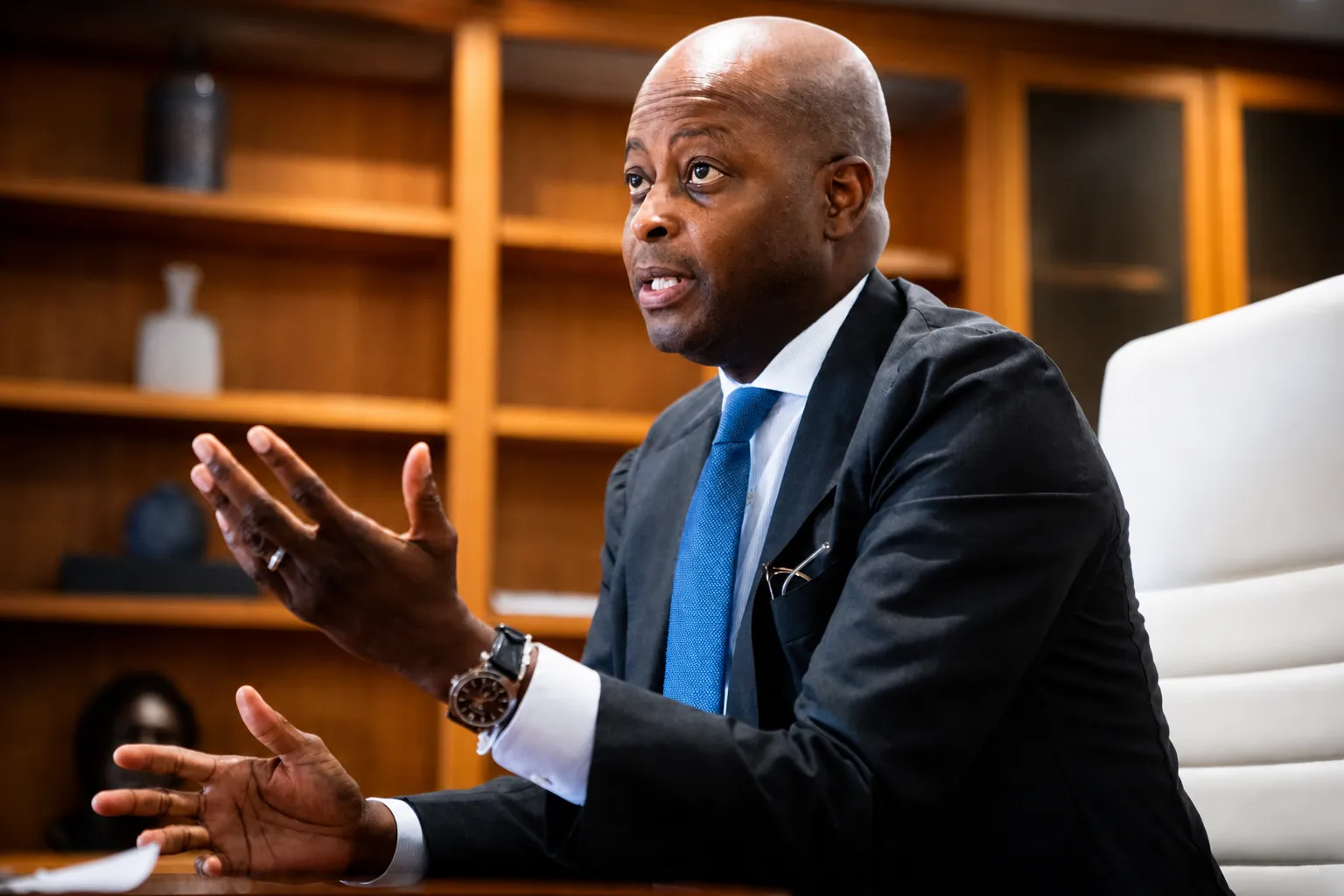
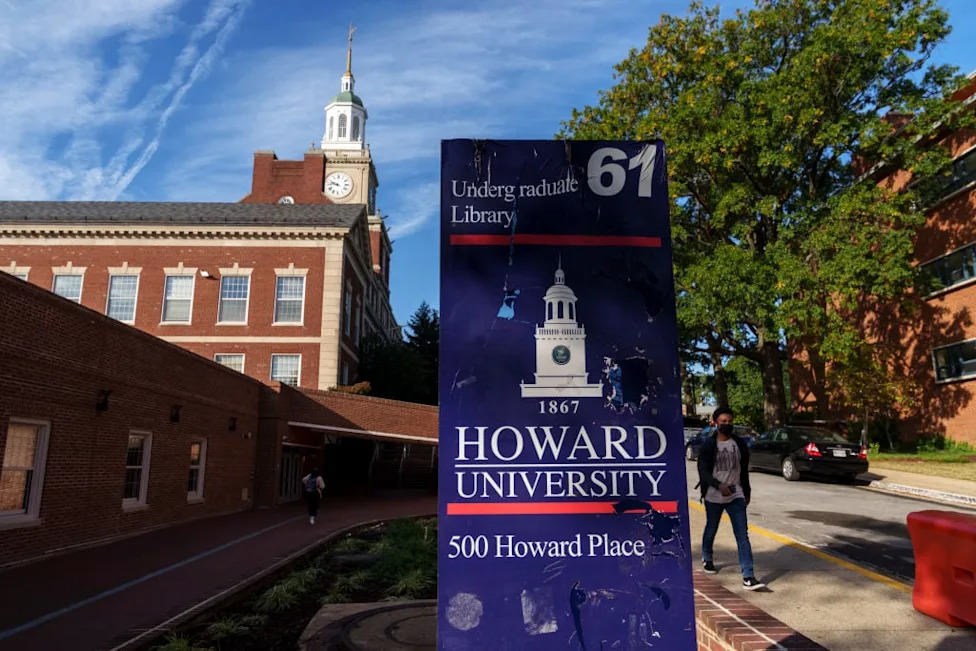
Howard University’s interim president said Wednesday that more than 200 of the over 500 first-year students who were unenrolled just weeks before fall classes begin have been readmitted to the prestigious historically Black university in Washington, D.C.
Interim President Wayne A. I. Frederick revealed the readmission numbers during an interview, acknowledging that the mass unenrollment decision had caused significant distress to families and students. He said the university started meeting and speaking with parents and students last week, which led to the reenrollments. “We looked at several things,” Frederick said of the process for reinstating the students, “including documents for incoming financial aid.”
The crisis began last Wednesday when Howard sent emails to 502 incoming first-year students informing them they had been unenrolled because their accounts did not reflect the required enrollment and financial obligations by previously communicated deadlines. Many students had just days left before the fall semester, which begins August 17, to find alternative educational plans. The university had received about 37,000 applications for enrollment this fall, and roughly 2,200 incoming students remained enrolled after the 502 were removed.
Frederick defended Howard’s decision, saying many students and their families apparently misunderstood the communicated financial obligations they were expected to meet before the start of instruction in August. He insisted the school had been clear since March about unpaid tuition balances that were due by mid-July. “There were no issues as far as what we communicated,” Frederick said.
However, students and families paint a different picture of their experience. Many said they had trouble reaching Howard officials by phone or email, leaving them uncertain how to resolve issues with tuition and housing assignments. Frederick acknowledged that the volume of calls was overwhelming, though he maintained that emails were responded to.
The situation has generated national attention and sparked criticism from higher education experts. Marybeth Gasman, a Rutgers University professor who studies higher education, said the mass unenrollment was particularly damaging because historically Black colleges are widely viewed as supportive environments for Black students. She argued the school should have completed more individual due diligence before issuing notices to more than 500 students on the same day.
Student accounts reveal confusion and distress over the policy. Some students said they had scholarships or other financial aid that had not yet been reflected on their accounts, while others said they had submitted documents to the university or received guidance suggesting their enrollment was secure. One incoming freshman, MarLae’ Coffield, reported that her account showed a negative balance, meaning her aid and scholarships exceeded the amount she owed, before she was notified that she had been unenrolled.
Another incoming freshman, Isabella Williams, said she had scholarships expected to cover her remaining balance and had notified Howard that the funds would arrive in August. Some affected students reported that university personnel had previously told them they were in good financial standing and would be able to attend Howard in the fall. One unenrolled student from Georgia, Crisette Jones, an 18-year-old incoming journalism major who would have been her family’s first college attendee, described learning of her unenrollment in her email. “My heart just dropped. I was in disbelief,” she said. “I thought it was a scam or an error until I went on Instagram and saw that everyone else got the email as well.”
The fallout has extended beyond Howard’s campus. New York Governor Kathy Hochul announced that the state will help students affected by Howard’s decision, offering guaranteed admission to participating State University of New York and City University of New York campuses for eligible New York residents. The state also waived the usual $8 application fees and provided an $800 credit per student to offset unrefunded Howard deposits. The University of the District of Columbia extended its application deadline to August 7 to help affected students find alternative enrollment options.
Frederick acknowledged that unenrollment is a standard practice at universities with high demand, explaining that confirming enrollment is essential for planning academic programs, housing, financial aid, and student support services. He emphasized that graduation rates suffer due to lack of finances, noting that limited university resources are stretched as far as possible.
Despite defending the university’s actions, Frederick said he takes “full responsibility” for the distress caused by the timing of the announcement so close to the semester’s start. However, he stopped short of fully backing away from the decision itself. The university’s Office of Enrollment Management announced plans to launch a “one-stop shop” in January to make the process for incoming students more seamless going forward, acknowledging that high email and call volumes from students and families had slowed the administrative process.
The readmission of more than 200 students represents partial resolution for the affected students, though hundreds remain uncertain about their enrollment status for the fall semester. Not all 502 unenrolled students will be reinstated, according to Frederick, who said the university is offering the remaining students options to transfer, defer enrollment, or enroll elsewhere with Howard’s assistance.