

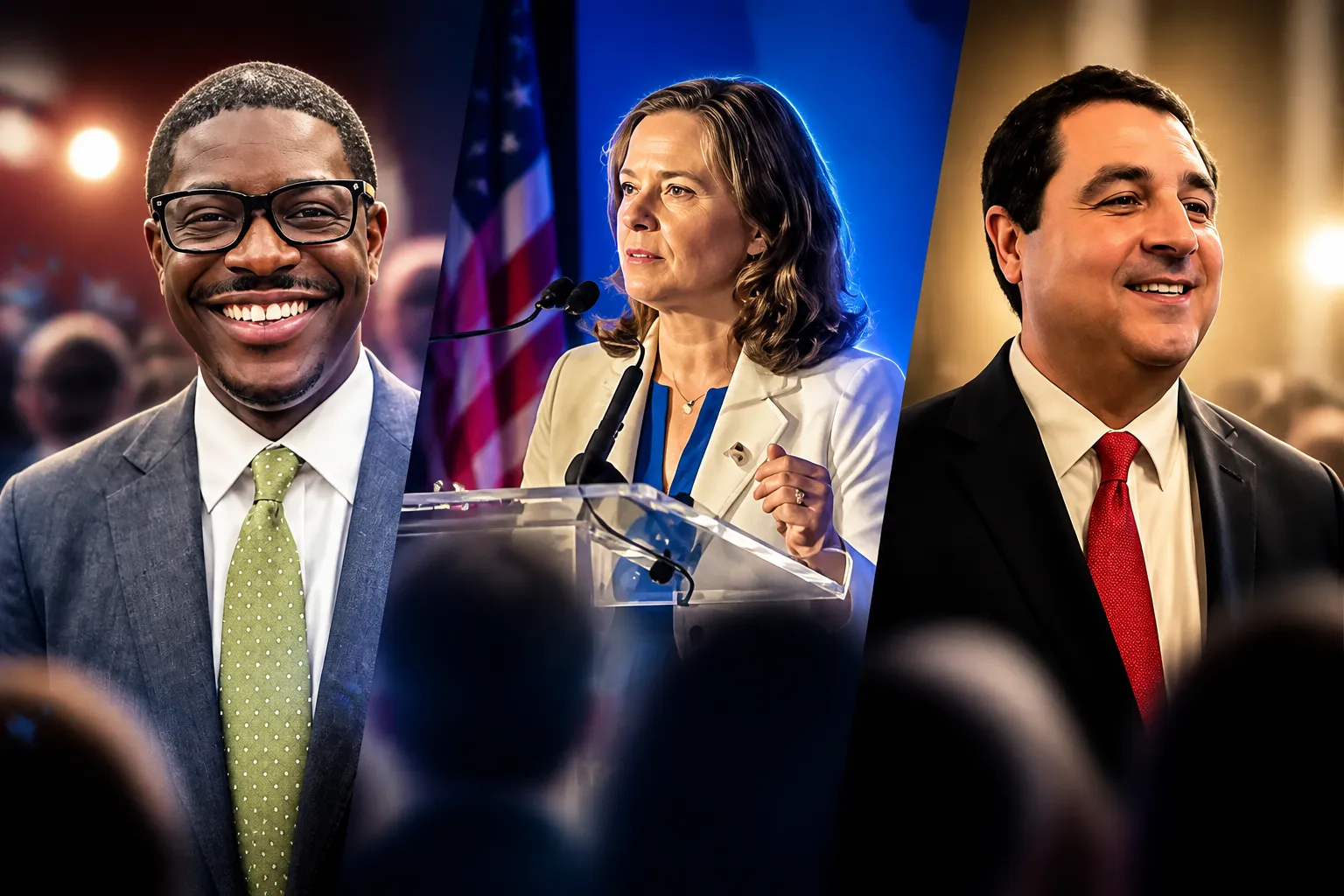
Early in-person voting is beginning in swing state Wisconsin’s chaotic Democratic primary for governor, with a democratic socialist trying to overcome the incumbent governor’s preferred choice to replace him. The primary is set for August 11, less than two weeks away, and the contest has been marked by unexpected exits and returns by major candidates that have created significant confusion.
State Rep. Francesca Hong, a democratic socialist backed by the Democratic Socialists of America, leads the field at 26 percent support in recent polling. Her grassroots campaign appeals strongly to the most liberal wing of the party and younger voters skeptical of establishment politics. However, nearly 45 percent of Democratic primary voters remain undecided heading into the voting period.
The race has been turbulent in recent weeks. Lieutenant Governor Sara Rodriguez dropped out on July 17 amid a campaign finance scandal after she fired her campaign manager for mismanaging funds. The very next day, Milwaukee County Executive David Crowley, who had exited the race on July 8, jumped back in with the endorsement of Governor Tony Evers. Meanwhile, former State Economic Development Director Missy Hughes dropped out in June but remains on the ballot, and the names of dropped-out candidates continue to create complications for voters.
Former Lieutenant Governor Mandela Barnes, who narrowly lost a 2022 U.S. Senate race, is attempting to overcome Hong by appealing to voters in his hometown of Milwaukee. The two candidates represent different branches of the Democratic Party. Both Crowley and Barnes are seeking to become Wisconsin’s first Black governor. Additionally, several other candidates remain in the race, creating what observers have called a muddled and fluid field with significant uncertainty about the outcome.
Democrats are hoping to retain control of the governor’s office and flip both chambers of the Wisconsin Legislature to achieve unified party control of state government for the first time since 2010. This makes the primary outcome particularly consequential. The winner will face Republican U.S. Representative Tom Tiffany, who has the backing of President Donald Trump and faces only nominal opposition in his primary. Tiffany won in a state that Trump captured in both 2016 and 2024, though the race remains competitive overall.
The chaos has extended beyond the campaign trail and into voting mechanics. More than 90,000 absentee ballots have already been returned to election officials since mail-in voting began in late June. Recognizing that many voters cast ballots for candidates who subsequently dropped out, the Democratic Party of Wisconsin filed a lawsuit seeking to allow voters who have already submitted absentee ballots to cancel them and cast new ones. The rare practice is known as ballot spoiling.
The Wisconsin Elections Commission voted on July 9 to issue guidance stating that absentee voters cannot cancel previously submitted ballots and receive new ones simply because a candidate dropped out or they changed their minds. The guidance limited spoiling to situations where a voter made an “accident or mistake” when filling out the ballot. Democrats argue this new policy unfairly disenfranchises voters given the exceptional volatility of their primary race.
The lawsuit challenges the commission’s position and seeks to overturn the guidance. The issue has been contentious in Wisconsin election law for years, with previous court rulings and legal positions fluctuating on whether voters should be able to replace absentee ballots. A judge was scheduled to hear arguments on the lawsuit hours after early voting began on Tuesday. Additionally, some Republican officials criticized the Democratic push, with Wisconsin Republican Party Chairman Brian Schimming stating that “election laws should not be changed to rescue one party from the consequences of its own actions.”
Hong has built her campaign on appealing to working families and progressive causes, focusing on guaranteeing childcare, paid leave, and imposing a moratorium on AI data centers in Wisconsin. She works as a bartender and chef in addition to her legislative duties and presents herself as an outsider candidate rooted in the working class rather than Democratic establishment circles. However, she has faced scrutiny over past social media posts calling for defunding and abolishing police, which opponents have highlighted as problematic.
In-person absentee voting runs through August 9, with the primary taking place on August 11. All absentee ballots must be received by the time polls close on election day to be counted. The five Democratic candidates are scheduled to meet for their only debate on Tuesday night before voting begins, offering one final opportunity for the field to make their case to undecided voters before ballots are cast.